
Catalogue Search | MBRL


Are you sure you want to remove the book from the shelf?

{{itemTitle}}
143
result(s) for
"Civilization, Modern -- Research"
Sort by:

Varieties of Multiple Modernities : New Research Design
\"To date, the nascent consequential notion of 'multiple modernities' has been predominately grounded in historical research with the purpose of validating the theory. Yet, the notion of multiple modernities represents a radical transformation in the way modernity and, indeed, the contemporary world is viewed. As such, the central aim of this volume is to explore the implications and hidden understanding of the multiple modernities research project beyond historical analysis in order to investigate its wide ranging omnipresent implications as they exist in communication and in the social order of societal membership in contemporary societies\"--Provided by publisher.
Book

Varieties of Multiple Modernities
This volume collects new research about multiple modernities and globalization. It shows the new turn of sociological theory in the contemporary scene with respect to multiple modernities, multi-centrism, transglobality, hybridization and multiculturalism, comparative cultures, and explores it as a new area of societal communication.
eBook
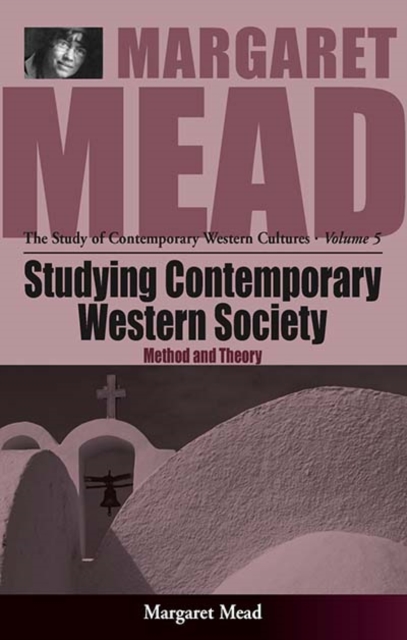
Studying Contemporary Western Society
Few anthropologists today realize the pioneering role Margaret
Mead played in the investigation of contemporary cultures. This
volume collects and presents a variety of her essays on research
methodology relating to contemporary culture. Many of these essays
were printed originally in limited circulation journals, research
reports and books edited by others. They reflect Mead's continuing
commitment to searching out methods for studying and extending the
anthropologist's tools of investigation for use in complex
societies. Essays on American and European societies,
intergenerational relations, architecture and social space,
industrialization, and interracial relations are included in this
varied and exciting collection.
eBook

The Palgrave Handbook of Contemporary Heritage Research
01
02
This book explores heritage from a wide range of perspectives and disciplines and in doing so provides a distinctive and deeply relevant survey of the field as it is currently researched, understood and practiced around the world. Furthermore it establishes and develops through its various sections and chapters an accessible and clearly presented vision of heritage as a cultural process designed for use by students, advance scholars and practitioners alike. This book provides both critical insight and food for thought, directing the reader to key texts in the various aspects of the field and charting a course for future research.
13
02
Emma Waterton is a DECRA Fellow at the University of Western Sydney's Institute for Culture and Society, Australia. Her research explores the interface between heritage, identity, memory and affect. She is author of Politics, Policy and the Discourses of Heritage in Britain (2010, Palgrave Macmillan) and The Semiotics of Heritage Tourism (with Steve Watson; 2014).
Steve Watson is Principal Lecturer at York St John University, UK, where he teaches cultural and heritage tourism. His research is concerned primarily with the representation and experience of heritage and he has a particular interest in Spanish travel writing. His most recent book is The Semiotics of Heritage Tourism (with Emma Waterton; 2014).
04
02
Introduction: Heritage as a Focus of Research – Past, Present and New Directions; Emma Waterton and Steve Watson
PART I: HERITAGE MEANINGS
1. Heritage Methods and Methodologies; Emma Waterton and Steve Watson
2. Heritage and Discourse; Zongjie Wu and Song Hou
3. Heritage as Performance; Michael Haldrup and Jørgen Ole Bærenholdt
4. Heritage and Authenticity; Helaine Silverman
PART II: HERITAGE IN CONTEXT
5. From Heritage to Archaeology and Back Again; Shatha Abu Khafajah and Arwa Badren
6. Heritage and History; Jessica Moody
7. Thinking About Others through Museums and Heritage; Andrea Witcomb
8. Heritage and Tourism; Duncan Light
9. Heritage and Geography; Nuala C. Johnson
PART III: HERITAGE AND CULTURAL EXPERIENCE
10. Affect, Heritage, Feeling; David Crouch
11. Heritage and Memory; Joy Sather-Wagstaff
12. Heritage and the Visual Arts; Russell Staiff
13. Industrial Heritage and Tourism: A Review of the Literature; Alfonso Vargas Sanchez
14. Curating Sound for Future Communities; Noel Lobley
15. Heritage and Sport; Gregory Ramshaw and Sean Gammon
PART IV: CONTESTED HERITAGE AND EMERGING ISSUES
16. Heritage in Multicultural Times; Cristóbal Gnecco
17. Cultural Heritage and Armed Conflict: New Questions for an Old Relationship; Dacia Viejo Rose and Marie Louise Stig Sørensen
18. Heritage and Globalisation; Rodney Harrison
19. Critical Approaches to Post-Colonial (Post-Conflict) Heritage; John Giblin
PART V: HERITAGE, IDENTITY AND AFFILIATION
20. Heritage and Nationalism: An Unbreachable Couple?; Tim Winter
21. Heritage and Participation; Cath Neal
22. Heritage and Social Class; Bella Dicks
23. Of Routes and Roots: Paths for Understanding Diasporic Heritage; Ann Reed
24. Making Feminist Heritage Work: Gender and Heritage; Anna Reading
PART VI: HERITAGE AND SOCIAL PRACTICE
25. 'Thinkers and Feelers' a Psychological Perspective on Heritage and Society; John Schofield
26. Heritage and Policy; John Pendlebury
27. Heritage, Power and Ideology; Katharina Schramm
28. Heritage and Economic Development; Steve Watson and María del Rosario González-Rodríguez
29. Heritage in Consumer Marketing; Georgios C. Papageorgiou
30. Heritage and Sustainable Development: Transdisciplinary Imaginings of a Wicked Philosophy; Robyn Bushell
PART VII: CONCLUSIONS
31. Contemporary Heritage and the Future; Cornelius Holtorf and Anders Högberg
32. Themes, Thoughts, Reflections; Steve Watson and Emma Waterton
02
02
This book explores heritage from a wide range of perspectives and disciplines and in doing so provides a distinctive and deeply relevant survey of the field as it is currently researched, understood and practiced around the world.
eBook

The Black campus movement : Black students and the racial reconstitution of higher education, 1965-1972
This book provides the first national study of this intense and challenging struggle which disrupted and refashioned institutions in almost every state. It also illuminates the context for one of the most transformative educational movements in American history through a history of black higher education and black student activism before 1965.
eBook

Shaky Foundations
Numerous popular and scholarly accounts have exposed the deep impact of patrons on the production of scientific knowledge and its applications.Shaky Foundationsprovides the first extensive examination of a new patronage system for the social sciences that emerged in the early Cold War years and took more definite shape during the 1950s and early 1960s, a period of enormous expansion in American social science.
By focusing on the military, the Ford Foundation, and the National Science Foundation, Mark Solovey shows how this patronage system presented social scientists and other interested parties, including natural scientists and politicians, with new opportunities to work out the scientific identity, social implications, and public policy uses of academic social research. Solovey also examines significant criticisms of the new patronage system, which contributed to widespread efforts to rethink and reshape the politics-patronage-social science nexus starting in the mid-1960s.
Based on extensive archival research,Shaky Foundationsaddresses fundamental questions about the intellectual foundations of the social sciences, their relationships with the natural sciences and the humanities, and the political and ideological import of academic social inquiry.
eBook

Using whole-genome SNP data to reconstruct a large multi-generation pedigree in apple germplasm
Background
Apple (
Malus
x
domestica
Borkh.) is one of the most important fruit tree crops of temperate areas, with great economic and cultural value. Apple cultivars can be maintained for centuries in plant collections through grafting, and some are thought to date as far back as Roman times. Molecular markers provide a means to reconstruct pedigrees and thus shed light on the recent history of migration and trade of biological materials. The objective of the present study was to identify relationships within a set of over 1400 mostly old apple cultivars using whole-genome SNP data (~ 253 K SNPs) in order to reconstruct pedigrees.
Results
Using simple exclusion tests, based on counting the number of Mendelian errors, more than one thousand parent-offspring relations and 295 complete parent-offspring families were identified. Additionally, a grandparent couple was identified for the missing parental side of 26 parent-offspring pairings. Among the 407 parent-offspring relations without a second identified parent, 327 could be oriented because one of the individuals was an offspring in a complete family or by using historical data on parentage or date of recording. Parents of emblematic cultivars such as ‘Ribston Pippin’, ‘White Transparent’ and ‘Braeburn’ were identified. The overall pedigree combining all the identified relationships encompassed seven generations and revealed a major impact of two Renaissance cultivars of French and English origin, namely ‘Reinette Franche’ and ‘Margil’, and one North-Eastern Europe cultivar from the 1700s, ‘Alexander’. On the contrary, several older cultivars, from the Middle Ages or the Roman times, had no, or only single, identifiable offspring in the set of studied accessions. Frequent crosses between cultivars originating from different European regions were identified, especially from the nineteenth century onwards.
Conclusions
The availability of over 1400 apple genotypes, previously filtered for genetic uniqueness and providing a broad representation of European germplasm, has been instrumental for the success of this large pedigree reconstruction. It enlightens the history of empirical selection and recent breeding of apple cultivars in Europe and provides insights to speed-up future breeding and selection.
Journal Article

Modalities of change
While in some cases modernity may dominate 'traditional' forms of expression, in others, the modern is embraced as a welcome source of new ideas that can modify 'tradition' while still keeping it within its own bounds. Maintaining a strong and distinct cultural identitywith the help of modernityhelps representatives of that identity cope with the modern world more generally. By contrast, assimilation to a dominant culture marked as modern is clearly associated with not only the loss of a distinct identity, but also its specific forms of cultural expression. This book explores the consequences of the interface between modernity and tradition in selected societies in Taiwan, mainland China and Vietnam. The contributors examine how traditions are themselves exploiting modernity in creative ways, in the interests of their own further cultural developments, and to what extent this approach is likely to help a tradition survive.
eBook

The Alchemy of Empire: Abject Materials and the Technologies of Colonialism
The Alchemy of Empire unravels the non-European origins of Enlightenment science. Focusing on the abject materials of empire-building, this study traces the genealogies of substances like mud, mortar, ice, and paper, as well as forms of knowledge like inoculation. Showing how East India Company employees deployed the paradigm of alchemy in order to make sense of the new worlds they confronted, Rajani Sudan argues that the Enlightenment was born largely out of Europe's (and Britain's) sense of insecurity and inferiority in the early modern world. Plumbing the depths of the imperial archive, Sudan uncovers the history of the British Enlightenment in the literary artifacts of the long eighteenth century, from the correspondence of the East India Company and the papers of the Royal Society to the poetry of Alexander Pope and the novels of Jane Austen.
eBook

Mobile Lives
How should we understand the personal and social impacts of complex mobility systems? Can lifestyles based around intensive travel, transport and tourism be maintained in the 21st century? What possibility post-carbon lifestyles?
In this provocative study of \"life on the move\", Anthony Elliott and John Urry explore how complex mobility systems are transforming everyday, ordinary lives. The authors develop their arguments through an analysis of various sectors of mobile lives: networks, new digital technologies, consumerism, the lifestyles of 'globals', and intimate relationships at-a-distance. Elliott and Urry introduce a range of new concepts - miniaturized mobilities, affect storage, network capital, meetingness, neighbourhood lives, portable personhood, ambient place, globals - to capture the specific ways in which mobility systems intersect with mobile lives.
This book represents a novel approach in \"post-carbon\" social theory. It will be essential reading for advanced undergraduate students, postgraduates and teachers in sociology, social theory, politics, geography, international relations, cultural studies, and economics and business studies.
eBook