
Catalogue Search | MBRL


Are you sure you want to remove the book from the shelf?

{{itemTitle}}
75
result(s) for
"Civilization, Turkic."
Sort by:

Kashgar revisited : Uyghur studies in memory of Ambassador Gunnar Jarring
Building on the rich scholarly legacy of Gunnar Jarring, the Swedish Turkologist and diplomat, the fourteen contributions by sixteen authors representing a variety of disciplines in the humanities and the social sciences provide an insight into ongoing research trends in Uyghur and Xinjiang Studies. In one way or other all the chapters explore how new research in the fields of history, linguistics, anthropology and folklore can contribute to our understanding of Xinjiang's past and present, simultaneously pointing to those social and knowledge practices that Uyghurs today can claim as part of their traditions in order to reproduce and perpetuate their cultural identity.Contributors include: Ildikó Bellér-Hann, Rahile Dawut, Arienne Dwyer, Fredrik Fällman, Chris Hann, Dilmurat Mahmut, Takahiro Onuma, Alexandre Papas, Eric Schluessel, Birgit Schlyter, Joanne Smith Finley, Rune Steenberg Jun Sugawara, Åsäd Sulaiman, Abdurishid Yakup, Thierry Zarcone.
eBook

Hammer and Anvil : Nomad Rulers at the Forge of the Modern World
\"Distinguished scholar Pamela Crossley offers a rich history of Eurasia, pivoting around the Mongol and Turkic empires. Synthesizing new interpretive approaches and grand themes of world history from 1000 to 1500, the author argues that these regimes shaped Eurasia's economic, technological, and political evolution toward the modern world.\"--Provided by publisher.
Book

The Origins of the Unity Idea in the Turkic World
As the Turks outside the Ottoman Empire lost their independence from 1885 and the ideas such as Ottomanism and Pan-Islamism were overwhelmed with the zeitgeist, the idea of unity emerged as a worldview and a new image of civilization in the Turkic World, which reinterpreted its civilizational identity within the framework of a multilevel reconstruction period. This study addresses the reconstruction of the centuries-long historical and cultural heritage of the Turkic world by the representatives of this idea based on the unity of language, i.e. having language as a unifying element, from a historical perspective. In this framework, studies published in five different languages were analyzed. 1885 yılından itibaren Osmanlı İmparatorluğu dışındaki Türklerin bağımsızlıklarını kaybetmeleri ve Osmanlıcılık, Ümmetçilik gibi fikirlerin zamanın ruhuna yenik düşmesiyle birlikte, medeniyet anlayışını çok katmanlı bir yeniden inşa sürecine tabii tutan Türk Dünyasında birlik fikri, bir dünya görüşü ve yeni bir medeniyet tasavvuru olarak ortaya çıkmıştır. Bu çalışma; Türk Dünyasının asırlara dayanan tarihi ve kültürel mirasının, dilde birlik fikrinin diğer bir ifadeyle dilin birleştirici bir unsur olarak ele alınması yaklaşımının temsilcileri tarafından, nasıl yeniden inşa edildiğini ele almaktadır. Bu kapsamda beş farklı dilde neşredilmiş araştırmalardan istifade edilmiştir.
Journal Article

The Other Empire
First Published in 2004. Routledge is an imprint of Taylor & Francis, an informa company.
Filiz Turhan's work focuses on romanticism, with specific emphasis on orientalism, imperialism, and the gothic. Her current research project is focused on the discursive construction of the Turks in twentieth-century fiction, travel literature, and film. She is assistant professor of English at Suffolk Community College and teaches courses in literature and composition.
eBook

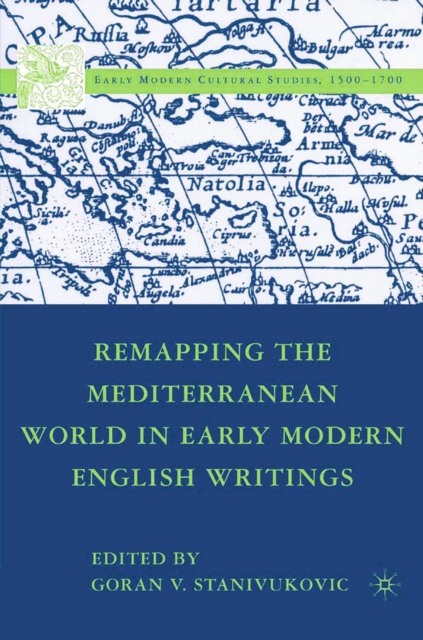
Remapping the Mediterranean world in early modern English writings
The essays in this volume explore the Mediterranean both as a physical and cultural space, and as a conceptual notion that challenges the boundaries between East and West. It emphasizes the Ottoman Mediterranean, by exploring a variety of literary and non-literary texts produced between the Sixteenth and Eighteenth centuries.
eBook
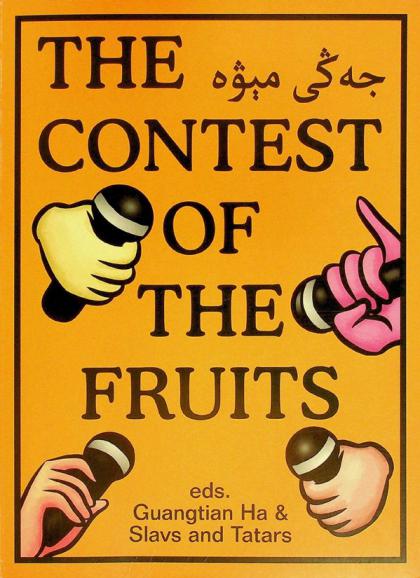
The contest of the fruits = jae gī mevah
The Contest of the Fruits takes a nineteenth-century Uyghur satirical poem as a departure point for investigations of language, politics, religion, humor, resilience, and resistance in a pluralistic world. Composed at the crossroads of multiple civilizations and empires and born of the Uyghurs' liminal position at the edges of Islam and the frontiers of China, \"The Contest of the Fruits\" captures a world in which borders are gateways rather than dividing lines. The poem, highly performative, embellished with verbal flourishes, and featuring the ribald rivalry of such fruits as mulberry, pomegranate, quince, and pear, may be the first Turkic rap battle.
Book
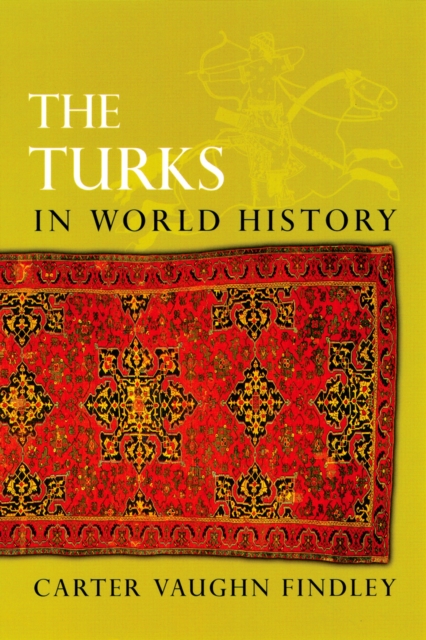
The Turks in World History
Beginning in Inner Asia two thousand years ago, the Turks have migrated and expanded to form today's Turkish Republic, five post-Soviet republics, other societies across Eurasia, and a global diaspora. For the first time in a single, accessible volume, this book traces the Turkic peoples' trajectory from steppe, to empire, to nation-state. Cultural, economic, social, and political history unite in these pages to illuminate the projection of Turkic identity across space and time and the profound transformations marked successively by the Turks' entry into Islam and into modernity.
eBook