
Catalogue Search | MBRL


Are you sure you want to remove the book from the shelf?

{{itemTitle}}
149
result(s) for
"Civilization, Viking"
Sort by:

The Vikings : facts and fictions
\"This book explores popular misconceptions about the Vikings and the historical truths about Viking society.\"--Provided by publisher.
Book

Scandinavia in the Age of Vikings
In Scandinavia in the Age of
Vikings , Jón Viðar Sigurðsson returns to the
Viking homeland, Scandinavia, highlighting such key aspects of
Viking life as power and politics, social and kinship networks,
gifts and feasting, religious beliefs, women's roles, social
classes, and the Viking economy, which included farming, iron
mining and metalworking, and trade.
Drawing of the latest archeological research and on literary
sources, namely the sagas, Sigurðsson depicts a complex and
surprisingly peaceful society that belies the popular image of
Norsemen as bloodthirsty barbarians. Instead, Vikings often acted
out power struggles symbolically, with local chieftains competing
with each other through displays of wealth in the form of great
feasts and gifts, rather than arms. At home, conspicuous
consumption was a Viking leader's most important virtue; the
brutality associated with them was largely wreaked abroad.
Sigurðsson's engaging history of the Vikings at home begins by
highlighting political developments in the region, detailing how
Danish kings assumed ascendency over the region and the ways in
which Viking friendship reinforced regional peace. Scandinavia
in the Age of Vikings then discusses the importance of
religion, first pagan and (beginning around 1000 A.D.)
Christianity; the central role that women played in politics and
war; and how the enormous wealth brought back to Scandinavia
affected the social fabric-shedding new light on Viking
society.
eBook

Viking explorers : first European voyagers to North America
Presents information about the Viking civilization and describes their voyages across the Atlantic to become the first Europeans to set foot in the New World.
Book

The Viking Eastern Baltic
This book demonstrates howcommunication networks over the BalticSea and further east were establishedand how they took different forms in thenorthern and the southern halves of theEastern Baltic. Changes in archaeologicalevidence along relevant trade routessuggest that the inhabitants of present-day Finland and the Baltic States weremore engaged in Viking easternmovement than is generally believed.
eBook


Crafts and Social Networks in Viking Towns
Crafting Communities explores the interface between craft, communication networks, and urbanization in Viking-age Northern Europe. Viking-period towns were the hubs of cross-cultural communication of their age, and innovations in specialized crafts provide archaeologists with some of the best evidence for studying this communication. The integrated results presented in these papers have been made possible through the sustained collaboration of a group of experts with complementary insights into individual crafts. Results emerge from recent scholarly advances in the study of artifacts and production: first, the application of new analytical techniques in artifact studies (e.g. metallographic, isotopic, and biomolecular techniques) and second, the shifted in interpretative focus of medieval artifact studies from a concern with object function to considerations of processes of production, and of the social agency of technology. Furthermore, the introduction of social network theory and actor-network theory has redirected attention toward the process of communication, and highlighted the significance of material culture in the learning and transmission of cultural knowledge, including technology. The volume brings together leading UK and Scandinavian archaeological specialists to explore crafted products and workshop-assemblages from these towns, in order to clarify how such long-range communication worked in pre-modern Northern Europe. Contributors assess the implications for our understanding of early towns and the long-term societal change catalysed by them, including the initial steps towards commercial economies. Results are analyzed in relation to social network theory, social and economic history, and models of communication, setting an agenda for further research. Crafting Communities provides a landmark statement on our knowledge of Viking-Age craft and communication
eBook
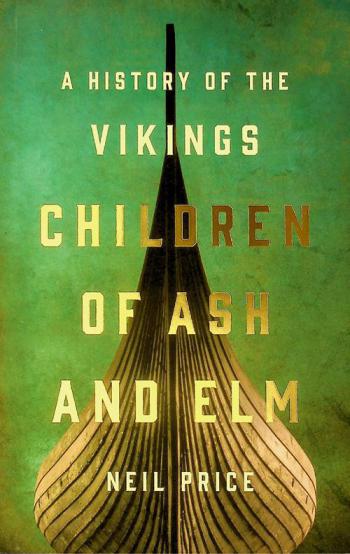
Children of ash and elm : a history of the Vikings
\"The Viking Age--between 750 and 1050--saw an unprecedented expansion of the Scandinavian peoples. As traders and raiders, explorers and colonists, they reshaped the world between eastern North America and the Asian steppe. Based on the latest archaeological and textual evidence, Children of Ash and Elm tells the story of the Vikings on their own terms: their politics, their cosmology, their art and culture. From Björn Ironside, who led an expedition to sack Rome, to Gudrid Thorbjarnardóttir, the most traveled woman in the world, Price shows us the real Vikings, not the caricatures they've become in popular culture and history\"-- Provided by publisher.

A Norse Settlement in the Outer Hebrides
The settlement at Bornais in the Western Isles of Scotland is one of the largest rural settlements known from the Norse period in Britain. It spans the period from the fifth to the fifteenth century AD when the Atlantic seaboard was subject to drastic changes. The islands were systematically ravaged by Viking raiders and then colonised by Norse settlers. In the following centuries the islanders were central to the emergence of the Kingdom of Man and the Isles, played a crucial role in the development of the Lordship of the Isles and were finally assimilated into the Kingdom of Scotland. This volume explores the stratigraphic sequence uncovered by the excavation of Bornais mounds 2 and 2A. The excavation of mound 2 revealed a sequence of high status buildings that span the Norse occupation of the settlement. One of these houses, constructed at the end of the eleventh century AD, was a well preserved bow-walled longhouse and the careful excavation and detailed recording of the floor layers has revealed a wealth of finds that provides invaluable insight into the activities taking place in this building. The final house in this sequence is very different in form and use, and clearly indicates the increasing Scottish influence on the region at the beginning of the thirteenth century. The excavation of mound 2A provides an insight into the less prestigious areas of the settlement and contributes a significant amount of evidence on the settlement economy. The area was initially cultivated before it became a settlement local and throughout its life a focus on agricultural activities, such as grain drying and processing, appears to have been important. In the thirteenth century the mound was occupied by a craftsman who produced composite combs, gaming pieces and simple tools. The evidence presented in this volume makes a major contribution to the understanding of Norse Scotland and the colonisation of the North Atlantic in a period of dramatic transformations.
eBook


Beowulf and the North before the Vikings
Ever since Tolkien’s famous lecture in 1936, it has been generally accepted that the poem Beowulf is a fantasy, and of no use as a witness to real history. This book challenges that view, and argues that the poem provides a plausible, detailed, and consistent vision of pre-Viking history which is most unlikely to have been the poet’s invention, and which has moreover received strong corroboration from archaeology in recent years. Using the poem as a starting point, historical, archaeological, and legendary sources are combined to form a picture of events in the North in the fifth and sixth centuries: at once a Dark and a Heroic Age, and the time of the formation of nations. Among other things, this helps answer two long-unasked questions: why did the Vikings come as such a shock? And what caused the previous 250 years of security from raiders from the sea?
eBook