
Catalogue Search | MBRL


Are you sure you want to remove the book from the shelf?

{{itemTitle}}
2,215
result(s) for
"Civilization, Western, in art."
Sort by:


Overcome by Modernity
In the decades between the two World Wars, Japan made a dramatic entry into the modern age, expanding its capital industries and urbanizing so quickly as to rival many long-standing Western industrial societies. How the Japanese made sense of the sudden transformation and the subsequent rise of mass culture is the focus of Harry Harootunian's fascinating inquiry into the problems of modernity. Here he examines the work of a generation of Japanese intellectuals who, like their European counterparts, saw modernity as a spectacle of ceaseless change that uprooted the dominant historical culture from its fixed values and substituted a culture based on fantasy and desire. Harootunian not only explains why the Japanese valued philosophical understandings of these events, often over sociological or empirical explanations, but also locates Japan's experience of modernity within a larger global process marked by both modernism and fascism.
What caught the attention of Japanese thinkers was how the production of desire actually threatened historical culture. These intellectuals sought to \"overcome\" the materialism and consumerism associated with the West, particularly the United States. They proposed versions of a modernity rooted in cultural authenticity and aimed at infusing meaning into everyday life, whether through art, memory, or community. Harootunian traces these ideas in the works of Yanagita Kunio, Tosaka Jun, Gonda Yasunosuke, and Kon Wajiro, among others, and relates their arguments to those of such European writers as George Simmel, Siegfried Kracauer, Walter Benjamin, and Georges Bataille.
Harootunian shows that Japanese and European intellectuals shared many of the same concerns, and also stresses that neither Japan's involvement with fascism nor its late entry into the capitalist, industrial scene should cause historians to view its experience of modernity as an oddity. The author argues that strains of fascism ran throughout most every country in Europe and in many ways resulted from modernizing trends in general. This book, written by a leading scholar of modern Japan, amounts to a major reinterpretation of the nature of Japan's modernity.
eBook

Music Generations in the Digital Age
What do we do when we listen? The act of engagement with music in everyday life may seem simple on the surface but participation, interpretation, circulation and cultural production in the digital age are more complex and entangled than ever before. It is especially so in Japan, with its vast multimedia idol and vocaloid industries. This unique ethnographic work at the intersection of cultural, media and music studies covers a wide spectrum of music-related activities embedded in the daily lives of two Japanese cohorts. The varied case studies, including teen idol groups and virtual idols, aid the detailed examination of the relation between music, generation, and society.
eBook

Muslim rap, halal soaps, and revolutionary theater : artistic developments in the Muslim world
No detailed description available for \"Muslim Rap, Halal Soaps, and Revolutionary Theater\".
eBook

The Arab Nahdah
To understand today's Arab thinking, you need to go back to the beginnings of modernity: the nahdah or Arab renaissance of the 19th and early 20th centuries. Abdulrazzak Patel enhances our understanding of the nahdah and its intellectuals, looking back to its origins in the 1700s and taking into account important internal factors alongside external forces. He explores the key factors that contributed to the rise and development of the nahdah, he introduces the humanist movement of the period that was the driving force behind much of the linguistic, literary and educational activity. Drawing on intellectual history, literary history and postcolonial studies, he argues that the nahdah was the product of native development and foreign assistance and that nahdah reformist thought was hybrid in nature. Overall, this study highlights the complexity of the movement and offers a more pluralist history of the period.
eBook

Europe and the Islamic world
Europe and the Islamic Worldsheds much-needed light on the shared roots of Islamic and Western cultures and on the richness of their inextricably intertwined histories, refuting once and for all the misguided notion of a \"clash of civilizations\" between the Muslim world and Europe. In this landmark book, three eminent historians bring to life the complex and tumultuous relations between Genoans and Tunisians, Alexandrians and the people of Constantinople, Catalans and Maghrebis--the myriad groups and individuals whose stories reflect the common cultural, intellectual, and religious heritage of Europe and Islam.
Since the seventh century, when the armies of Constantinople and Medina fought for control of Syria and Palestine, there has been ongoing contact between the Muslim world and the West. This sweeping history vividly recounts the wars and the crusades, the alliances and diplomacy, commerce and the slave trade, technology transfers, and the intellectual and artistic exchanges. Here readers are given an unparalleled introduction to key periods and events, including the Muslim conquests, the collapse of the Byzantine Empire, the commercial revolution of the medieval Mediterranean, the intellectual and cultural achievements of Muslim Spain, the crusades and Spanish reconquest, the rise of the Ottomans and their conquest of a third of Europe, European colonization and decolonization, and the challenges and promise of this entwined legacy today.
As provocative as it is groundbreaking, this book describes this shared history in all its richness and diversity, revealing how ongoing encounters between Europe and Islam have profoundly shaped both.
eBook
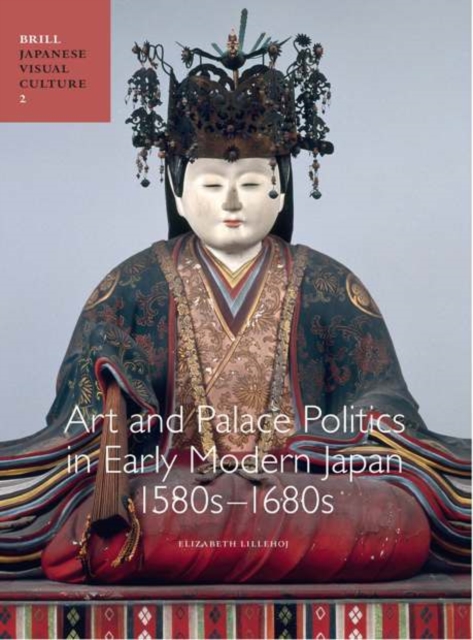
Art and Palace Politics in Early Modern Japan, 1580s-1680s
Magnificent art and architecture created for the emperor with the financial support of powerful warlords at the beginning of Japan's early modern era (1580s-1680s) testify to the continued cultural and ideological significance of the imperial family. Works created in this context are discussed in this groundbreaking study, with over 100 illustrations in color.
eBook

The politics of the provisional : art and ephemera in revolutionary France
In revolutionary France the life of things could not be assured. War, shortage of materials, and frequent changes in political authority meant that few large-scale artworks or permanent monuments to the Revolution's memory were completed. On the contrary, visual practice in revolutionary France was characterized by the production and circulation of a range of transitional, provisional, ephemeral, and half-made images and objects, from printed paper money, passports, and almanacs to temporary festival installations and relics of the demolished Bastille. Addressing this mass of images conventionally ignored in art history, The Politics of the Provisional contends that they were at the heart of debates on the nature of political authenticity and historical memory during the French Revolution. Thinking about material durability, this book suggests, was one of the key ways in which revolutionaries conceptualized duration, and it was crucial to how they imagined the Revolution's transformative role in history.
The Politics of the Provisional is the first book in the Art History Publication Initiative (AHPI), a collaborative grant from the Andrew W. Mellon Foundation. Thanks to the AHPI grant, this book is available on a variety of popular e-book platforms.
eBook

The birth of the past
How we learned to distinguish past from present and see the world historically.
Outstanding Academic Title, Choice
How did people learn to distinguish between past and present? How did they come to see the past as existing in its own distinctive context? In The Birth of the Past, Zachary Sayre Schiffman explores these questions in his sweeping survey of historical thinking in the Western world. Today we automatically distinguish between past and present, labeling things that appear out of place as \"anachronisms.\" Schiffman shows how this tendency did not always exist and how the past as such was born of a perceived difference between past and present.
Schiffman takes readers on a grand tour of historical thinking from antiquity to modernity. He shows how ancient historians could not distinguish between past and present because they conceived of multiple pasts. Christian theologians coalesced these multiple pasts into a single temporal space where past merged with present and future. Renaissance humanists began to disentangle these temporal states in their desire to resurrect classical culture, creating a \"living past.\" French enlighteners killed off this living past when they engendered a form of social scientific thinking that measured the relations between historical entities, thus sustaining the distance between past and present and relegating each culture to its own distinctive context.
Featuring a foreword by the eminent historian Anthony Grafton, this fascinating book draws upon a diverse range of sources—ancient histories, medieval theology, Renaissance art, literature, legal thought, and early modern mathematics and social science—to uncover the meaning of the past and its relationship to the present.
eBook

The Democratization of Knowledge in Renaissance Italy
The book identifies to what extent it is possible to speak of a democratization of knowledge in Renaissance Italy. It establishes the boundaries of the present investigation within the Aristotelian tradition, and outlines democratization as a process capable of assigning power to people. It deals with how the democratization of knowledge historically is invested equally in ideas from religion and philosophy, involving the same democratizers, moved by similar intentions, employing identical techniques of vulgarization and targeting equivalent communities of recipients.
eBook