
Catalogue Search | MBRL


Are you sure you want to remove the book from the shelf?

{{itemTitle}}
98
result(s) for
"Civilization, Western History Textbooks."
Sort by:


Dismantling Curricular Statues: Critically Examining Anti-Black Racism in Representations of Ancient Africa in Canadian Textbooks
Although Canada is portrayed as a benevolent multicultural society, the experiences of many of its racialized peoples point to the ongoing realities of racism. Research demonstrates that schools are central to perpetuating racism, in part through a prioritization of white Eurocentric curricula. But how might ancient history curricula specifically contribute to racism? In this article, we interrogate representations of ancient African societies as presented in three secondary school world history textbooks from Quebec and Manitoba and consider the mechanisms of anti-black racism at work. By using Fairclough’s (2003) approach to critical discourse analysis, we offer insights about how ancient history curricula do little to address the persistence of anti-black racism. Our analysis finds a continued valorisation of white Western civilizations at the expense of ancient African histories and Black peoples more generally. Further, we demonstrate how ancient history textbooks perpetuate specific anti-black discourses such as Black primitivity and an overemphasis on Black labour.
Journal Article

Making two Vietnams : war and youth identities, 1965-1975
\"North and South Vietnamese children had very different experiences of growing up during the Vietnamese War. The book gives a unique perspective on the conflict through the prism of adult-youth relations. By studying these relations, including educational systems, social organizations, and texts created by and for children during the war, Olga Dror analyses how the two societies dealt with their wartime experience and strove to shape their futures. She examines the socialisation and politicisation of Vietnamese children and teenagers, contrasting the North's highly centralized agenda of indoctrination with the South, which had no such policy, and explores the results of these varied approaches. By considering the influence of Western culture on the youth of the South and of socialist culture on the youth of the North, we learn how the culture of the children of both Vietnams diverged from their pre-war paths and from each other. Olga Dror is Associate Professor in the Department of History at Texas A&M University.\"--Provided by publisher.
Book
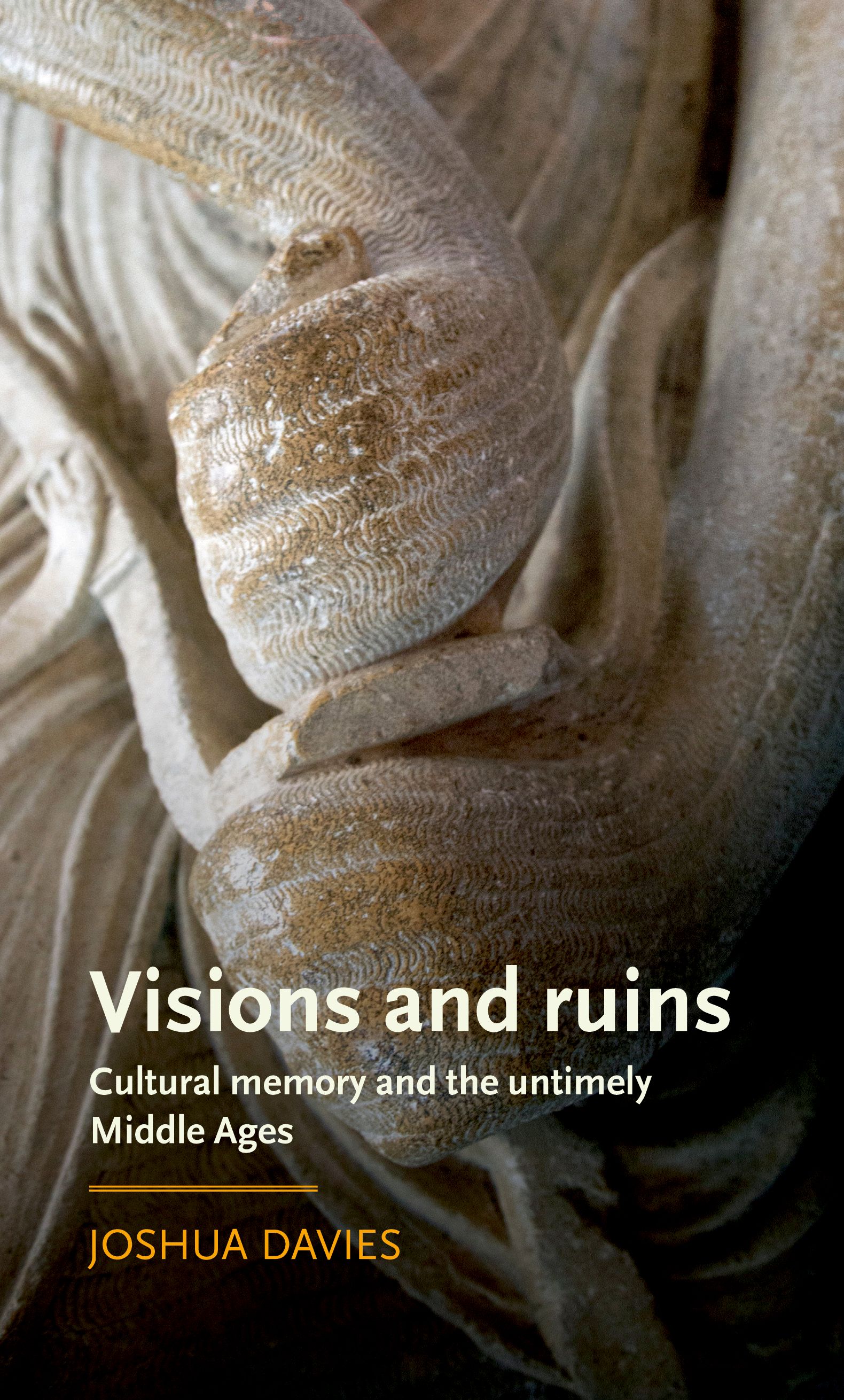
Visions and ruins
Visions and ruins explores the production of cultural memory in the Middle Ages and the uses the medieval past has been put to in modernity. Working with texts in Old English, Middle English and Latin, as well as visual and material culture, it traces connections in time, place, language and media to explore the temporal complexities of cultural production and subject formation. The book interrogates critical, poetic, artistic and political archives to reveal exchanges of cultural energy and influence between past and present, offering new ways of knowing the medieval past and the contemporary moment.
eBook

Western educational historiography and the institutionalization of normal schools in modern China (1901–1944)
PurposeThis paper traces the incorporation of western educational histories in the development of normal-school curricula during the late Qing Dynasty and the Republic of China (1901–1944). It uses publication networks to show how the study of comparative educational history facilitated the international circulation of knowledge in the teaching profession, and how the “uses” of educational history were shaped by larger geopolitical forces.Design/methodology/approachThis paper analyzes the international exchange of texts between normal schools in China and Japan and, subsequently, between normal schools in China and the United States. A database of 107 publications in the field of western educational history that were adopted in China reveals specific patterns of textual citation, cross-reference, and canon-formation in the field of educational historiography.FindingsWith conclusions derived from a combination of social network analysis and clustering analysis, this paper identifies three broad stages in China's development of normal-school curricula in comparative educational history: “Japan as Teacher,” “transitional period” and “America as Teacher.”Research limitations/implicationsStatistical analysis can reveal citation and reference patterns but not readers' understanding of the deeper meaning of texts – in this case, textbooks on the subject of western educational history. In addition, the types of publications analyzed in this study are relatively limited, the articles on the history of education in journals have not become the main objects of this study.Originality/valueThis paper uses both quantitative and qualitative methods to uncover the transnational circulation of knowledge in the field of comparative educational history during its formative period in China.
Journal Article

City of beasts
This book explores the role of animals – horses, cattle, sheep, pigs and dogs – in shaping Georgian London. Moving away from the philosophical, fictional and humanitarian sources used by previous animal studies, it focuses on evidence of tangible, dung-bespattered interactions between real people and animals, drawn from legal, parish, commercial, newspaper and private records.This approach opens up new perspectives on unfamiliar or misunderstood metropolitan spaces, activities, social types, relationships and cultural developments. Ultimately, the book challenges traditional assumptions about the industrial, agricultural and consumer revolutions, as well as key aspects of the city’s culture, social relations and physical development. It will be stimulating reading for students and professional scholars of urban, social, economic, agricultural, industrial, architectural and environmental history.
eBook

Are “the Natives” Educable?
This article explores how geography textbooks and missionary stories were used to persuade Dutch primary schoolchildren of the moral righteousness of the Ethical Policy for the Dutch East Indies between 1890 and 1910. Educative discourses targeting Dutch children were instrumentalized in order to recruit the next generation of missionaries, colonial administrators, and overseas entrepreneurs. To achieve this aim, they dwelt at length on the opportunities for and constraints on uplifting indigenous children in the Indies. These narratives all convey the message that Indies children, though certainly capable of improvement, would never attain the same level of civilization and moral integrity as their Dutch counterparts.
Journal Article
Paths of fire
Technology, perhaps the most salient feature of our time, affects everything from jobs to international law yet ranks among the most unpredictable facets of human life. Here Robert McC. Adams, renowned anthropologist and Secretary Emeritus of the Smithsonian Institution, builds a new approach to understanding the circumstances that drive technological change, stressing its episodic, irregular nature. The result is nothing less than a sweeping history of technological transformation from ancient times until now. Rare in antiquity, the bursts of innovations that mark the advance of technology have gradually accelerated and now have become an almost continuous feature of our culture. Repeatedly shifting in direction, this path has been shaped by a host of interacting social, cultural, and scientific forces rather than any deterministic logic. Thus future technological developments, Adams maintains, are predictable only over the very short term.Adams's account highlights Britain and the United States from early modern times onward. Locating the roots of the Industrial Revolution in British economic and social institutions, he goes on to consider the new forms of enterprise in which it was embodied and its loss of momentum in the later nineteenth century. He then turns to the early United States, whose path toward industrialization initially involved considerable \"technology transfer\" from Britain. Propelled by the advent of mass production, world industrial leadership passed to the United States around the end of the nineteenth century. Government-supported research and development, guided partly by military interests, helped secure this leadership.Today, as Adams shows, we find ourselves in a profoundly changed era. The United States has led the way to a strikingly new multinational pattern of opportunity and risk, where technological primacy can no longer be credited to any single nation. This recent trend places even more responsibility on the state to establish policies that will keep markets open for its companies and make its industries more competitive. Adams concludes with an argument for active government support of science and technology research that should be read by anyone interested in America's ability to compete globally.
eBook

Around the world in 80 picture books: Teaching ancient civilizations through text sets
The purpose of this article is to introduce text sets of picture books that address 10 ancient civilizations commonly taught in middle school and also offer instructional strategies that could be used for critical and multicultural literacy exploration. Beginning with discussion of the importance of picture books and text sets in the middle school classroom, the article highlights the importance of reading pictures along with words. Additionally, this article showcases 10 ancient civilizations by providing picture book titles that will engage students and concludes by sharing literacy strategies and reflection that will assist social studies teachers in implementing the various text sets described throughout.
Journal Article
Teaching National Identity and Alterity
The swift and profound transformations in technology and industry that the United States began to experience in the late 1800s manifested themselves in school textbooks, which presented different patterns of race, ethnicity, and otherness. They also displayed concepts like national identity, exceptionalism, and the superiority of Euro-American civilization. This article aims to demonstrate, via an analysis of two textbooks, how world geography was taught to children in primary schools in nineteenth century America. It shows that the development of American identity coincided with the emergence of the realm of the “other,” that is, with the intensification of racial attitudes and prejudices, some of which were to persist well into the twentieth century.
Journal Article