
Catalogue Search | MBRL


Are you sure you want to remove the book from the shelf?

{{itemTitle}}
944
result(s) for
"Civilization Manuscripts."
Sort by:

From codicology to technology : Islamic manuscripts and their place in scholarship
Long description: Islamic manuscripts are voices from the past, revealing scholarly debates and networks, as well as aspects of daily life. They allow us to witness the transmission of knowledge and economic and cultural exchanges of centuries gone by. The present articles mirror this variety of aspects involved when dealing with Islamic manuscripts, and emphasize their importance as sources for our knowledge of history. The articles cover research on single manuscripts, as well as collections, the problems of editing, as well as cataloguing. New technologies have extended the possibilities of preserving and presenting manuscripts – accessible online, digitised and catalogued, they serve an international research community and become a worldwide cultural heritage.
Biographical note: Stefanie Brinkmann is lecturer at the Institute of Oriental Studies at Leipzig University, Germany. She is active as team member of projects on Islamic manuscripts held at Leipzig University Library. Educated in Arabic and Persian Studies, as well as Italian Philology, she holds a PhD in Arabic Studies.
Beate Wiesmueller has been research associate in projects on cataloguing Islamic manuscripts and Oriental rare books. Since 2006 she is research associate in Leipzig for projects on Islamic manuscripts. She has authored several publications on Oriental collections and holds a M.A. in Islamic Studies, English Philology and Comparative Religious Studies.
eBook


Arabic literature of Africa. Volume IV, Writings of Western Sudanic Africa
This volume of Arabic literature of Africa deals with the scholarly and literary production of authors from Mali, Senegal, Guinea, Niger, and Ghana, from earliest times to 2002.
eBook

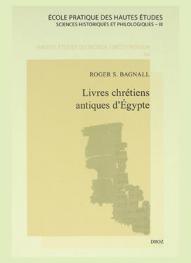


The pharaoh's treasure : the origin of paper and the rise of Western civilization
For our entire history, humans have always searched for new ways to share information. This innate compulsion led to the origin of writing on the rock walls of caves and coffin lids or carving on tablets. But it was with the advent of papyrus paper when the ability to record and transmit information exploded, allowing for an exchanging of ideas from the banks of the Nile throughout the Mediterranean--and the civilized world--for the first time in human history. In The Pharaoh's Treasure, John Gaudet looks at this pivotal transition to papyrus paper, which would become the most commonly used information medium in the world for more than 4,000 years. Far from fragile, papyrus paper is an especially durable writing surface; papyrus books and documents in ancient and medieval times had a usable life of hundreds of years, and this durability has allowed items like the famous Nag Hammadi codices from the third and fourth century to survive. The story of this material that was prized by both scholars and kings reveals how papyrus paper is more than a relic of our ancient past, but a key to understanding how ideas and information shaped humanity in the ancient and early modern world.
Book