
Catalogue Search | MBRL


Are you sure you want to remove the book from the shelf?

{{itemTitle}}
646
result(s) for
"Civilization crisis"
Sort by:


What Goes Around Comes Around: From the Coloniality of Power to the Crisis of Civilization
This article combines world-systems, decolonial, eco-feminist and post-human ecological approaches to deconstruct the planetary crisis of the hegemonic civilization. Underpinned by anthropocentric, androcentric, hetero-patriarchal, Euro/Western-centric, modern/colonial and capitalist systems of power, this civilization causes devastating socioecological effects. Globalized through (neo)colonialism/(neo)imperialism, it has subjugated the rural under the urban and the Global South under the North, becoming globally hegemonic. Through the coloniality of power hegemonic conceptions of progress, growth, development and modernity have been spread, procuring the loyalty of semi-peripheral and peripheral regimes into a civilizational obsession with endless accumulation based on the “mastery of nature.” Most “postcolonial” elites, especially across “emerging economies,” have not broken with this coloniality. They often reproduce govern-mentalities aimed at “catching-up” with, cloning, emulating, imitating or conforming to hegemonic models enacted in the North’s metropolitan cores. Overcoming this crisis requires not only a critique of neoliberal capitalist modernity, but a world-systemic transformation towards ecosufficient lifeways based on indigenous, eco-feminist, and post-human alternatives.
Journal Article

Globalizing cultures : theories, paradigms, actions
\"With the crisis of the global capitalist economy the topic of global culture is regaining its importance and needs to be revisited from both theoretical and practical standpoints. How do we make sense of this rapid flow of global consumer culture across national borders? What is the role of corporations, governments, ONG and social movements in shaping the terms of these flows? How do these flows of money, people, culture, goods and services work in practice? How do these flows affect the lives of the majority of regular people consuming and producing in the global marketplace? Taking an interdisciplinary approach, this volume examines the way cultures and individuals oppose, resist and re-center globalization. Contributors are: Gwen I. Alexis, Andrea Borghini, Cory Blad, Jack Bratich, Enrico Campo, Rekha Datta, Ricardo A. Dello Buono, Peter Kivisto, Vincenzo Mele, Mihaela Moscaliuc, Nancy Naples, Ino Rossi,Victoria Reyes, Saliba Sarsar, Manal Stephan, Karen Schmelzkopf, and Marina Vujnovic\"--Provided by publisher.
Book

Democratic Peace or Clash of Civilizations? Target States and Support for War in Britain and the United States
Research on public support for war shows that citizens are responsive to various aspects of strategic context. Less attention has been paid to the core characteristics of the target state. In this comparative study we report survey experiments manipulating two such characteristics, regime type and dominant faith, to test whether the “democratic peace” and the “clash of civilizations” theses are reflected in U.S. and British public opinion. The basic findings show small differences across the two cases: both publics were somewhat more inclined to use force against dictatorships than against democracies and against Islamic than against Christian countries. Respondent religion played no moderating role in Britain: Christians and nonbelievers were alike readier to attack Islamic states. However, in the United States, the dominant faith effect was driven entirely by Christians. Together, our results imply that public judgments are driven as much by images and identities as by strategic calculations of threat.
Journal Article

Descentrando lo material: mapeando el contenido espiritual en los discursos latinoamericanos de transición civilizatoria. ¿La demanda de una relación más sofisticada?
Este artículo analiza los resultados de una investigación sobre el contenido espiritual en el campo de los discursos Latinoamericanos de transición civilizatoria, con un énfasis en las narrativas intelectuales. En primer lugar, presenta el marco conceptual y analítico, basado en la interrelación entre los conceptos de civilización, contenido espiritual y dinámicas de transición. En segundo lugar, explica el marco metodológico, centrado en un estudio de corpus de texto, el análisis de las estructuras narrativas y argumentativas en una muestra, y un análisis semántico fino de citaciones. Luego, presenta el resultado del análisis de las estructuras narrativas y argumentativas, identificando las cinco principales narrativas del campo, y sus variantes internas: la narrativa Tecno-ambiental, la narrativa Biosocial, la narrativa Eco-social, la narrativa Relacional-comunal y la narrativa Civilizatorio-indígena. Basado en el análisis semántico fino, presenta una tipología inicial sobre la variedad de formas de acoplamiento espiritual y material, identificado ocho tipos, asociados a su vez a las diferentes narrativas y variantes: Diferenciador-secular (ds), Laicismo-progresista (ls), Compleja-cósmica (cc), Compleja-transformativa (ct), Relacional-pluriversal (rp), Relacional-reflexiva (rr), Sistémico-material (sm) y Natural-esencial (ne). Esta tipología es mapeada de acuerdo con sus grados de coherencia material/espiritual, así como de resistencia, reacción y resonancia en cuanto dinámicas de transición, reflejando que los contenidos que presentarían un grado mayor de coherencia coinciden con aquellos que presentan grados más intensos de resonancia. Finalmente, complementa estos pasos con un análisis comprehensivo de la semántica novedosa relevada, discutiendo sobre sus implicancias tanto para el conocimiento para las transiciones, así como para la teoría sociológica. Junto con dar cuenta de la presencia relevante de un contenido espiritual en estas narrativas, el articulo concluye analizando las maneras más sofisticadas de visualizar la relación entre lo material y lo espiritual que estarían demandando frente a los imperativos de la crisis socio-ecológica actual, y de la misma modernidad.
Journal Article

Mariátegui and Dependency Theory
A review of the multiple approaches to dependency theory alongside some of the thoughts on dependency of José Carlos Mariátegui highlights the contributions that Mariátegui could make to the deepening of that theory and even the opening of new paths and the theoretical affinity to the work of later scholars. Reconstruction of Mariátegui’s and other critical approaches to capitalism, including the postdevelopmentalist, is an urgent task.
Una reseña del pensamiento dependentista desde sus múltiples aproximaciones, complementada con una revisión de varias intuiciones sobre la dependencia dejadas por José Carlos Mariátegui, hace resaltar los aportes que Mariátegui podría brindar para profundizar e incluso abrir nuevos senderos a las teorías de la dependencia. Una reconstrucción de las teorías tanto de Mariátegui como de otros referentes del pensamiento crítico al capitalismo, incluso en clave posdesarrollista, es una tarea urgente.
Journal Article
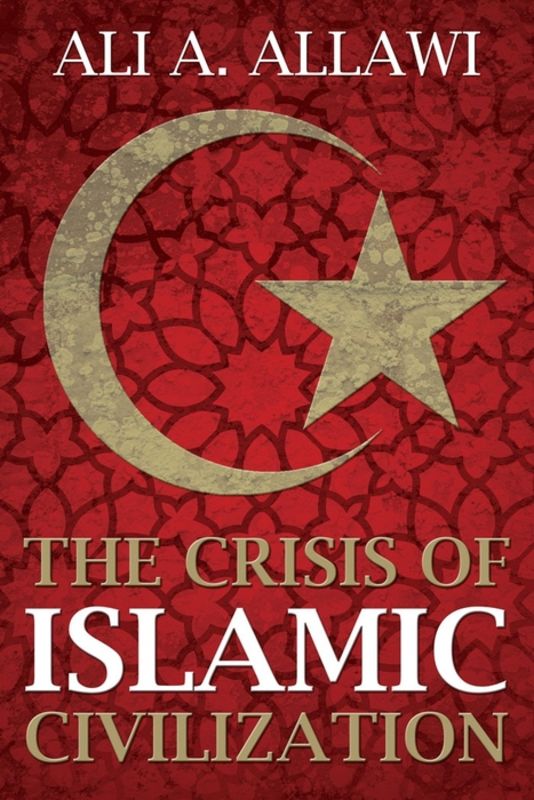
The Crisis of Islamic Civilization
Islam as a religion is central to the lives of over a billion people, but its outer expression as a distinctive civilization has been undergoing a monumental crisis. Buffeted by powerful adverse currents, Islamic civilization today is a shadow of its former self. The most disturbing and possibly fatal of these currents-the imperial expansion of the West into Muslim lands and the blast of modernity that accompanied it-are now compounded by a third giant wave, globalization.
These forces have increasingly tested Islam and Islamic civilization for validity, adaptability, and the ability to hold on to the loyalty of Muslims, says Ali A. Allawi in his provocative new book. While the faith has proved resilient in the face of these challenges, other aspects of Islamic civilization have atrophied or died, Allawi contends, and Islamic civilization is now undergoing its last crisis.
The book explores how Islamic civilization began to unravel under colonial rule, as its institutions, laws, and economies were often replaced by inadequate modern equivalents. Allawi also examines the backlash expressed through the increasing religiosity of Muslim societies and the spectacular rise of political Islam and its terrorist offshoots. Assessing the status of each of the building blocks of Islamic civilization, the author concludes that Islamic civilization cannot survive without the vital spirituality that underpinned it in the past. He identifies a key set of principles for moving forward, principles that will surprise some and anger others, yet clearly must be considered.
eBook

The Responsibilities of Social Work for Ecosocial Justice
The crisis of civilization we are experiencing unbalances the inter-relational, interdependency and intergenerational relationships of the planetary ecosystem, putting all species at risk. The current relationship between the unlimited economic development model and its social impacts in all regions, territories and communities is analyzed. These are more severe in the global South and the most impoverished populations, which often leads to conflicts, the deterioration of subsystems of life, and, as a result, movements of people. These challenges highlight the close interrelationship between social justice and issues of ecological injustice acting as a new source of inequality. The responsibility of social work, which is called on to incorporate the ecosocial perspective in all its areas and dimensions of practice, is becoming consolidated. To achieve this, five measures are proposed: expanding and strengthening the ethical and political basis of the profession; promoting the skilling-emancipatory models; cutting across all levels, methodologies and action areas; new fields of practice for ecosocial work; and introduction into social work curriculums. Social justice cannot be fully achieved without taking ecological justice into account.
Journal Article

Political utilisation of scholarly ideas: the ‘clash of civilisations’ vs. ‘Soft Power’ in US foreign policy
This article discusses how and under what conditions ideas coming from International Relations (IR) scholarship are used in foreign policy. We argue that the focus on policy relevance, which dominates the IR literature on the research-policy interface, is limited. Focusing instead on political utilisation highlights types and mechanisms of political impact, which are overlooked in studies on policy relevance. The fruitfulness of this change in focus is showed in an analysis of how Samuel Huntington's ‘clash of civilizations’ notion and Joseph Nye's ‘soft power’ concept have been used in US foreign policy. George W. Bush's explicit critique and reframing of ‘the clash’ thesis should not be interpreted as absence of impact, but as a significant symbolic utilisation, which has helped legitimate US foreign policy. Likewise, in the few instances in which the notion of ‘soft power’ has been used explicitly, it has played a conceptual and symbolical rather than instrumental role. More generally, this article argues that accessible framing and paradigm compatibility are essential for political utilisation of ideas.
Journal Article

Déjà Vu All Over Again: A post-Cold War empirical analysis of Samuel Huntington's 'Clash of Civilizations' Theory
Many in the media have depicted conflicts between the Western and Muslim worlds as a 'Clash of Civilizations' (CoC), and this has revived many of the questions surrounding the value of Samuel Huntington,s CoC theory. Previous empirical tests have analysed his theory using lowlevel conflict at the interstate level or violent conflict at the subnational level. The former have demonstrated little or no empirical support for his theory, while the results in the latter group are mixed.This analysis adds to previous empirical studies in a number of ways. One, the empirical models test CoC exclusively in the post-Cold War era. Two, along with examining the civilizational determinants of military interstate disputes, as prior studies have done, I include models that focus exclusively on interstate wars, because Huntington frequently points out that a CoC between states will lead to violent political conflict. Finally,this study directly tests Huntingtons civilizational 'fault lines' and Islamic 'bloody border' hypotheses. I include an extension and find that intracivilizational conflict is relatively rare in the post-Cold War era. Contrary to earlier analyses, the data show strong empirical support for CoC, particularly when focusing on violent international conflict in the post-Cold War era, and the results are robust when testing the hypotheses with alternative data on international crises.
Journal Article