
Catalogue Search | MBRL


Are you sure you want to remove the book from the shelf?

{{itemTitle}}
18
result(s) for
"Cladism"
Sort by:

Phytophthora: an ancient, historic, biologically and structurally cohesive and evolutionarily successful generic concept in need of preservation
The considerable economic and social impact of the oomycete genus
Phytophthora
is well known. In response to evidence that all downy mildews (DMs) reside phylogenetically within
Phytophthora
, rendering
Phytophthora
paraphyletic, a proposal has been made to split the genus into multiple new genera. We have reviewed the status of the genus and its relationship to the DMs. Despite a substantial increase in the number of described species and improvements in molecular phylogeny the
Phytophthora
clade structure has remained stable since first demonstrated in 2000. Currently some 200 species are distributed across twelve major clades in a relatively tight monophyletic cluster. In our assessment of 196 species for twenty morphological and behavioural criteria the clades show good biological cohesion. Saprotrophy, necrotrophy and hemi-biotrophy of woody and non-woody roots, stems and foliage occurs across the clades. Phylogenetically less related clades often show strong phenotypic and behavioural similarities and no one clade or group of clades shows the synapomorphies that might justify a unique generic status. We propose the clades arose from the migration and worldwide radiation ~ 140 Mya (million years ago) of an ancestral Gondwanan
Phytophthora
population, resulting in geographic isolation and clade divergence through drift on the diverging continents combined with adaptation to local hosts, climatic zones and habitats. The extraordinary flexibility of the genus may account for its global ‘success’. The 20 genera of the obligately biotrophic, angiosperm-foliage specialised DMs evolved from
Phytophthora
at least twice via convergent evolution, making the DMs as a group polyphyletic and
Phytophthora
paraphyletic in cladistic terms. The long phylogenetic branches of the DMs indicate this occurred rather rapidly, via paraphyletic evolutionary ‘jumps’. Such paraphyly is common in successful organisms. The proposal to divide
Phytophthora
appears more a device to address the issue of the convergent evolution of the DMs than the structure of
Phytophthora
per se. We consider it non-Darwinian, putting the emphasis on the emergent groups (the DMs) rather than the progenitor (
Phytophthora
) and ignoring the evolutionary processes that gave rise to the divergence. Further, the generic concept currently applied to the DMs is narrower than that between some closely related
Phytophthora
species. Considering the biological and structural cohesion of
Phytophthora
, its historic and social impacts and its importance in scientific communication and biosecurity protocol, we recommend that the current broad generic concept is retained by the scientific community.
Journal Article

Individual essentialism in biology
A few philosophers of biology have recently explicitly rejected Essential Membership, the doctrine that if an individual organism belongs to a taxon, particularly a species, it does so essentially. But philosophers of biology have not addressed the broader issue, much discussed by metaphysicians on the basis of modal intuitions, of what is essential to the organism. In this paper, I address that issue from a biological basis, arguing for the Kripkean view that an organism has a partly intrinsic, partly historical, essence. The arguments appeal to the demands of biological explanation and are analogous to arguments that I have given elsewhere that a taxon has a partly intrinsic, partly historical, essence. These conclusions about the essences of individuals and taxa yield an argument for Essential Membership. Finally, I cast doubt on LaPorte’s objection to that doctrine arising from the view that a species cannot survive having a daughter.
Journal Article
When is a cladist not a cladist?
The term “cladist” has distinct meanings in distinct contexts. Communication between philosophers, historians, and biologists has been hindered by different understandings of the term in various contexts. In this paper I trace historical and conceptual connections between several broadly distinct senses of the term “cladist”. I propose seven specific definitions that capture distinct contemporary uses. This serves to disambiguate some cases where the meaning is unclear, and will help resolve apparent disagreements that in fact result from conflicting understandings of the term.
Journal Article

Theoricity and homology: a reply to Roffe, Ginnobili, and Blanco
Roffe et al. (Hist Philos Life Sci, 2108. https://doi.org/10.1007/s40656018-0208-z) develop a rather creative line of response to Pearson's (Hist Philos Life Sci 32(4):475-492, 2010) critique of pattern cladisma response centering on a structuralist approach to the homology concept. In this brief reply I attempt to demonstrate, however, that Roffe, and Ginnobili, and Blanco subtly mis-characterize the target of Pearson's critique. The consequence of this mischaracterization is that even though the structuralist framework may help make sense of pattern cladism, it does not undermine Pearson's critique of it.
Journal Article

Monophyly and paraphyly: A discourse without end?
The ongoing discourse on monophyly versus paraphyly shows apparent lack of mutual understanding among schools of biological taxonomy. The principal reason behind the frozen disagreement is that these terms were redefined repeatedly. Although terminological discrepancy has long been recognized, relatively few attempts have been made to clarify this. As a consequence, contemporary taxonomy still uses three different definitions of monophyly, and therefore paraphyly. Resolution is possible provided that the terms (a) monophyly and paraphyly are used for diachronous classifications and phylogenetic trees; (b) monoclady and paraclady for synchronous classifications and cladograms of contemporaneous organisms; and (c) monothety and non-monothety for groups in classifications derived by the pattern cladistic approach.
Journal Article

From Taxonomy to Phylogenetics Life and Work of Willi Hennig
Willi Hennig (1913-1976), laid the fundaments of a 'scientific revolution' in Biological Systematics by his method called \"Phylogenetic Systematics\". The book describes the historical development of this 'scientific revolution', and highlights the life and the work of a 'cautious revolutioniser' in a Germany of dictatorship, war, and separation.
eBook
The Cladistic Race Concept: A Defense
Many contemporary race scholars reject the biological reality of race.Elsewhere I have argued that they have been too quick to do so. Part ofthe reason is that they have overlooked the possibility that races canbe defined cladistically. Since the publication of the cladistic raceconcept, a number of questions and objections have been raised. My aimin this paper is to address these objections.[PUBLICATION ABSTRACT]
Journal Article
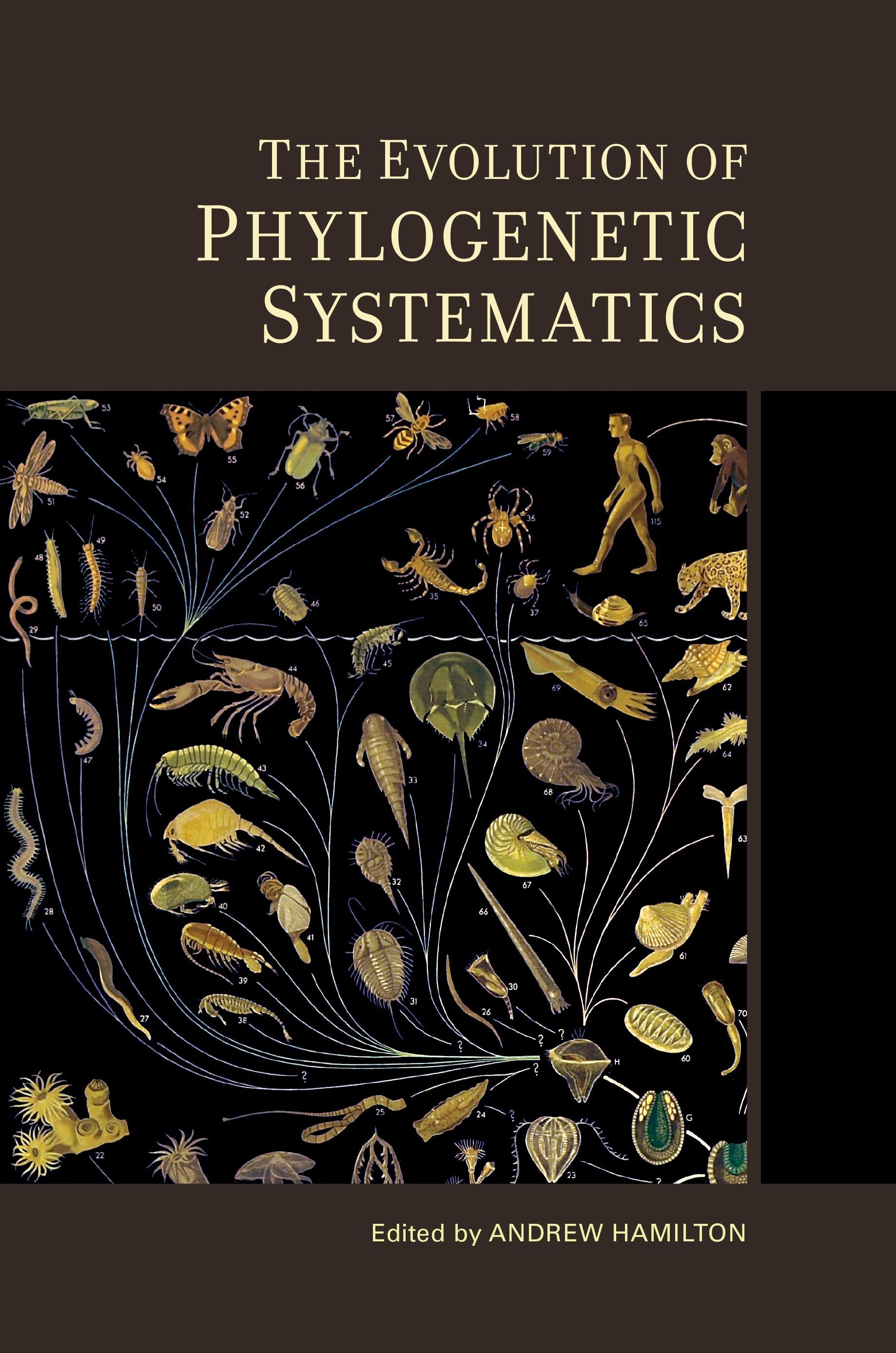
The evolution of phylogenetic systematics
The Evolution of Phylogenetic Systematics aims to make sense of the rise of phylogenetic systematics—its methods, its objects of study, and its theoretical foundations—with contributions from historians, philosophers, and biologists. This volume articulates an intellectual agenda for the study of systematics and taxonomy in a way that connects classification with larger historical themes in the biological sciences, including morphology, experimental and observational approaches, evolution, biogeography, debates over form and function, character transformation, development, and biodiversity. It aims to provide frameworks for answering the question: how did systematics become phylogenetic?
eBook
Pattern Cladism, Homology, and Theory-Neutrality
Pattern cladists purport to classify biological taxa in a way that is theory-neutral. The idea of a theory-neutral science is, however, philosophically problematic; and, while pattern cladists' commitment to theory-neutrality has been subject to scrutiny by both phylogenetic cladists and some philosophers, virtually no attention has been paid to the core issue of whether observation of patterns in nature is a means to theory-neutrality. This essay critically examines pattern cladists' claim to construct a theory-neutral cladistic taxonomy by relying on observation. Special attention is paid to the observations of patterns involving homologous traits.
Journal Article
Science as a Process
\"Legend is overdue for replacement, and an adequate replacement must attend to the process of science as carefully as Hull has done. I share his vision of a serious account of the social and intellectual dynamics of science that will avoid both the rosy blur of Legend and the facile charms of relativism. . . . Because of [Hull's] deep concern with the ways in which research is actually done, Science as a Process begins an important project in the study of science. It is one of a distinguished series of books, which Hull himself edits.\"—Philip Kitcher, Nature
\"In Science as a Process, [David Hull] argues that the tension between cooperation and competition is exactly what makes science so successful. . . . Hull takes an unusual approach to his subject. He applies the rules of evolution in nature to the evolution of science, arguing that the same kinds of forces responsible for shaping the rise and demise of species also act on the development of scientific ideas.\"—Natalie Angier, New York Times Book Review
\"By far the most professional and thorough case in favour of an evolutionary philosophy of science ever to have been made. It contains excellent short histories of evolutionary biology and of systematics (the science of classifying living things); an important and original account of modern systematic controversy; a counter-attack against the philosophical critics of evolutionary philosophy; social-psychological evidence, collected by Hull himself, to show that science does have the character demanded by his philosophy; and a philosophical analysis of evolution which is general enough to apply to both biological and historical change.\"—Mark Ridley, Times Literary Supplement
\"Hull is primarily interested in how social interactions within the scientific community can help or hinder the process by which new theories and techniques get accepted. . . . The claim that science is a process for selecting out the best new ideas is not a new one, but Hull tells us exactly how scientists go about it, and he is prepared to accept that at least to some extent, the social activities of the scientists promoting a new idea can affect its chances of being accepted.\"—Peter J. Bowler, Archives of Natural History
\"I have been doing philosophy of science now for twenty-five years, and whilst I would never have claimed that I knew everything, I felt that I had a really good handle on the nature of science, Again and again, Hull was able to show me just how incomplete my understanding was. . . . Moreover, [Science as a Process] is one of the most compulsively readable books that I have ever encountered.\"—Michael Ruse, Biology and Philosophy
eBook