
Catalogue Search | MBRL


Are you sure you want to remove the book from the shelf?

{{itemTitle}}
165,296
result(s) for
"Clarke"
Sort by:


Pattern of the past : studies in honour of David Clarke
David Clarke's work concentrated on the establishment of explicit theory and logic in archaeological method. The contributors to this volume demonstrate how vital was his inspiration and reflect its diversity.
Book

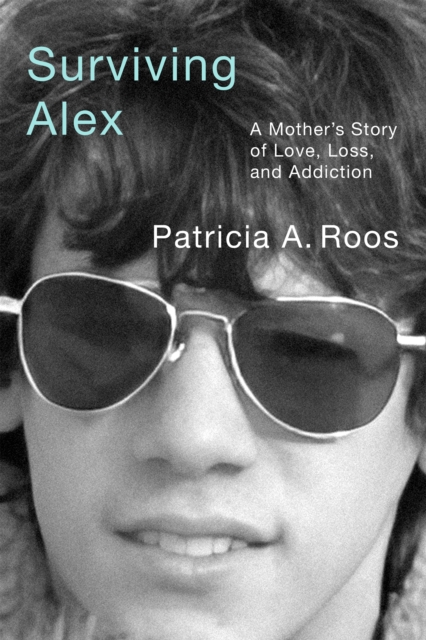
Surviving Alex
In 2015, Patricia Roos's twenty-five-year-old son Alex died of a heroin overdose. Turning her grief into action, Roos, a professor of sociology at Rutgers University, began to research the social factors and institutional failures that contributed to his death. Surviving Alex tells her moving story-and outlines the possibilities of a more compassionate and effective approach to addiction treatment. Weaving together a personal narrative and a sociological perspective, Surviving Alex movingly describes how even children from \"good families\" fall prey to addiction, and recounts the hellish toll it takes on families. Drawing from interviews with Alex's friends, family members, therapists, teachers, and police officers-as well as files from his stays in hospitals, rehab facilities, and jails-Roos paints a compelling portrait of a young man whose life veered between happiness, anxiety, success, and despair. And as she explores how a punitive system failed her son, she calls for a community of action that would improve care for substance users and reduce addiction, realigning public health policy to address the overdose crisis.
eBook

First contact and time travel : selected essays and short stories
\"This volume collects both essays and fictional material around two core topics in the long career of the Serbian writer, essayist, researcher, publisher and translator. The first topic - first contact - is chiefly represented by his comprehensive essay on \"The Theme of First Contact in the SF Works of Arthur C. Clarke\" and reflected on the literary level with his short stories \"The Bookshop\" and \"The Puzzle.\" Two shorter essays on the second topic - time travel in SF literature - introduce, amongst others, the well-known and fascinating mosaic novel Time Gifts, which skillfully explores the more literary side of the notions of past, present and future. In the annotations the author provides insights into his take on the subjects presented.\" -- Provided by publisher.
BOOK
Leibniz & Clarke : a study of their correspondence
The correspondence between Leibniz and Samuel Clarke was the most influential philosophical exchange of the eighteenth century, and indeed one of the most significant such exchanges in the history of philosophy. Carried out in 1715 and 1716, the debate focused on the clash between Newtonian and Leibnizian world systems, involving disputes in physics, theology, and metaphysics. The letters ranged over an extraordinary array of topics, including divine immensity and eternity, the relation of God to the world, free will, gravitation, the existence of atoms and the void, and the size of the universe. This penetrating book is the first to offer a comprehensive overview and commentary on the Leibniz-Clarke correspondence. Building his narrative around general subjects covered in the exchange--God, the soul, space and time, miracles and nature, matter and force--Ezio Vailati devotes special attention to a question crucial for Leibniz and Clarke alike. Both philosophers, worried by the advance of naturalism and its consequences for morality, devised complex systems to counter naturalism and reinforce natural religion. However, they not only deeply disagreed on how to answer the naturalist threat, but they ended up seeing in each other's views the germs of naturalism itself. Vailati rigorously tracks the twists and turns of this argument, shedding important new light on a critical moment in modern philosophy. Lucid, taut, and energetically written, this book not only examines the Leibniz-Clarke debate in unprecedented depth but also situates the views advanced by the two men in the context of their principal writings. An invaluable reference to a fascinating exchange of ideas, Leibniz and Clarke makes vital reading for philosophers and historians of science and theology.
eBook

James Clarke Hook : painter of the sea
Juliet McMaster tracks the life and career of the brilliant yet underappreciated Victorian painter, from his rigorous training at the Royal Academy Schools, his travelling studentship in Florence and Venice, and his work as a historical painter, to the discovery of his métier as an inspired painter of contemporary rural and coastal scenes.
Book

A worked example of Braun and Clarke’s approach to reflexive thematic analysis
Since the publication of their inaugural paper on the topic in 2006, Braun and Clarke’s approach has arguably become one of the most thoroughly delineated methods of conducting thematic analysis (TA). However, confusion persists as to how to implement this specific approach to TA appropriately. The authors themselves have identified that many researchers who purport to adhere to this approach—and who reference their work as such—fail to adhere fully to the principles of ‘reflexive thematic analysis’ (RTA). Over the course of numerous publications, Braun and Clarke have elaborated significantly upon the constitution of RTA and attempted to clarify numerous misconceptions that they have found in the literature. This paper will offer a worked example of Braun and Clarke’s contemporary approach to reflexive thematic analysis with the aim of helping to dispel some of the confusion regarding the position of RTA among the numerous existing typologies of TA. While the data used in the worked example has been garnered from health and wellbeing education research and was examined to ascertain educators’ attitudes regarding such, the example offered of how to implement the RTA would be easily transferable to many other contexts and research topics.
Journal Article