
Catalogue Search | MBRL


Are you sure you want to remove the book from the shelf?

{{itemTitle}}
70
result(s) for
"Class of 1940"
Sort by:

What is water? : the history of a modern abstraction
A history of the modern concept of water that traces how a scientific abstraction has helped to produce a global crisis.
eBook

The political philosophy of George Washington
George Washington is revered as the father of his country, a clever and skilled general, and a man of restrained principle—but not as a political thinker. This short introduction to Washington's political philosophy reveals him as a thoughtful public intellectual who was well equipped to lead the young United States.
Though Washington left little explicit writing on political philosophy, Jeffry Morrison examines his key writings, actions, education, and political and professional lives. He finds that Washington held closely to a trinity of foundational principles—classical republicanism, British liberalism, and Protestant Christianity—with greater fidelity than many of the other founding fathers. In unearthing Washington's ideological growth, Morrison reveals the intellectual heritage of his political thought and shows how these beliefs motivated him to action.
This insightful, concise story makes clearer the complexities of the revolutionary era and shows how the first president's political ideas shaped governmental institutions and instantiated the nation's foundational principles.
eBook
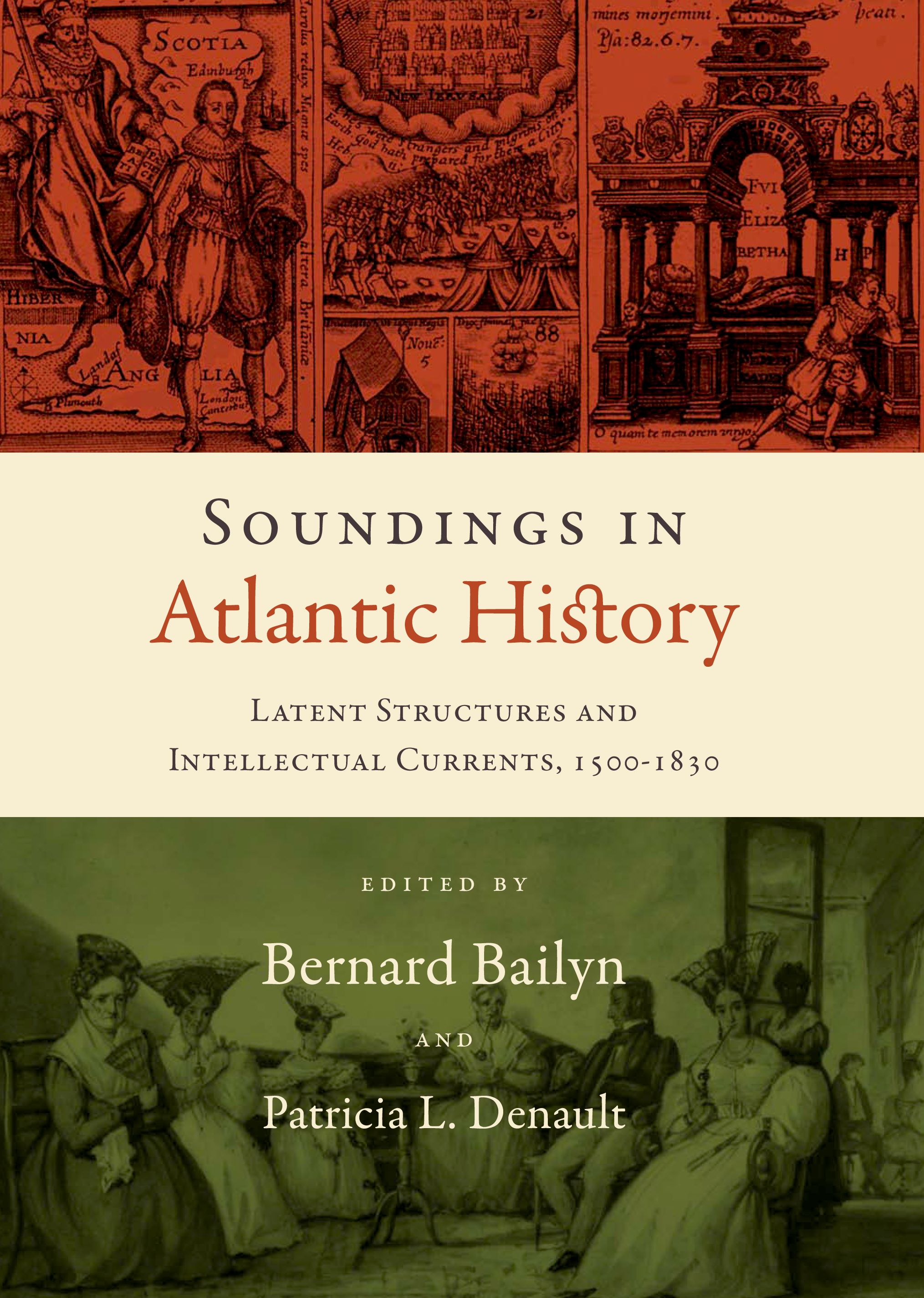
Soundings in Atlantic history : latent structures and intellectual currents, 1500-1830
These innovative essays probe the underlying unities that bound the early modern Atlantic world into a regional whole and trace some of the intellectual currents that flowed through the lives of the people of the four continents. Drawn together in a comprehensive Introduction by Bernard Bailyn, the essays include analyses of the climate and ecology that underlay the slave trade, pan-Atlantic networks of religion and of commerce, legal and illegal, inter-ethnic collaboration in the development of tropical medicine, science as a product of imperial relations, the Protestant international that linked Boston and pietist Germany, and the awareness and meaning of the Atlantic world in the mind of that preeminent intellectual and percipient observer, David Hume.
In his Introduction, Bailyn explains that the Atlantic world was never self-enclosed or isolated from the rest of the globe but suggests that experiences in the early modern Atlantic region were distinctive in ways that shaped the course of world history.
eBook
Two lives : Gertrude and Alice
Two Lives is Janet Malcolm's stunning portrait of a legendary couple: Gertrude Stein, the modernist master, and Alice B Toklas, the 'worker bee' who ministered to Stein's needs throughout their forty-year expatriate 'marriage'.
eBook

India in Africa, Africa in India : Indian Ocean cosmopolitanisms
India in Africa, Africa in India traces the longstanding interaction between these two regions, showing that the Indian Ocean world provides many examples of cultural flows that belie our understanding of globalization as a recent phenomenon. This region has had, and continues to have, an internal integrity that touches the lives of its citizens in their commerce, their cultural exchanges, and their concepts of each other and of themselves in the world. These connections have deep historical roots, and their dynamics are not attributable solely to the effects of European colonialism, modernity, or contemporary globalization -- although these forces have left their mark. The contributors to this interdisciplinary volume come from the fields of history, literature, dance, sociology, gender studies, and religion, making this collection unique in its recreation of an entire world too seldom considered as such.
eBook


First-in-human phase Ia study of the PI3Kα inhibitor CYH33 in patients with solid tumors
PIK3CA
mutations are highly prevalent in solid tumors. Targeting phosphatidylinositol 3-kinase α is therefore an attractive strategy for treating cancers harboring
PIK3CA
mutations. Here, we report the results from a phase Ia, open label, dose-escalation and -expansion study (NCT03544905) of CYH33, a highly selective PI3Kα inhibitor, in advanced solid tumors. The primary outcomes were the safety, tolerability, maximum tolerated dose (MTD) and recommended phase 2 dose (RP2D) of CYH33. The secondary outcomes included evaluation of pharmacokinetics, preliminary efficacy and changes in pharmacodynamic biomarkers in response to CYH33 treatment. The exploratory outcome was the relationship between the efficacy of CYH33 treatment and tumor biomarker status, including
PIK3CA
mutations. A total of 51 patients (19 in the dose escalation stage and 32 in the dose expansion stage) including 36 (70.6%) patients (4 in the dose escalation stage and 32 in the dose expansion stage) with
PIK3CA
mutations received CYH33 1–60 mg. The MTD of CYH33 was 40 mg once daily, which was also selected as the RP2D. The most common grade 3/4 treatment-related adverse events were hyperglycemia, rash, platelet count decreased, peripheral edema, and fatigue. Forty-two out of 51 patients were evaluable for response, the confirmed objective response rate was 11.9% (5/42). Among 36 patients harboring
PIK3CA
mutations, 28 patients were evaluable for response, the confirmed objective response rate was 14.3% (4/28). In conclusion, CYH33 exhibits a manageable safety profile and preliminary anti-tumor efficacy in solid tumors harboring
PIK3CA
mutations.
PIK3CA is a commonly mutated cancer-associated gene, making it an attractive therapeutic target. Here, the authors report the results of a first-in-human phase Ia trial to assess the safety and recommended phase II dose of CYH33, a PI3Kα inhibitor, in patients with advanced solid tumors.
Journal Article

Jacques Rancière, J. M. Coetzee, and Doing Things Oneself
Jacques Rancière and J. M. Coetzee, exact contemporaries, are both interested the worker’s access to aesthetic experience. In Rancière’s case, this involves looking backward to the fact that nineteenth-century workers were able to squeeze time from their working lives for art and literature. In Coetzee’s case, however, this problem of distributing aesthetic sensibility turns out to be a matter of looking forward in history, and of his own practice. How is he to write in a way that does not unfairly exempt him from work?
Journal Article
YUGOSLAVYA KOMÜNİST PARTİSİNİN ULUSAL SORUN ÜZERİNE İZLEDİĞİ POLİTİKALAR (1918-1941)
In this article, the policies of the Communist Party of Yugoslavia on the national question between 1918-1941 will be examined. After the establishment of the Kingdom of Serbs, Croats and Slovenes (the Kingdom of Yugoslavia since 1929), which united the Southern Slavs under a single state in 1918, the most important political conflict in the country was between the pro-centralist Serbs and the pro-federal Croats. When the Communist Party of Yugoslavia was founded in Belgrade in April 1919, it accepted the idea that Serbs, Croats and Slovenes formed a single Yugoslav nation, and also set a goal of overthrowing the Kingdom of Yugoslavia. After 1934, the communist party accepted the existence of Slovene, Croat and Serbian nations separately and adopted a political program for the establishment of a federal Yugoslav state on the basis of equality of nations. The decisions of the Comintern played a major role in changing the party's view on the national question. In this study, the transition process from the view of the existence of a single Yugoslav nation, which was adopted by the Communist Party of Yugoslavia when it was first established, to the view of federalist Yugoslavia, which recognizes the existence of different nations, will be explained. It will be argued also that the transformation of this ideological-political attitude was decisive to the establishment of Second Yugoslavia (1945-1991) as a federal state by the communists.
Journal Article