
Catalogue Search | MBRL


Are you sure you want to remove the book from the shelf?

{{itemTitle}}
3,154
result(s) for
"Class struggle"
Sort by:

Social class struggle as a Greek political discourse
This article delves into the construction of social class division in Greek political discourse. More specifically, the focus is on ‘ταξική πάλη’ (class struggle) as a discourse that has started being carved in Greek media since the current leftist government party, Syriza, won the election in 2015 for the first time in the country’s political history. Contrary to Syriza, which always frames its arguments on the basis of a divisive class fight discourse between the elitists and laypeople, New Democracy, the liberal and main oppositional party, tries to play down this discourse by advocating a more unifying and social class inclusive discourse. The analysis suggests that social class struggle is a theme framed within a wider shifting (anti)populist discourse constantly being negotiated linguistically in ironic ways among political elites. Both the government and opposition parties engage in tactical maneuvering of competing political discourses that, in different ways, articulate attachments to the ‘people’. The theoretical contribution of this study is the discursive theorization of social class struggle as a digitally constructed and politically relevant discourse in the context of Greek populism and its discontents.
Journal Article
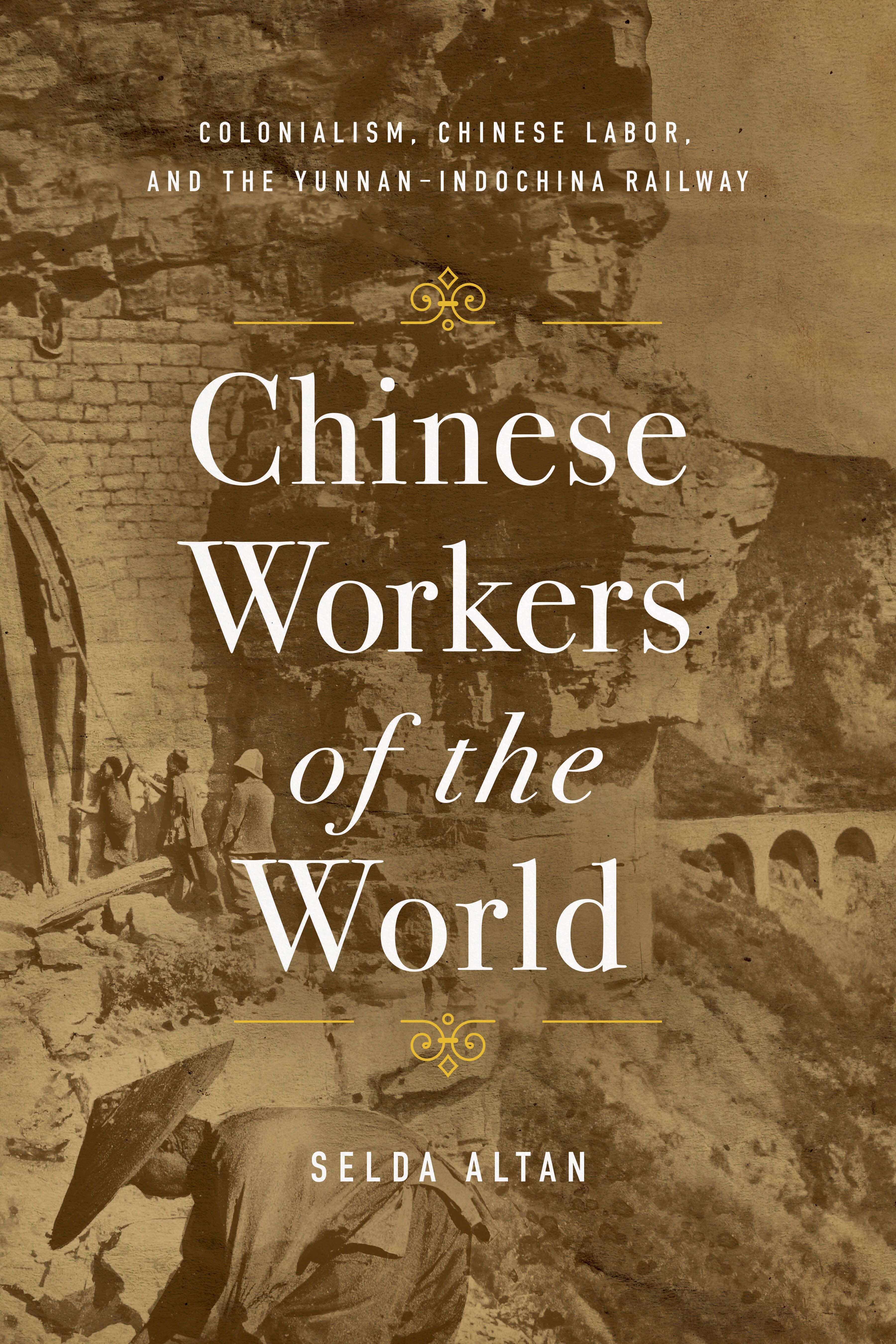
Chinese Workers of the World
Chinese workers helped build the modern world. They labored on New World plantations, worked in South African mines, and toiled through the construction of the Panama Canal, among many other projects. While most investigations of Chinese workers focus on migrant labor, Chinese Workers of the World explores Chinese labor under colonial regimes within China through an examination of the Yunnan-Indochina Railway, constructed between 1898–1910. The Yunnan railway—a French investment in imperial China during the age of \"railroad colonialism\"—connected French-colonized Indochina to Chinese markets with a promise of cross-border trade in tin, silk, tea, and opium. However, this ambitious project resulted in fiasco. Thousands of Chinese workers died during the horrid construction process, and costs exceeded original estimates by 74%. Drawing on Chinese, French, and British archival accounts of day-to-day worker struggles and labor conflicts along the railway, Selda Altan argues that long before the Chinese Communist Party defined Chinese workers as the vanguard of a revolutionary movement in the 1920s, the modern figure of the Chinese worker was born in the crosscurrents of empire and nation in the late nineteenth century. Yunnan railway workers contested the conditions of their employment with the knowledge of a globalizing capitalist market, fundamentally reshaping Chinese ideas of free labor, national sovereignty, and regional leadership in East and Southeast Asia.
eBook


Insurgencia obrera y represión en la Argentina de la década de 1970: la lucha de clases en la transformación de la acumulación de capital. Un análisis a partir de la lucha de los trabajadores automotrices
El artículo estudia el proceso de movilización y represión política que protagonizaron los trabajadores automotrices en Argentina entre 1970 y principios de la década de 1980, en el marco general del «ciclo internacional de lucha de clases». Y los analiza a la luz de su relación con el proceso de transformaciones que experimentó el proceso global de acumulación de capital, con epicentro en la crisis de 1972 a 1982, que resultó en cambios en la división internacional del trabajo. Se argumenta que las características particulares que desarrolló el proceso político en Argentina pueden explicarse por el modo específico en que participa en esta división internacional del trabajo.
Journal Article

Democracy and the Class Struggle
Why do societies today distribute political power more equally than before? Most scholars believe that this transition is explained by the rise of capitalism but have long disagreed about why it mattered. The author argues that dominant models fail to capture why capitalist development helps key actors win what they seek. Drawing on comparative and historical work, the author introduces a model of the democratic transition that centers on the concept of disruptive capacity. He collects data on employment structures for much of the modern period to study democratization over the same period. In cross-national regressions, the author finds evidence that the disruptive capacity of nonelites drives democratic gains, and the finding that landlord capacity stymies it is reproduced. Counterfactual exercises show that slightly more than half of the democracy gap between the developing and developed world can be explained by the fact that late development bolstered landlords while handicapping nonelites.
Journal Article

Old Aesthetics, New Ethics
The depiction of the class struggle features prominently in the American canon of the first half of the 20th century. However, the emphasis has been almost exclusively on prose fiction to the exclusion of the works of poets such as Claude McKay, one of the central figures of the early Harlem Renaissance and the leading figure among socially engaged English-speaking poets at the time. The article redresses this imbalance by drawing attention to McKay’s socially engaged sonnets, which helped to expand the horizons and culturally empower the exploited poor in America (and by extension the proletariat in England) to resist and overcome racist ideology in their common struggle for universal social justice. McKay makes use of a traditional, highly aestheticized sonnet form, while giving it a new ethical premise and fresh impetus.
Journal Article

Chess and Freedom
The tension between the game of chess as strictly regulated by rules and the idea of freedom can be traced in three radidal examples separated by media and different periods of the twentieth century. The first emphatic employment of the concept of freedom is in the title of a chess journal issued by the Communist opposition of the central German working-class chess organization at the end of the Weimar Republic. In the journal Frei Schach! the radical subsection of “Red Sports Unity” asserts its claim for supremacy, demanding revolutionary goals in the class struggle. But this journalistic appeal to freedom was countered by the use of the same concept by the moderate alternative central chess organisation, and soon even by the National Socialists suppressing both working-class organisations. In the cultural scene after the second world war there was a distant, strangely depoliticized echo of freedom in chess. In the Austrian avantgarde dramatist Wolfgang Bauer`s version of Ibsen`s modernist revision of classical drama in the play Ghosts there is a farcical use of everyday objects as a replacement of chess elements. They function as a postmodern parody of the conventional structures of a conversation play. Compared to such highly idiosyncratic ludic transformation of chess games, today`s digitalized chess in which the computer is the final arbiter makes the game more accessible to the masses. The surface democratic appeal in which average players can turn into critics of the chess elite is accompanied by the complete subjection to digitalisation on a late capitalist agenda. However, this does not completely deprive the traditional game of chess of its promise of playful enjoyment for an increasing number of people on a global scale.
Journal Article

Unstable universalities
How do we think about radical politics today, in the wake of the collapse of Marxist-Leninism and the triumph of neo-liberal capitalism? How should radical political theory respond to new challenges posed by globalisation, postmodernity, the ‘war on terror’ and the rise of religious fundamentalism? How are we to take account of the new social movements and political struggles appearing on the global horizon? In addressing these questions, this book explores the theme of universality and its place in radical political theory. It argues that both Marxist politics of class struggle and the postmodern politics of difference have reached their historical and political limits, and that what is needed is a new approach to universality, a new way of thinking about collective politics. By exploring various themes and ideas within poststructuralist and post-Marxist theory, the book develops a new approach to universality — one that has implications for politics today, particularly on questions of power, subjectivity, ethics and democracy. In so doing, it engages in debates with thinkers such as Laclau, Žižek, Badiou and Rancière over the future of radical politics. The book also applies theoretical insights to contemporary events such as the emergence of the anti-globalisation movement, the ‘war on terrorism’, the rise of anti-immigrant racism and the nihilistic violence that lurks at the margins of the political.
eBook
Nothing is Inevitable but Class Struggle: A Workerist Perspective on AI Regulation
AI systems are often portrayed in narratives that exaggerate their potential, either as a universal solution or as a looming disaster. Particularly in the workplace, AI is depicted as an unstoppable force that shapes an entirely novel labour process. Consequently, efforts to regulate its introduction and deployment are dismissed as futile or even regressive. This paper argues for a different approach. Firstly, it proposes engaging with AI within the framework of Fordism-Taylorism, reflecting capital's long-standing aspirations for labour intensification, opacity of decision making and separation between conception and execution. Secondly, drawing on recent workers' struggles, with a particular focus on the Efood platform in Greece, the paper illustrates how labour resistance can influence the deployment and regulation of AI. The case study of Efood highlights the collective actions taken by workers against AI-powered algorithmic management, demonstrating the potential for labour to contest and reshape the introduction of new technologies. In the concluding sections, a general outline of this perspective is provided as well as an analysis of how it can potentially tactically benefit from existing regulation, such as the AI Act.
Journal Article