
Catalogue Search | MBRL


Are you sure you want to remove the book from the shelf?

{{itemTitle}}
5,797
result(s) for
"Classical Archaeology"
Sort by:

The archaeology of the Holy Land : from the destruction of Solomon's Temple to the Muslim conquest
\"In the heart of the ancient Near East (modern Middle East) and at a crossroads between once mighty powers such as Assyria to the east and Egypt to the south is a tiny piece of land -- roughly the size of New Jersey -- that is as contested as it is sacred. One cannot even name this territory without sparking controversy. Originally called Canaan after its early inhabitants (the Canaanites), it has since been known by various names. To Jews this is Eretz-Israel (the Land of Israel), the Promised Land described by the Hebrew Bible as flowing with milk and honey. To Christians it is the Holy Land where Jesus Christ -- the messiah or anointed one -- was born, preached, and offered himself as the ultimate sacrifice. Under the Greeks and Romans, it was the province of Judea, a name which hearkened back to the biblical kingdom of Judah. After the Bar-Kokhba revolt ended in 135 C.E., Hadrian renamed the province Syria-Palestina, reviving the memory of the long-vanished kingdom of Philistia. Under early Islamic rule the military district (jund) of Filastin was part of the province of Greater Syria (Arabic Bilad al-Sham). In this book, the term Palestine is used to denote the area encompassing the modern state of Israel, the Hashemite kingdom of Jordan, and the Palestinian territories\"-- Provided by publisher.
Book

Documenting Ancient Sagalassos; Sagalassos Arkeolojisini Belgelemek
The methods, concepts and practices of KU Leuven’s Sagalassos Archaeological Sagalassos speaks to the imagination in more ways than one. The authentic and natural beauty of the site no doubt plays a role in that. The Sagalassos Project testifies to the fact that its core business, archaeology, also appeals to the imagination. Learning about the past is fascinating, for young and old alike. Curiosity unquestionably plays a role in this. Archaeologists, as any other scientist, are driven to really know about past human activities. As they leave no stone unturned in their endeavours, archaeologists also stimulate the curiosity of society. The public at large is not only interested in the results per se, but also wants to understand how knowledge about the past comes about. This volume gives the word to the archaeologists and other scientists of the Sagalassos Archaeological Research Project. They explain their ways, methods and concepts as they reconstruct and interpret the past of the archaeological site of Sagalassos and the surrounding study region. By bringing testimony to the broader discipline of archaeology, this book deserves to be read by scholars and students with an open interest in classical archaeology who wish to (re)discover some of the basics of the science and process. It will also be of interest to professionals involved with archaeologists and the wider interested public. Ebook available in Open Access. This publication is GPRC-labeled (Guaranteed Peer-Reviewed Content).
Contributors: Sam Cleymans (Gallo-Roman Museum Tongeren), Ebru Torun, Göze Üner and Özge Başağaç (independent architects), Rinse Willet (Radboud University) and Philip Bes (Österreichisches Archäologisches Institut), Fran Stroobants (Royal Library of Belgium), Dries Daems (KU Leuven) Johan Claeys (KU Leuven), Bas Beaujean (KU Leuven), Peter Talloen (Bilkent University), Ralf Vandam (Vrije Universiteit Brussel ), Patrick Willett (ARIT).
eBook

Traces of the past : classics between history and archaeology
\"What are we doing when we walk into an archaeological museum or onto an archaeological site? What do the objects and features we encounter in these unique places mean and, more specifically, how do they convey to us something about the beliefs and activities of formerly living humans? In short, how do visible remains and ruins in the present give meaning to the human past? Karen Bassi addresses these questions through detailed close readings of canonical works spanning the archaic to the classical periods of ancient Greek culture, showing how the past is constituted in descriptions of what narrators and characters see in their present context. She introduces the term protoarchaeological to refer to narratives that navigate the gap between linguistic representation and empirical observation--between words and things--in accessing and giving meaning to the past. Such narratives invite readers to view the past as a receding visual field and, in the process, to cross the disciplinary boundaries that divide literature, history, and archaeology. Aimed at classicists, literary scholars, ancient historians, cultural historians, and archaeological theorists, the book combines three areas of research: time as a feature of narrative structure in literary theory; the concept of 'the past itself' in the philosophy of history; and the ontological status of material objects in archaeological theory. Each of five central chapters explores how specific protoarchaeological narratives--from the fate of Zeus' stone in Hesiod's Theogony to the contest between words and objects in Aristophanes' Frogs--both expose and attempt to bridge this gap. Throughout, the book serves as a response to Herodotus' task in writing the Histories, namely, to ensure that 'the past deeds of men do not fade with time'\"-- Provided by publisher.
Book

In Pursuit of Ancient Pasts
The stories behind the acquisition of ancient antiquities are often as important as those that tell of their creation. This fascinating book provides a comprehensive account of the history and development of classical archaeology, explaining how and why artifacts have moved from foreign soil to collections around the world.As archaeologist Stephen Dyson shows, Greek and Roman archaeological study was closely intertwined with ideas about class and social structure; the rise of nationalism and later political ideologies such as fascism; and the physical and cultural development of most of the important art museums in Europe and the United States, whose prestige depended on their creation of collections of classical art. Accompanied by a discussion of the history of each of the major national traditions and their significant figures, this lively book shows how classical archaeology has influenced attitudes about areas as wide-ranging as tourism, nationalism, the role of the museum, and historicism in nineteenth- and twentieth-century art.
eBook
The sculptor's workshop
\"Carved marble was a major part of the economy of Roman cities. The material was supplied by local and regional quarries but little is known of the workshops in which the carving was carried out. The Sculptor's Workshop at Aphrodisias is a uniquely well-preserved facility of this kind supplied by a nearby local quarry. The workshop was located behind the Council House in the centre of town, and when excavated in 1967-1969 it contained remarkable remains from a high-end sculpture business. The monograph offers a complete publication of the archaeology of the workshop itself and of the finds - they include a set of stone-carving tools, a large quantity of sculpture in various states of completion, well-preserved statues (both portraits and mythological figures), and several practice pieces carved by apprentice sculptors as part of their training\"--Publisher's website.
Book
El tesoro de Regina Turdulorum (Casas de Reina, Badajoz)
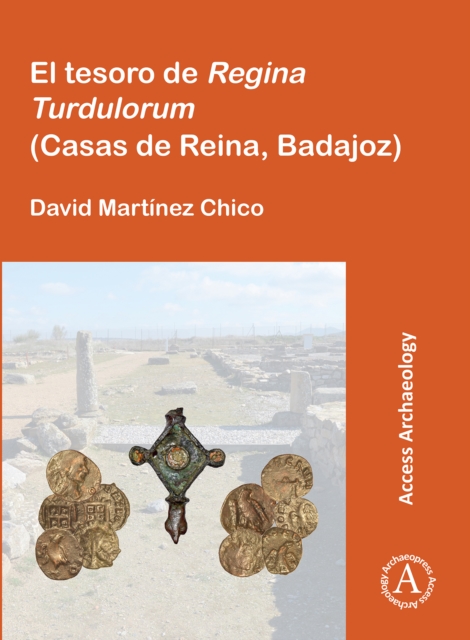
The Regina Turdulorum Hoard (Casas de Reina, Badajoz) was buried with 818 imitative antoniniani of Divo Claudio type, minted in copper. The vast majority of the coins bear the reverse legend CONSECRATIO. This figure makes the Regina Turdulorum hoard one of the most important in Spain and Portugal. In numismatic terms, the most common reverse type is the funeral pyre, as opposed to the eagle. In addition to this main group, there is a second group, where there are curious imitations that follow various prototypes for the manufacture of the reverse. The study of the posthumous coinage of Claudius II and his imitations represents one of the most complex tasks in ancient numismatics. The work is considerably complicated by the fact that they are highly copied coins, which means that regular issues are very difficult to distinguish from the imitations. In this sense, the hoard provides vital information for the western monetary circulation of the Roman Empire, contributing to the debate on Gallic and African imitations. It also opens the way to the hypothesis that Hispania may have been another centre for issuing Divo Claudio imitations. Although the latter remains to be proven, the tentative and open nature of this book provides the opportunity to open new lines of study in the hope that they will be resolved sooner rather than later.
eBook


The Archaeology of Late Bronze Age Interaction and Mobility at the Gates of Europe
Interaction and mobility have attracted much interest in research within scholarly fields as different as archaeology, history, and more broadly the humanities.Critically assessing some of the most widespread views on interaction and its social impact, this book proposes an innovative perspective which combines radical social theory and currently.
eBook

The Italic people of ancient Apulia : new evidence from pottery for workshops, markets, and customs
\"The focus of this book is on the Italic people of Apulia during the fourth century BC, when Italic culture seems to have reached its peak of affluence. Scholars have largely ignored these people and the region they inhabited. During the past several decades archaeologists have made significant progress in revealing the cultures of Apulia through excavations of habitation sites and un-plundered tombs, often published in Italian journals. This book makes the broad range of recent scholarship--from new excavations and contexts to archaeometric testing of production hypotheses to archaeological evidence for reconsidering painter attributions--available to English-speaking audiences. In it thirteen scholars from Italy, the United States, Great Britain, France, and Australia present targeted essays on aspects of the cultures of the Italic people of Apulia during the fourth century BC and the surrounding decades\"-- Provided by publisher.
Book

The 2003-2007 Excavations in the Late Roman Fort at Yotvata
No detailed description available for \"The 2003-2007 Excavations in the Late Roman Fort at Yotvata\".
eBook