
Catalogue Search | MBRL


Are you sure you want to remove the book from the shelf?

{{itemTitle}}
2,796
result(s) for
"Classical antiquities"
Sort by:


Art and antiquity in the Netherlands and Britain : the vernacular arcadia of Franciscus Junius (1591-1677)
How did the classical tradition survive on the North Sea shores? This book explores the writings of Franciscus Junius that paired scholarship to painter's practice in the seventeenth century. They illuminate the reception of antiquity and the creation of an Anglo-Dutch artistic Arcadia.
eBook
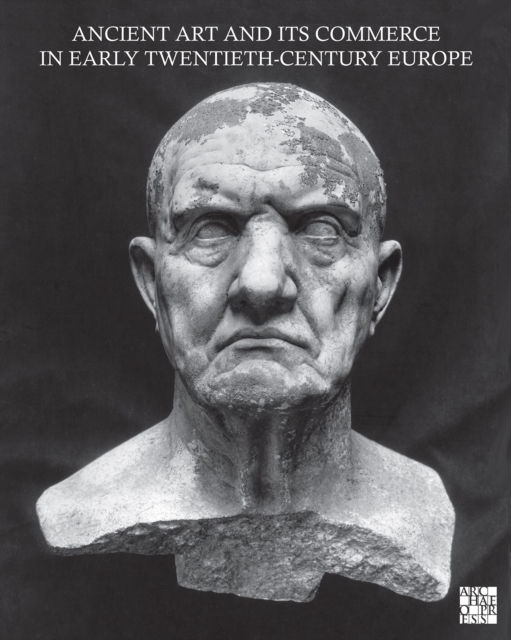
Ancient Art and its Commerce in Early Twentieth-Century Europe
At the beginning of the 20th century, changes in taste and expectations of the public led private museums in Europe and North America to embark on large-scale acquisition of archaeological objects from the Mediterranean and the Near East.John Marshall (1862-1928) was an antiquities expert hired by the Metropolitan Museum of New York as purchasing agent in Europe on behalf of its Department of Classical Art in between 1906 and 1928. His mission was to secure for the Metropolitan a comprehensive collection of antiquities of high aesthetic standards and historical significance.During his agency, John Marshall was an attentive observer of the antiquities trade. Photographs and annotations on more than a thousand ancient objects circulating on the art market at that time have survived in his personal archive, later bequeathed to the British School at Rome and the Ashmolean Library at Oxford. This unpublished and very valuable resource shines light on the secretive world of art dealing and provides information on the history of many masterpieces of ancient and post-ancient art now in the largest museums of Europe and North America. Using information gathered by John Marshall, this book delineates how the trade of art and archaeological objects has impacted the perception of the Classical past in the modern Western world.
eBook


In Pursuit of Ancient Pasts
The stories behind the acquisition of ancient antiquities are often as important as those that tell of their creation. This fascinating book provides a comprehensive account of the history and development of classical archaeology, explaining how and why artifacts have moved from foreign soil to collections around the world.As archaeologist Stephen Dyson shows, Greek and Roman archaeological study was closely intertwined with ideas about class and social structure; the rise of nationalism and later political ideologies such as fascism; and the physical and cultural development of most of the important art museums in Europe and the United States, whose prestige depended on their creation of collections of classical art. Accompanied by a discussion of the history of each of the major national traditions and their significant figures, this lively book shows how classical archaeology has influenced attitudes about areas as wide-ranging as tourism, nationalism, the role of the museum, and historicism in nineteenth- and twentieth-century art.
eBook

Ambitious Antiquities, Famous Forebears
This monograph studies the constructions of 'impressive' historical descent manufactured to create 'national', regional, or local antiquities in early modern Europe (1500-1700), especially the Netherlands. This was a period characterised by important political changes and therefore by an increased need for legitimation; a need which was met using historical claims. Literature, scholarship, art and architecture were pivotal media that were used to furnish evidence of the impressively old lineage of states, regions or families. These claims related not only to Classical antiquity (in the generally-known sense) but also to other periods that were regarded as periods of antiquity, such as the chivalric age. The authors of this volume analyse these intriguing early modern constructions of appropriate \"antiquities\" and investigate the ways in which they were applied in political, intellectual and artistic contexts in Europe, especially in the Northern Low Countries. This book is a revised and augmented translation of Oudheid als ambitie: De zoektocht naar een passend verleden, 1400-1700 (Nijmegen: Vantilt, 2017).
eBook


Two Cemeteries at Takhtidziri (Georgia)
Two Cemeteries at Takhtidziri (Georgia): Late Achaemenid-Early
Hellenistic and Late Hellenistic-Early Roman publishes
excavations at two cemeteries located near to the village of
Takhtidziri in Shida Kartli, the central region of Georgia. The
first features Late Achaemenid-Early Hellenistic graves belonging
to the representatives of the ruling family of a minor
territorial-administrative unit, part of the only state that the
Persians (Achaemenids) encountered in the Caucasus and which was
referred to as Kolkhida by the Greeks. The other cemetery dates to
the 1st century BC-1st century AD and was used by non-elite members
of the community. The grave goods recovered through excavation are
diverse and point to the fact that the kingdom of Kartli (Caucasian
Iberia) was involved in international trade and economic relations
in the Late Hellenistic and Early Roman period.
eBook