
Catalogue Search | MBRL


Are you sure you want to remove the book from the shelf?

{{itemTitle}}
10,082
result(s) for
"Classical education"
Sort by:

Teaching classics with technology
\"The impact of ICT on the teaching of classical languages, literature and culture has not until now been extensively described and evaluated. Nevertheless, educational technology has made a huge difference to the ways in which Classics is taught at junior, senior and college level. The book brings together ten major approaches to the use of technology in the classroom and presents them for a wide, international audience. It thus forms a record of current and developing practice, promotes further discussion and use among practitioners (teachers, learners and trainers) and offers suggestions for changes in pedagogical practices in the teaching of Classics for the better. The many examples of practice from both UK and US perspectives are applicable to countries throughout the world where Classics is being taught. The more traditional curricula of high-school education in the UK and Europe are drawing more and more on edutech, whereas educational jurisdictions in the US are increasingly expecting high-school students to use ICT in all lessons, with some actively dissuading schools from using traditional printed textbooks. This book presents US teachers with a vital resource as they adapt to this use of educational technology in Classics teaching. This is no less pertinent at university level, in the UK and US, where pedagogy tends to follow traditionalist paradigms: this book offers lecturers frameworks for understanding and assimilating the models of teaching and learning which are prevalent in schools and experienced by their students\"-- Provided by publisher.
Book

The Battle of the Classics
The Battle of the Classics criticizes contemporary apologetics for the humanities and presents a historically informed case for a decidedly different approach to rescuing the humanistic disciplines in American higher education. It uses the so-called Battle of the Classics of the late nineteenth and early twentieth centuries as a springboard for crafting a novel foundation for the humanistic tradition. The book argues that current defences of the humanities rely on the humanistic disciplines as inculcators of certain poorly defined skills such as “critical thinking.” It finds fault with this conventional approach, arguing that humanists cannot hope to save their disciplines without arguing in favor of particular humanities content. As the lackluster defenses of the classical humanities in the late nineteenth century help prove, instrumental apologetics are bound to fail. All the same, the book shows that proponents of the Great Books favor a curriculum that is too intellectually narrow for the twenty-first century. The Battle of the Classics thus lays out a substance-based approach to undergraduate education that will revive the humanities while steering clear of overreliance on the Western canon. The book envisions a global humanities based on the examination of masterworks from manifold cultures as the heart of an intellectually and morally sound education.
eBook

Classical humanism and the challenge of modernity : debates on classical education in 19th-century Germany
This book challenges the common view that classical education in 19th-century Germany was dominated by a progressive ideal called 'neohumanism'. The prevailing ideal of education at the German Gymnasien was emphatically traditional and is best described as classical humanism. Moreover, this 19th-century classical humanism dynamically related to modern society and should therefore be seen as the continuation of a living tradition.
Book
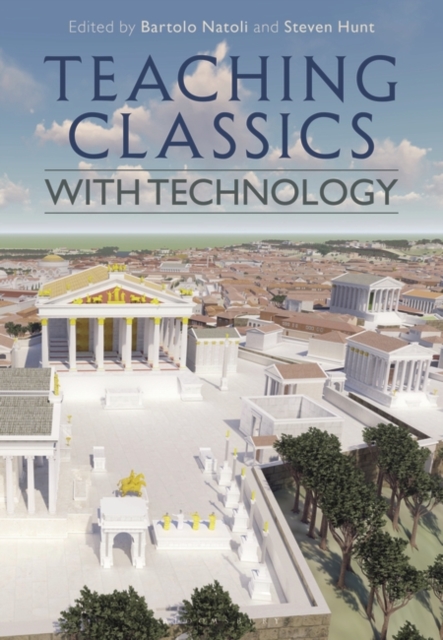
Teaching Classics with Technology
The impact of ICT on the teaching of classical languages, literature and culture has not until now been extensively described and evaluated. Nevertheless, educational technology has made a huge difference to the ways in which Classics is taught at junior, senior and college level. The book brings together twenty major approaches to the use of technology in the classroom and presents them for a wide, international audience. It thus forms a record of current and developing practice, promotes further discussion and use among practitioners (teachers, learners and trainers) and offers suggestions for changes in pedagogical practices in the teaching of Classics for the better. The many examples of practice from both UK and US perspectives are applicable to countries throughout the world where Classics is being taught. The more traditional curricula of high-school education in the UK and Europe are drawing more and more on edutech, whereas educational jurisdictions in the US are increasingly expecting high-school students to use ICT in all lessons, with some actively dissuading schools from using traditional printed textbooks. This book presents school teachers with a vital resource as they adapt to this use of educational technology in Classics teaching. This is no less pertinent at university level, in the UK and US, where pedagogy tends to follow traditionalist paradigms: this book offers lecturers frameworks for understanding and assimilating the models of teaching and learning which are prevalent in schools and experienced by their students.
eBook

Classics, the culture wars, and beyond
\"Beginning with a short intellectual history of the academic culture wars, Eric Adler's book examines popular polemics including those by Allan Bloom and Dinesh D'Souza, and considers the oddly marginal role of classical studies in these conflicts. In presenting a brief history of classics in American education, the volume sheds light on the position of the humanities in general. The book dissects three significant controversies from the era: the so-called AJP affair, which supposedly pitted a conservative journal editor against his feminist detractors; the brouhaha surrounding Martin Bernal's contentious Black Athena project; and the dustup associated with Victor Davis Hanson and John Heath's fire-breathing jeremiad, Who Killed Homer? The book concludes by considering these controversies as a means to end the crisis for classical studies in American education. How can the study of antiquity--and the humanities--thrive in the contemporary academy? Classics, the Culture Wars, and Beyondprovides workable solutions to end the crisis for classics and for the humanities as well. This major work also includes findings from a web survey of American classical scholars, offering the first broadly representative impression of what they think about their discipline and its prospects for the future. Eric Adler also conducted numerous in-depth interviews with participants in the controversies discussed, allowing readers to gain the most reliable information possible about these controversies. Those concerned about the liberal arts and the best way to educate young Americans should read this book. Accessible and jargon-free, this narrative of scholarly scandals and their context makes for both enjoyable and thought-provoking reading\"-- Provided by publisher.
Book

On the role of interdisciplinary, transdiscliprinary, and philosophical knowledge in modern higher education
The article traces the substantial and functional evolution of interdisciplinary and transdisciplinary knowledge and its integration into the theory and practice of higher education. The method of distinguishing between classical, non-classical, and post-non-classical rationality is used to disclose the specifics of university transdisciplinarity. The proposed hypothesis suggests that in non-classical and post-non-classical education, different types of studied objectivity exist while when the subject boundaries are fixed, various forms of subject uncertainty are observed. Difficulties in the practice of non-classical education are associated with the objective of overcoming double uncertainty. In one case, the onedimensionality of the study depends on the choice of ontological conditions that are only sufficient for a given monodiscipline. In another case, the task of combining the intervals of studying a subject in the framework of multidisciplinary knowledge is being solved. Transdisciplinarity manifests primarily through educational modeling technologies. What can be attributed to the specifics of post-non-classical education is the study of two types of objectivity: the system-level reality in cases of severe disequilibrium and the system-operational reality in cases of mild disequilibrium. Thus, the subject area demonstrates substantial and systemic uncertainty. It is concluded that the study of systemic objects as a part of the educational process requires interdisciplinary efforts and is carried out in line with the following scheme: problem – project – concept – practical solution.
Journal Article


Old Schools
Old Schools marks out a modernist countertradition: a series of engagements with classical education after the rise of progressive pedagogical theories. The book shows how figures in various cultural vanguards, from Victorian Britain to 1970s Brazil, reimagined the old school to make it facilitate the change it seemed to impede.
eBook

Aneignungen des Humanismus
Aneignungen des Humanismus describes the reception and adaptation of new educational ideas at the University of Ingolstadt in the later Middle Ages. Based on manuscript research, this study explains how the process of adopting new educational procedures relates to the broader contexts for social, economic and institutional framework of teaching and learning in the 15th century.
eBook