
Catalogue Search | MBRL


Are you sure you want to remove the book from the shelf?

{{itemTitle}}
2,595
result(s) for
"Classification Philosophy."
Sort by:

The Poverty of the Linnaean Hierarchy
The question of whether biologists should continue to use the Linnaean hierarchy has been a hotly debated issue. Invented before the introduction of evolutionary theory, Linnaeus's system of classifying organisms is based on outdated theoretical assumptions, and is thought to be unable to provide accurate biological classifications. Marc Ereshefsky argues that biologists should abandon the Linnaean system and adopt an alternative that is more in line with evolutionary theory. He traces the evolution of the Linnaean hierarchy from its introduction to the present. He illustrates how the continued use of this system hampers our ability to classify the organic world, and then goes on to make specific recommendations for a post-Linnaean method of classification. Accessible to a wide range of readers by providing introductory chapters to the philosophy of classification and the taxonomy of biology, the book will interest both scholars and students of biology and the philosophy of science.
eBook

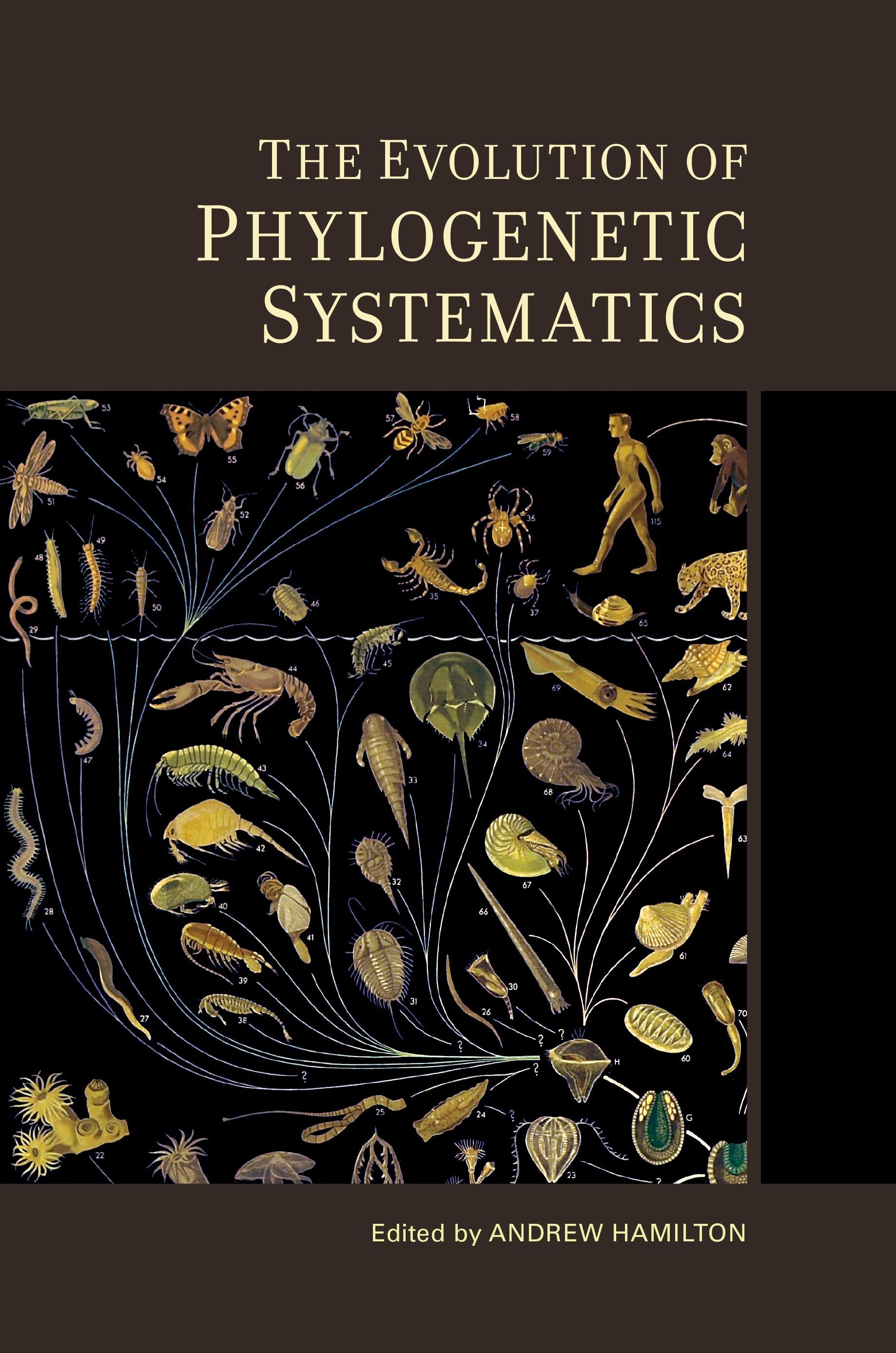
The evolution of phylogenetic systematics
The Evolution of Phylogenetic Systematics aims to make sense of the rise of phylogenetic systematics—its methods, its objects of study, and its theoretical foundations—with contributions from historians, philosophers, and biologists. This volume articulates an intellectual agenda for the study of systematics and taxonomy in a way that connects classification with larger historical themes in the biological sciences, including morphology, experimental and observational approaches, evolution, biogeography, debates over form and function, character transformation, development, and biodiversity. It aims to provide frameworks for answering the question: how did systematics become phylogenetic?
eBook


Concept versus Data in Delimitation of Plant Genera
As a consequence of there being several ways in which observed patterns of variation in nature can be conveyed in a generic classification, long recognised genera have changed in size over time. The generic rank has its origins in folk taxonomy, where genera were homogenous units of relatively few kinds. In the era of Bentham there was a widespread preference for large genera, many of which were split during the 20th century. In a survey of contemporary (1998–2007) generic delimitation practice we found a significant dichotomy between studies that incorporate molecular data and those that rely exclusively on morphological data. The former lead to delimitation of larger genera whereas the latter in general do not. This finding spurred a broader investigation into what drives changes in overall generic sizes, neww data sources or new concepts? Two new data types have been introduced during the course of history: detailed morphology (anatomy, cytology) and chemical data (amino acid and DNA sequence data). Conceptual development has seen severa turns: from language and communication, through memory and stability, to evolution and monophyly. We argue that conceptual change has a greater impact than changes in data do, since new data must be interpreted and translated into a classification and since conceptual changes may spur a search for new kinds of data. We conclude that the current trend toward recognising larger genera is a result of a return to study on a broad scale, rather than of incorporation of molecular data.
Journal Article


YinYang bipolar dynamic organizational modeling for equilibrium-based decision analysis: Logical transformation of an indigenous philosophy to a global science
While it is recognized that indigenous research on China is helpful if not essential, the essence of YinYang has never been made clear in logical forms. While indigenous research should be guided by a philosophy, it was widely believed that without a unique logical system China only had culture but no philosophy. Now, worldwide indigenous research on China is faced with tremendous difficulties due to the lack of principles, academic disciplines, and a scientific common ground even though the Chinese YinYang has been widely influential. Consequently, a unique formal logical foundation is imperative for a logical reincarnation of Chinese philosophy. It is shown in this work that a formal equilibrium-based and harmony-centered YinYang
bipolar dynamic logic
(BDL) can fill the gap. Based on BDL,
bipolar dynamic organizational modeling
(BDOM) is proposed for
equilibrium-based decision analysis
(EBDA). It is shown that BDOM/EBDA methodologies can integrate case study methods and grounded theory together into a holistic and dynamic management paradigm for global regulation. The three philosophies of metaphysics, dialectics and the Dao of YinYang are formally classified and distinguished. It is argued that with BDL YinYang is elevated to a formal logical system, and indigenous research on China is positioned in the context of a global science with a common philosophical ground of equilibrium, complementarity, and harmony. It is concluded that, with YinYang as a philosophical guiding light, not only is bipolar dynamic equilibrium-based indigenous research helpful but also fundamental and essential.
Journal Article


Discours de la méthode
Célèbre écrit de Descartes à l'origine du cartésianisme. Pensée qui s'appuie sur une méthode scientifique en opposition aux vérités révélées.
eBook