
Catalogue Search | MBRL


Are you sure you want to remove the book from the shelf?

{{itemTitle}}
3,975
result(s) for
"Classroom Applications of Technology"
Sort by:
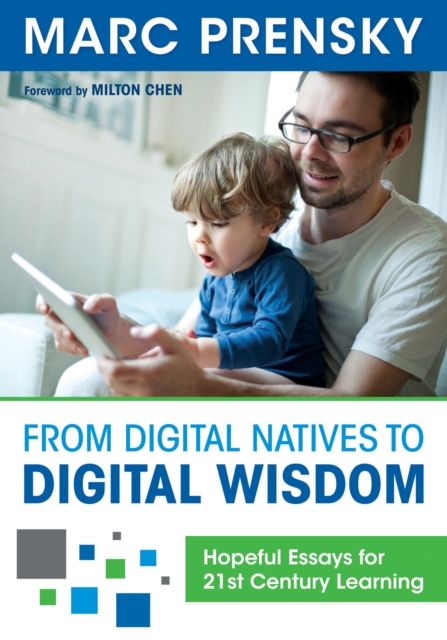
From digital natives to digital wisdom
An expert perspective on 21st century educationWhat can you learn on a cell phone? Almost anything! How does that concept fit with our traditional system of education? It doesn't. Best-selling author and futurist Marc Prensky's book of essays challenges educators to “reboot” and make the changes necessary to prepare students for 21st century careers. His “bottom-up” vision is based on interviews with young people and includes their ideas about what they need from teachers, schools, and education. Also featured are easy-to-do, high-impact classroom strategies that help what he calls “digital natives” acquire “digital wisdom.” This thought-provoking text is organized into two sections that address: Rethinking education; 21st century learning and technology in the classroom (including games, YouTube, and more)In addition to valuable knowledge, this compelling collection offers inspiration, new perspectives, and ideas that work. Our educational context has changed, and a new context demands new thinking. This book will broaden your mind, spark new insights regarding how and what you teach, and reshape your vision of 21st century education.
eBook

Developing Digital Literacies
Turn teachers—and students—into tech-savvy digital citizens!Digital literacies are essential for managing information and communication in our rapidly changing world—but the old scattered approaches to introducing technology have left many teachers playing catch-up with their students. With this authentic, job-embedded professional development program, you'll help K–12 teachers incorporate digital literacies into their classrooms once and for all.Using a modular, highly adaptable framework that capitalizes on the personnel and resources you already have available, this comprehensive program includes:Instructions on developing personal learning networks (PLN) for collaborative learning and applying digital literacies in the classroom; Tips for maximizing teacher motivation and buy-in; Technology-related supports to enable schoolwide curriculum integration; A companion website with electronic planning and implementation materials, sample instructional tools, and links to supporting resourcesWhen you empower teachers to harness existing technologies and digital resources, they'll build upon their teaching expertise—and change the way students learn.“Summey presents a well-crafted, technology professional development model that is sound in practice, adaptable, and can be easily implemented at the local level. And, as an added bonus, he includes a new digital literacies framework that surrounds the professional development structure and is a stellar model for framing the teaching and learning of the important 21st century skill-set for both educators and students!”—Kathy Schrock, Educational Technologist
eBook
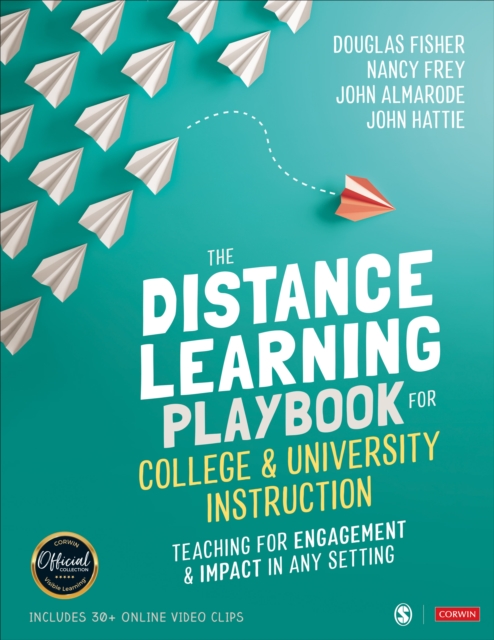
The Distance Learning Playbook for College and University Instruction
First, let's commend ourselves: how in the midst of a pandemic we faculty stepped up at record speed to teach in such a foreign learning environment. Try we did, adapt we did, and learn we did. But to be clear, and we already recognize this, this past spring was less about distance learning and more about crisis teaching. This time around we have the opportunity to be much more purposeful and intentional, and that's where The Distance Learning Playbook for College and University Instruction will prove absolutely indispensable. Much more than a collection of cool tools and apps, The Distance Learning Playbook for College and University Instruction mobilizes decades of Visible Learning® research to reveal those evidence-based strategies that work best in an online environment. Supplemented by video footage and opportunities to self-assess and reflect, the book addresses every dynamic that must be in place for students to learn, even at a distance: Faculty-student relationships from a distance Teacher credibility from a distance Teacher clarity from a distance Engaging tasks from a distance Planning learning experiences from a distance Feedback, assessment, and grading from a distance Keeping the focus on learning, from a distance or otherwise What does our post-COVID future hold? \"We suspect,\" Fisher, Frey, Almarode, and Hattie write, \"it will include increased amounts of distance learning. In the meantime, let's seize on what we have learned to improve post-secondary education in any format, whether face-to-face or from a distance.\" \"We are all still active faculty members, committed to teaching, scholarship, and service. The unexpected transition to remote learning doesn't mean we no longer know how to teach. We can still impact the lives of our students and know that we made a difference. The Distance Learning Playbook for College
and University Instruction will show you how.\" ~Douglas Fisher, Nancy Frey, John Almarode, and John Hattie.
eBook

The blended learning blueprint for elementary teachers
Your blueprint for empowering students through personalized learning In today’s technologically-integrated world, blended learning is a natural fit for the elementary classroom, where many teachers already think flexibly about the learning environment, resources, and time in order to meet diverse student needs. As blended elementary classrooms become more common, teachers and administrators must develop a shared understanding of the characteristics of effective instruction in blended environments. This guide is designed to help K-5 teachers develop and carry out a plan for effective instruction in blended environments. Presented in a step-by-step workbook format, this resource identifies the competencies blended teachers need and strategies for development, culminating in a personalized implementation plan for successful blended instruction. Readers will • Take an in-depth look at the iNACOL Blended Learning Teacher Competency Framework, to foster a deeper understanding of the teacher proficiencies needed for effective blended learning environments. • Identify your own strengths and needs related to the blended teacher competencies. • Develop a personalized blueprint for designing and facilitating blended learning in your classrooms. • Tailor your needs and goals when it comes to maximizing instructional time, personalizing learning, empowering students, pursuing professional learning, and more. • Explore specific strategies and examples of blended learning in elementary classrooms, and reflect on your own plans for blended instruction. Making the shift to blended learning requires intentional planning and support. This workbook will guide you through the process of developing an actionable plan for blended learning in your classroom.
eBook
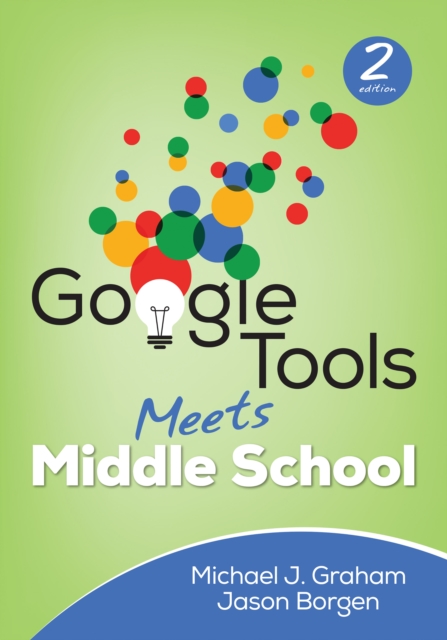
Google Tools Meets Middle School
Become a master of 21st century learning for your students Google Apps and Chromebooks have become ubiquitous in classrooms, but how can you thoughtfully and seamlessly integrate these tools into day-to-day teaching to prepare your students for the jobs of the future? Filled with actionable instruction ideas, the newest edition of this bestselling book includes: • Step-by-step tutorials on how to use the Google Apps for Education suite so students can create, collaborate, and share their work • How each tool can impact student learning, promote 21st-century skills, and meet and exceed ISTE NETs, Common Core, and other standards • New and updated classroom examples, teaching tips, and sample lessons to help you use these tools most effectively The exciting second edition will invigorate veteran teachers to implement new strategies while helping novice teachers get familiar with crucial technology components students need for success for high school and later in life. “Graham and Borgen have hit the nail on the head! They have compiled extensive resources to provide the teachers with a one-stop location to move technology integration forward in a school or district.” Tim Landeck, Director, Technology Services Pajaro Valley Unified School District, Watsonville, CA “Given the fact that Google now dominates the edtech market, mastering the tools in the G Suite for Education is no longer a luxury but rather a necessity for 21st-century educators. The authors have written a comprehensive instructional work the covers the full range of Google tools -- from Gmail to Google Drive and beyond. Pedagogy, lesson ideas, and helpful tech tips round out a book that will surely be a must read for any forward-thinking educator.” Dr. John Davenport, Middle School ELA and History Teacher Portola Valley School District, Portola Valley, CA
eBook

The socially networked classroom
'A veritable smorgasbord of ideas and suggestions. This text grabbed me right away, and I started flagging all sorts of ideas even in the earliest chapters. It is as if Bill Kist met me in the hallway, took me by the hand, and simply said, 'Come here, I want to show you something' - Sheila M. Gragg, Technology Integration Coach Ashbury College, Canada 'I loved this book. I learned a great deal about 'texts' and about how to teach 'texts' to students in the digital age. But what was so compelling about this book was the genuineness of the author; he cares passionately about his students and passionately about the subject matter. As Dewey points out, effective education must have an emotional component; indeed, the book's credibility and authority derives from its core emotional energy' - Elliot Soloway, Arthur F. Thurnau Professor University of Michigan, Ann Arbor 'This book is totally compelling and geared to a slice of the teaching profession that is in desperate need of the kind of guidance and insight that Kist offers. By sharing his creative teaching methods, he points out the openings in teachers' practice where shift can happen' - Sue Collins, Integration Technology Specialist, Bedford Public Schools, MA Secondary school students are increasingly plugged in to social networking sites outside of school, but inside the classroom such functions of the web are often ignored. In The Socially Networked Classroom: Teaching in the New Media Age, William Kist identifies and documents the processes of teaching and learning via social networking in the new-media classroom. This book broadens the debate around what constitutes literacy as it tackles practical tasks for educators that include: - Documenting the assignments, assessments, and outcomes of instruction in networked classrooms - Categorizing the classrooms into levels of Web 2.0 applications - Illustrating how the new assignments can be used to address classic classroom questions
eBook

Teaching with the tools kids really use
This resource helps educators integrate Web and mobile technologies and tools into classroom instruction and offers a model for selecting appropriate tools and technologies for primary and secondary settings.
eBook
Crayons and IPads
A timely addition to the SAGE Swift Series, Crayons and iPads examines the use of digital technology in the early stages of child development and the way in which learning techniques have evolved in classrooms across the world. Taking the position that tablets provide an accessible learning and instructional tool, Debra Harwood explores how tablets can be used to provoke, ignite, and excite children’s interest in the world around them, arguing that it is through this engagement with technology that new discoveries are made and learning takes place. Guiding readers through research-based insights into children’s thinking, interactions and being, Crayons and iPads offers an important starting point upon which to build play and inquiry-based learning opportunities within early learning programs.
eBook
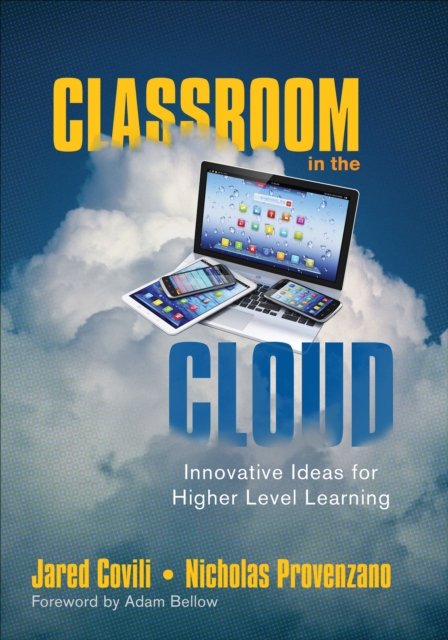
Classroom in the cloud : innovative ideas for higher level learning
This easy-to-use primer includes practical tools for integrating cloud computing into teaching, real-life examples, step-by-step directions for classroom activities, and strategies for ensuring safety.
eBook
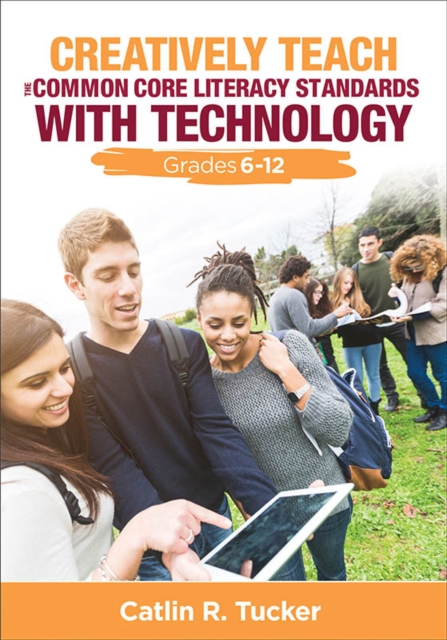
Creatively Teach the Common Core Literacy Standards with Technology
Let technology pave the way to Common Core success. Your transition to the Common Core just got easier! When you start getting creative with technology, you’ll turn your classroom into a student-centered learning environment that fosters collaboration, individualizes instruction, and cultivates essential technological literacy. This book is your road map to student success–while meeting the Common Core ELA and literacy standards. Features include: • Specific recommendations for free apps and tech tools that support the Common Core • Step-by-step guidelines to breaking down a Common Core standard for your grade and subject • Teacher-tested, lesson ideas and teaching strategies • Replicable resources, including prewriting activities and writing templates • Real-life examples You don’t need to be in a 1:1 school to do amazing things with technology. With just a few devices, you can engage a whole class! Delve into the Common Core ELA standards by having students experiment creatively with the tech tools at hand for a more meaningful and resonant learning experience. “The book contains a tremendous collection of actionable ideas that can be seamlessly implemented to make a difference in all aspects of the classroom. A must-own guide that will surely be a teacher’s go-to resource to help bring the standards to life.” Adam Bellow, Founder of eduTecher / eduClipper Plainview, New York “Catlin Tucker provides great ideas for student use of technology tools that cross the curriculum areas and allow the students to showcase their mastery of content. Students will love how the traditional classroom assessments are transformed!” Kathy Schrock, Educational Technologist, Adjunct Instructor Wilkes University, PA
eBook