
Catalogue Search | MBRL


Are you sure you want to remove the book from the shelf?

{{itemTitle}}
17
result(s) for
"Clerks Fiction"
Sort by:

Majipoor chronicles
\"When Hissune, Lord Valentine's successor-designate and a clerk in the House of Records, is assigned to organizing the archives of the tax-collectors, he is disheartened to say the least. No one will ever have need of his findings, his useless busywork. But close to the House of Records lies a far more interesting place: the Register of Souls. Home to millions of telepathically recorded stories, the Register contains Majipoor's infinitely complex histories--tales of love and loss, triumph and heartbreak\"--Back cover.
Book
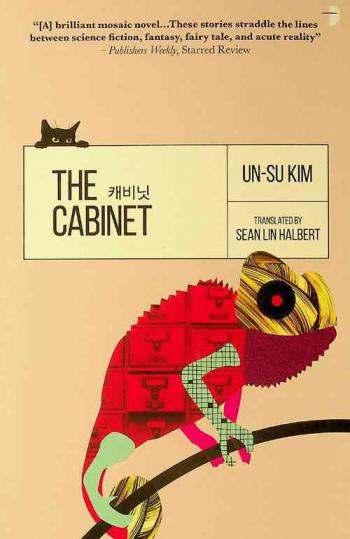
The cabinet
Cabinet 13 looks like a normal filing cabinet, but it's filled with files on \"symptomers\"--People with weird abilities and bizarre experiences. And harried Mr. Kong, who is the office worker responsible for the cabinet, must deal with all the symptomers who call the office looking for help. A richly funny and fantastical novel about the strangeness at the heart of even the most everyday lives, from one of South Korea's most acclaimed novelists

Fiction As a Vehicle for Truth
Despite widespread evidence that fictional models play an explanatory role in science, resistance remains to the idea that fictions can explain. A central source of this resistance is a particular view about what explanations are, namely, the ontic conception of explanation. According to the ontic conception, explanations just are the concrete entities in the world. I argue this conception is ultimately incoherent and that even a weaker version of the ontic conception fails. Fictional models can succeed in offering genuine explanations by correctly capturing relevant patterns of counterfactual dependence and licensing correct inferences. Using the example of Newtonian force explanations of the tides, I show how, even in science, fiction can be a vehicle for truth.
Journal Article

An outcast of the islands
\"An Outcast of the Islands (1896), Conrad's second novel, returns to the Malay world of Almayer's Folly (1895). Focusing on the collapse of Western values and morals in a colonial setting, the novel daringly portrays the power of erotic attraction and exposes the venal ambitions behind small- and large-scale political intrigues. The introduction situates the novel in Conrad's career as a writer and traces its origins and reception. The essay on the text and the apparatus explain the history of the work's composition and publication, and detail the interventions of Conrad's compositors and editors. There are notes explaining literary and historical references, a glossary of nautical terms, illustrations including pictures of early drafts, and appendixes. This edition presents the novel and its preface in forms more authoritative than any so far printed, and restores a text that has circulated in defective forms since its original publication\"-- Provided by publisher.
Book

Promiscuously partisan public servants? Publicly defending and promoting the government’s reputation to the detriment of bureaucratic impartiality and truthfulness
PurposeFor many, the claim that a new approach to bureaucracy—new political governance (NPG)—is underway reads as if it was written by Stephen King: Frightening fiction. While the thought of promiscuously partisan senior public servants publicly defending and promoting the government’s reputation to the demise of impartiality is disturbing, the evidentiary record has led most to dismiss the idea as empirically false. This article questions, and empirically investigates, whether dismissing the idea of promiscuous partisanship has been premature.Design/methodology/approachA case study of the loyalty displayed by Canada’s most senior public servant during a highly publicized parliamentary committee is analysed with a novel theoretical and empirical approach in three steps. First, the Clerk of the Privy Council (Clerk)’s committee testimony is analysed against analytical constructs of impartial and promiscuous partisan loyalty that focuses on the testimony’s direction and substance. Second, the objectivity and truthfulness of the testimony is analysed by comparing what was publicly claimed to have occurred against evidence submitted to the committee that provids an independent record of events. Third, the perception the Clerk’s testimony had on some committee members, political journalists and members of the public is analysed through print media and committee Hansard.FindingsWhile the Clerk’s testimony displays an awareness of upholding impartiality, it also comprises promiscuous partisanship. Throughout his testimony, the Clerk redirects from the line of questioning to defend and promote the sitting government’s reputation. Moreover, to defend and promote the government’s reputation the Clerk’s testimony moved away from objectivity and engaged in truth-obfuscating tactics. Finally, the nature of the Clerk’s testimony was perceived by some committee members and the public—including former senior public servants—as having abandoned impartiality to have become a public “cheerleader” of the government.Research limitations/implicationsEmploying an in-depth case study limits the extent to which the findings concerning the presence of promiscuously partisan loyalty can be generalized beyond the present case to the larger cadre of senior public servants.Originality/valueEmpirically, while most research has dismissed claims of promiscuous partisanship as empirically unfounded, this article provides what is possibly the strongest empirical case to date of a public incident of promiscuous partisanship at the apex of the bureaucracy. As such, scholars can no longer dismiss NPG as an interesting idea without much empirical leverage. Theoretically, this article adds further caution to Aucoin’s original narrative of NPG by suggesting that promiscuous partisanship might not only involve senior public servants defending and promoting the government, but that doing so may push them to engage in truth-obfuscating tactics, and therein, weaken the public’s confidence in political institutions. The novel theoretical and empirical approach to studying senior public servants’ parliamentary testimony can be used by scholars in other settings to expand the empirical study of bureaucratic loyalty.
Journal Article

A Canadian Bankclerk
Of this novel of Canadian business life and village and city social conditions in the early twentieth century, the author explains that his object is 'to enlighten the public concerning life behind the wicket and thus pave the way for the legitimate organization of bankclerks into a fraternal association, for their financial and social (including moral) betterment.'
eBook

The book charmer
\"A charming and evocative story about a picturesque Southern town, two fiercely independent women, and a magical friendship that will change their lives forever\"-- Provided by publisher.
Book