
Catalogue Search | MBRL


Are you sure you want to remove the book from the shelf?

{{itemTitle}}
37
result(s) for
"Climate Change Popular Works."
Sort by:


energy glut
Worldwide, over a billion people are overweight and 300 million are obese. At the same time, global warming threatens the survival of our species. The Energy Glut shows how the heating of our planet and the bulging of our waistlines are manifestations of the same global malaise. Ian Roberts presents a frightening vision of humanity besieged by a food industry pushing a surfeit of energy-dense food, while the rise of the car means we have fewer opportunities to move our bodies than ever before. This insightful, exciting new work explains why getting fatter is a political rather than a personal problem, and why tackling climate change could be the next great public health advance.
eBook

H is for hope : climate change from A to Z
\"In 26 connected essays, Pulitzer-Prize winning reporter Elizabeth Kolbert takes us on an illustrated journey through the landscape of climate change and the stories we tell ourselves about the future\"-- Provided by publisher ; back cover
Book
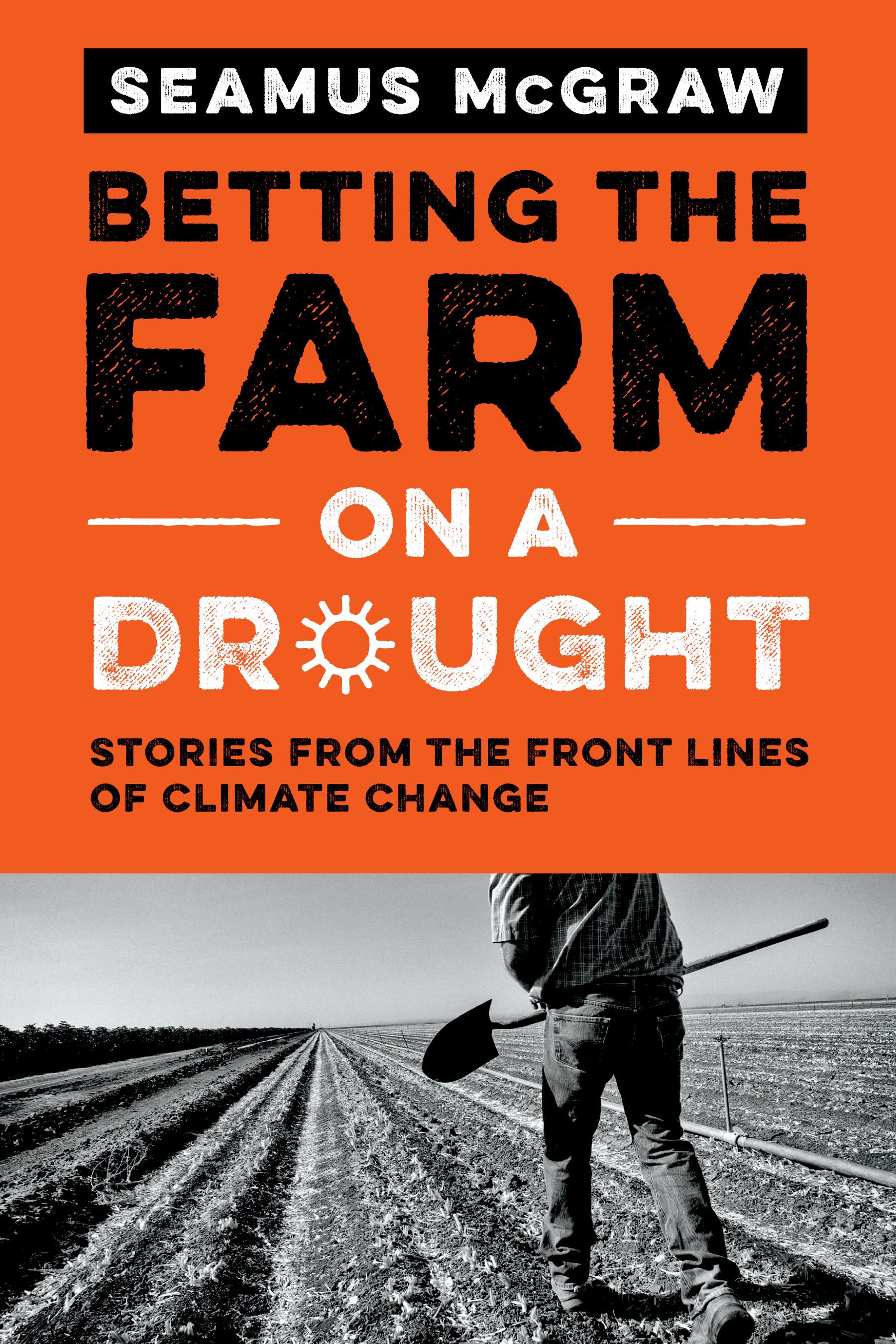
Betting the Farm on a Drought
Climate change has become one of the most polarizing issues of our time. Extremists on the left regularly issue hyperbolic jeremiads about the impending destruction of the environment, while extremists on the right counter with crass, tortured denials. But out in the vast middle are ordinary people dealing with stronger storms and more intense droughts than they’ve ever known. This middle ground is the focus of Betting the Farm on a Drought, a lively, thought-provoking book that lays out the whole story of climate change—the science, the math, and most importantly, the human stories of people fighting both the climate and their own deeply held beliefs to find creative solutions to a host of environmental challenges. Seamus McGraw takes us on a trip along America’s culturally fractured back roads and listens to farmers and ranchers and fishermen, many of them people who are not ideologically, politically, or in some cases even religiously inclined to believe in man-made global climate change. He shows us how they are already being affected and the risks they are already taking on a personal level to deal with extreme weather and its very real consequences for their livelihoods. McGraw also speaks to scientists and policymakers who are trying to harness that most renewable of American resources, a sense of hope and self-reliance that remains strong in the face of daunting challenges. By bringing these voices together, Betting the Farm on a Drought ultimately becomes a model for how we all might have a pragmatic, reasoned conversation about our changing climate.
eBook

Climate change in popular culture : a warming world in the American imagination
\"An invaluable resource for general readers investigating climate change, this book examines the impact of climate change on popular culture and analyzes how writers and directors treat the disasters caused by climate change in their novels and films\"-- Provided by publisher.
Book

The clean energy age
It’s time for a new approach to environmentalism that focusses on practical solutions rather than problems and speaks to ordinary citizens in simple terms. This clear, positive, and non-partisan guidebook offers Top 10 lists that will help individuals and organizations save money while taking aim at the source of most of our carbon emissions. Reviewing proven and unproven technologies and government programs, it explores opportunities for homeowners, governments, corporations, media, and others. While BF Nagy evaluates clean technology progress to date, he does not dwell on doom and gloom, seek to shame or scold, or propose unlikely overnight lifestyle upheavals. Instead he prioritizes everyday actions and reviews the paybacks and effectiveness of clean building technologies and vehicles, government/utility incentives, and finance structures. Organized for both quick reference and deep dives into the nuts and bolts of saving the plant from environmental ruin, The Clean Energy Age contains specific sections for individuals and organizations using appropriate language and exploring current trends and issues for homeowners, regional and local governments, small businesses, large corporations, investors, politicians, civil servants, urban planners, media people, entertainers, teachers, transportation people, medical professionals, manufacturers, farmers, and others. In addition to technology and government programs it reviews current clean tech business and economic realities and insights into what we can expect in the future. It explores electric vehicles, net-zero smart homes, the Internet of things, smart grids, solar, wind, and geothermal. Each Top 10 list offers detailed explanations as well as a simple, summary format. Other chapters on buildings, electricity, transportation, investment, business, politics & economics, government, and unproven technologies, provide support for the information found in the Top 10 lists and success stories accumulated during consultations with clean technology, government and business specialists. Organized for easy-access by people in different segments, there is something for everyone looking to combat climate change in these pages.
eBook
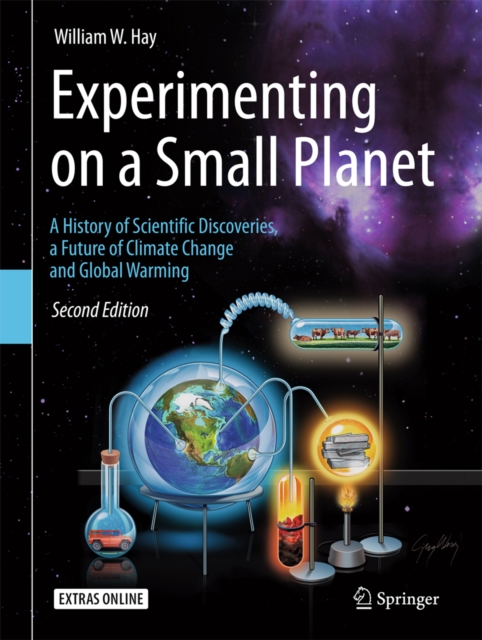
Experimenting on a Small Planet
This book is a thorough introduction to climate science and global change. The author is a geologist who has spent much of his life investigating the climate of Earth from a time when it was warm and dinosaurs roamed the land, to today's changing climate. Bill Hay takes you on a journey to understand how the climate system works. He explores how humans are unintentionally conducting a grand uncontrolled experiment which is leading to unanticipated changes. We follow the twisting path of seemingly unrelated discoveries in physics, chemistry, biology, geology, and even mathematics to learn how they led to our present knowledge of how our planet works. He explains why the weather is becoming increasingly chaotic as our planet warms at a rate far faster than at any time in its geologic past. He speculates on possible future outcomes, and suggests that nature itself may make some unexpected course corrections. Although the book is written for the layman with little knowledge of science or mathematics, it includes information from many diverse fields to provide even those actively working in the field of climatology with a broader view of this developing drama. Experimenting on a Small Planet is a must read for anyone having more than a casual interest in global warming and climate change - one of the most important and challenging issues of our time. This new edition includes actual data from climate science into 2014. Numerous powerpoint slides allow lecturers and teachers to more effectively use the book as a basis for climate change education.
eBook

Can We Save the Planet?
The Big Idea shortlisted for series design in the British Design and Production AwardsThe effects of global warming are being felt around the world through climate change, and images of our rivers and oceans choking with plastic have provoked an instinctive horrified reaction. In response, governments, corporations and individuals are beginning to change their policies and behaviour - but is it too little, too late? Is it possible to reverse the damage we have done to the planet, or have we reached the point where we are only able to manage the problems and devastation caused? This engaging and incisive volume offers insightful analysis of a range of key issues including deforestation, global warming and single use plastics, while evaluating whether - and how - it may just be possible to mend our planet.
eBook

Role of Social Media as a Soft Power Tool in Raising Public Awareness and Engagement in Addressing Climate Change
Climate change has been one of the most debated topics in the past few decades, but a number of challenges have hindered the development of robust policies and strategies by nations. At the same time, social media platforms—such as Instagram, Twitter, and Facebook—have given the opportunity for the general public to share opinions and engage with the issue of climate change like never before. This phenomenon is considered to be a new form of soft power which can provide input into the discussion and possibly affect the current international political mechanisms. The present paper aims to (1) define the forms and characteristics of social media as a soft power method, (2) analyze its influence on the awareness of societies, and (3) assess if increased public awareness could influence the official political and policy processes. In order to assess if social media has influence on people’s relative awareness, we have focused on analyzing the links between a few highly visible climate change related events and the trends in people’s searches on the Internet in connection to those events. The study finds that even though it is difficult to assess the effects of social media as a soft power tool with certainty, there are visible links between social media and changing public perceptions, with the possibility of public opinion influencing political decision-making.
Journal Article

Cultural Dynamics of \u2028Climate Change and \u2028the Environment in \u2028Northern America
In Cultural Dynamics of Climate Change and the Environment in Northern America academics from various fields such as anthropology, art history, cultural studies, environmental science, history, political science, and sociology explore society–nature interactions in – culturally as well as ecologically – one of the most diverse regions of the world.; Readership: All interested in the cultural dimensions of climate change, and anyone concerned with environmental history, environmental sociology as well as environmental policy in North America.
eBook