
Catalogue Search | MBRL


Are you sure you want to remove the book from the shelf?

{{itemTitle}}
1,185
result(s) for
"Climatic changes Australia."
Sort by:


Adapting agriculture to climate change : preparing Australian agriculture, forestry and fisheries for the future
Adapting Agriculture to Climate Change is a fundamental resource for primary industry professionals, land managers, policy makers, researchers and students involved in preparing Australia's primary industries for the challenges and opportunities of climate change. More than 30 authors have contributed to this book, which moves beyond describing the causes and consequences of climate change to providing options for people to work towards adaptation action. Climate change implications and adaptation options are given for the key Australian primary industries of horticulture, forestry, grains, rice, sugarcane, cotton, viticulture, broadacre grazing, intensive livestock industries, marine fisheries, and aquaculture and water resources. Case studies demonstrate the options for each industry. Adapting Agriculture to Climate Change summarises updated climate change scenarios for Australia with the latest climate science. It includes chapters on socio-economic and institutional considerations for adapting to climate change, greenhouse gas emissions sources and sinks, as well as risks and priorities for the future.
eBook


Applied Studies in Climate Adaptation
The book advances knowledge about climate change adaptation practices through a series of case studies. It presents important evidence about adaptation practices in agriculture, businesses, the coastal zone, community services, disaster management, ecosystems, indigneous populations, and settlements and infrastructure. In addition to 38 case studies across these sectors, the book contains horizon-scoping essays from international experts in adaptation research, including Hallie Eakin, Susanne Moser, Jonathon Overpeck, Bill Solecki, and Gary Yohe. Australia's social-ecological systems have a long history of adapting to climate variability and change, and in recent decades has been a world-leader in implementing and researching adaptation, making this book of universal relevance to all those working to adapt our environment and societies to climate change.
eBook


Australia's biodiversity and climate change
Australia's unique biodiversity is under threat from a rapidly changing climate. Theeffects of climate change are already discernible at all levels of biodiversity - genes,species, communities and ecosystems. Many of Australia's most valued and iconic natural areas - the Great Barrier Reef, south-western Australia, the Kakadu wetlands and the Australian Alps - are amongthe most vulnerable. But much more is at stake than saving iconic species or ecosystems. Australia's biodiversity is fundamental to the country's national identity, economy and quality of life. In the face of uncertainty about specific climate scenarios, ecological andmanagement principles provide a sound basis for maximising opportunities forspecies to adapt, communities to reorganise and ecosystems to transform whilemaintaining basic functions critical to human society. This innovative approach tobiodiversity conservation under a changing climate leads to new challenges for management, policy development and institutional design. This book explores these challenges, building on a detailed analysis of the interactions between a changing climate and Australia's rich but threatened biodiversity. Australia's Biodiversity and Climate Change is an important reference for policymakers, researchers, educators, students, journalists, environmental andconservation NGOs, NRM managers, and private landholders with an interest inbiodiversity conservation in a rapidly changing world.
eBook

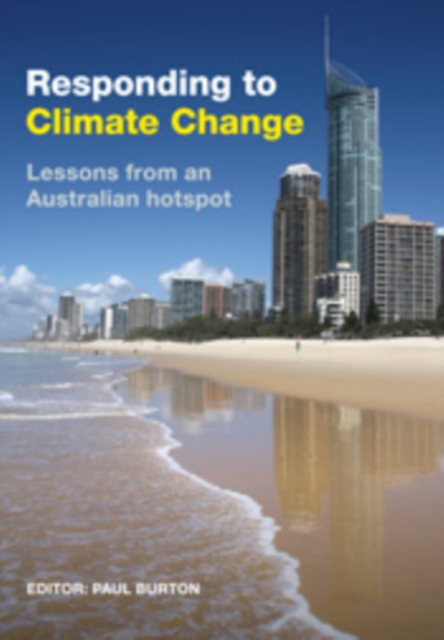
Responding to Climate Change
South East Queensland has been one of the fastest growing regions of Australia, both in terms of its rapidly growing population and an ever-expanding built environment. It is also on eof the most vulnerable regions likely to suffer from the adverse impacts of climate change, especially increased flooding, storms, coastal erosion and drought.Responding to Climate Change: Lessons from an Australian Hotspot brings together the results of cutting edge research from members of the Griffith Climate Change Response Program, showing how to overcome barriers to adaptation. The authors treat climate change adaptation as a cross-cutting, multi-level governance policy challenge extending across human settlements, infrastructure, ecosystems, water management, primary industries, emergency management and human health.
eBook

Climate change litigation : regulatory pathways to cleaner energy
\"This examination of the role of litigation in addressing the problem of climate change focuses not only on how the massive and growing number of lawsuits influences regulation directly, but also on how the lawsuits shape corporate behaviour and public opinion. It provides readers with an understanding of how these lawsuits have shaped approaches to mitigation and adaptation, and have been used to try to force and to block regulation. There is a particular emphasis on lawsuits in the United States and Australia, the two jurisdictions which have had the most climate change litigation in the world, and the lessons provide broader insights into the role of courts in addressing climate change\"-- Provided by publisher.
Book
