
Catalogue Search | MBRL


Are you sure you want to remove the book from the shelf?

{{itemTitle}}
2,564
result(s) for
"Climatic changes Forecasting"
Sort by:
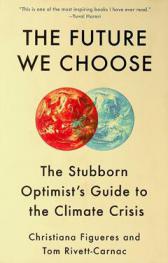
The future we choose : the stubborn optimist's guide to the climate crisis
\"In The Future We Choose, Christiana Figueres and Tom Rivett-Carnac ;who led negotiations for the United Nations during the historic Paris Agreement of 2015 ;have written a cautionary but optimistic book about the world ;s changing climate and the fate of humanity. The authors outline two possible scenarios for our planet. In one, they describe what life on Earth will be like by 2050 if we fail to meet the Paris Agreement ;s climate targets. In the other, they lay out what it will be like to live in a regenerative world that has net-zero emissions. They argue for confronting the climate crisis head-on, with determination and optimism. The Future We Choose presents our options and tells us what governments, corporations, and each of us can, and must, do to fend off disaster.\"--Google Books viewed Aug. 16, 2021.
Book

The West without water
The West without Water documents the tumultuous climate of the American West over twenty millennia, with tales of past droughts and deluges and predictions about the impacts of future climate change on water resources. Looking at the region’s current water crisis from the perspective of its climate history, the authors ask the central question of what is “normal” climate for the West, and whether the relatively benign climate of the past century will continue into the future. The West without Water merges climate and paleoclimate research from a wide variety of sources as it introduces readers to key discoveries in cracking the secrets of the region’s climatic past. It demonstrates that extended droughts and catastrophic floods have plagued the West with regularity over the past two millennia and recounts the most disastrous flood in the history of California and the West, which occurred in 1861–62. The authors show that, while the West may have temporarily buffered itself from such harsh climatic swings by creating artificial environments and human landscapes, our modern civilization may be ill-prepared for the future climate changes that are predicted to beset the region. They warn that it is time to face the realities of the past and prepare for a future in which fresh water may be less reliable.
eBook

The future we choose : surviving the climate crisis
The authors, Figueres and Rivett-Carnac--the architects of the 2015 Paris Climate Change Agreement, outline two possible scenarios for the planet. In one, what life on Earth will be like by 2050 if we fail to meet the Paris targets for carbon dioxide emission reduction. In the other, what it will take to create and live in a carbon neutral, regenerative world. They argue for confronting the climate crisis head on, and present what governments, corporations, and every person can and must do to fend off disaster.
Book

Modelling the impact of climate change on water resources
The quantitative assessment of the impact of climate change on water availability and water resources management requires knowledge of climate, hydro(geo)logical and water resources models, and particularly the relationships between each of them. This book brings together world experts on each of these aspects, distilling each complex topic into concise and easy to understand chapters, in which both the uses and limitations of modelling are explored. The book concludes with a set of case studies using real-life examples to illustrate the steps required and the problems that can be faced in assessing the potential impacts of climate change on water resource systems. For students, scientists, engineers and decision-makers alike, this book provides an invaluable and critical look at the information that is provided by climate models, and the ways it is used in modelling water systems. A key focus is the exploration of how uncertainties may accrue at each stage of an impacts assessment, and the reliability of the resulting information. The book is a practical guide to understanding the opportunities and pitfalls in the quantitative assessment of climate change impacts and adaptation in the water resource sector.
eBook


Environmental Apocalypse in Science and Art
At a time when it is clear that climate change adaptation and mitigation are failing, this book examines how our assumptions about (valid and usable) knowledge are preventing effective climate action. Through a cross-disciplinary, empirically-based analysis of climate science and policy, the book situates the failures of climate policy in the cultural history of prediction and its interfaces with policy.
Fava calls into question the current interfaces between scientific research and climate policy by tracing multiple connections between modelling, epistemology, politics, food security, religion, art, and the apocalyptic. Demonstrating how the current domination of climate policy by models and scenarios is part of the problem, the book examines how artistic practices are a critical location to ask questions differently, rethink environmental futures, and activate social change. The analysis starts with another moment of climatic change in recent western history: the overlap of the Little Ice Age and the \"scientific revolution,\" during which intense climatic, scientific and political change were contemporary with mathematical calculation of the apocalypse.
Dealing with the need for complex answers to complex and urgent questions, this is essential reading for those interested in climate action, interdisciplinary research and methodological innovation. The empirical analyses amount to a methodological experiment, across history of science, theology, art theory and history, architecture, future studies, climatology, computer modelling, and agricultural policy. This book is a major contribution to understanding how we are precluding effective climate action, and designing futures that resemble our worst nightmares.
eBook


The Planet in 2050
In 2050, the billions of people living on Earth have found a way to manage the planetary system effectively. Everyone has access to adequate food, shelter, and clean water. Human health is no longer considered outside of the health of the ecosystems in which people live. Ecological awareness is an integral part of education. People respond effectively to social and environmental hazards, and societies care for the most vulnerable amongst them. The economy, too, has shifted. Carbon dioxide management is under control, and energy efficiency is the norm. The remaining rainforests have been preserved. Coral reefs are recovering. Fish stocks are thriving. Is any of this really possible? How can our complex social and economic systems interact with a complex planetary system undergoing rapid change to create a future we all want?
This book is a contextualised collation of ideas articulated by the 50 participants of the Planet 2050 workshop held in Lund in October 2008, as part of The Planet in 2050, an interdisciplinary Fast Track Initiative of the International Geosphere-Biosphere Programme. Participants were selected from academia and the sustainability practice community to give a wide-ranging, multi-cultural, trans-disciplinary set of perspectives.
This collection explores four broad sectoral themes: energy and technologies; development, economies and culture; environment; and land use change. By doing so, this book emphasises the importance of a social dialogue on our collective future, and our responsibility to the Earth. It makes strong statements about what needs to happen to the global economy for a sustainable future and documents a new kind of scholarly discussion, engaging people from diverse knowledge communities in a spirit of exploration and reflexivity. The book provides a focus for dialogue and further study for postgraduates and researchers interested in global change as a multi-faceted, socio-environmental
eBook


Climatic Cataclysm: The Foreign Policy and National Security Implications of Climate Change
Presents three scenarios of what the future may hold: expected, severe, and catastrophic and analyzes the security implications of each. Considers what can be learned from early civilizations confronted with natural disaster and asks what the largest emitters of greenhouse gases can do to reduce and manage future risks.
eBook