
Catalogue Search | MBRL


Are you sure you want to remove the book from the shelf?

{{itemTitle}}
157
result(s) for
"Climatic changes Middle East."
Sort by:

Climate change and energy dynamics in the Middle East : modeling and simulation-based solutions
This edited volume presents chapters on the dynamics of global climate change and global warming in the Middle East. In this region, it should be noted that even slightly warmer weather can result in an increased demand of energy along with its lower supply, as well as lower labor productivity. This text focuses on modeling, simulation, system dynamics, and agent-based modeling in dealing with these issues. The latest decision making tools, techniques, and innovative solutions used to overcome these challenges are presented. Many distinguished researchers contribute their work herein. The audience for this volume includes policy makers, researchers, and students unified by the common goal of making better decisions in the sustainable production and consumption of energy. The practical orientation of the chapters within each part is intended to suit the practitioners: managers and decision makers in the energy sector of the Middle East region.
Book
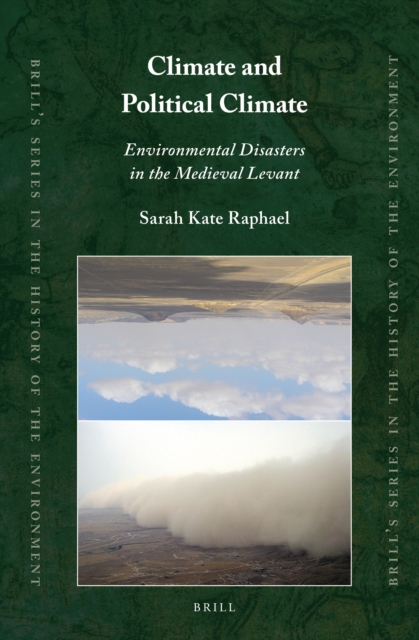
Climate and Political Climate
This study examines environmental disasters in the Levant. The data is drawn from contemporary sources. The main aim is to determine the long and short-term repercussions of environmental disasters on the regional affairs during the Crusader, Ayyubid and Mamluk periods.
eBook
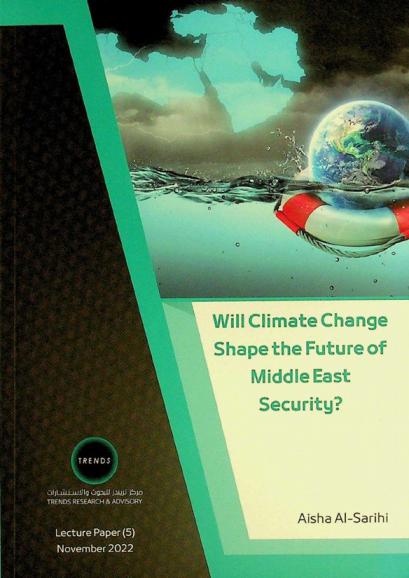
Climate change and migration
Climate change is a major source of concern in the Middle East and North Africa (MENA) region, and migration is often understood as one of several strategies used by households to respond to changes in climate and environmental conditions, including extreme weather events. This study focuses on the link between climate change and migration. Most micro-level studies measure climate change either by the incidences of extreme weather events or by variation in temperature or rainfall. A few studies have found that formal and informal institutions as well as policies also affect migration. Institutions that make government more responsive to households (for example through public spending) discourage both international and domestic migration in the aftermath of extreme weather events. Migration is often an option of last resort after vulnerable rural populations attempting to cope with new and challenging circumstances have exhausted other options such as eating less, selling assets, or removing children from school. This study is based in large part on new data collected in 2011 in Algeria, Egypt, Morocco, Syria, and the Republic of Yemen. The surveys were administered by in-country partners to a randomly selected set of 800 households per country. It is also important to emphasize that neither the household survey results nor the findings from the qualitative focus groups are meant to be representative of the five countries in which the work was carried, since only a few areas were surveyed in each country. This report is organized as follows: section one gives synthesis. Section two discusses household perceptions about climate change and extreme weather events. Section three focuses on migration as a coping mechanisms and income diversification strategy. Section four examines other coping and adaptation strategies. Section five discusses perceptions about government and community programs.
eBook

Climate change in the Middle East and North Africa : 15,000 years of crises, setbacks, and adaptation
\"Environmental factors in the Middle East and North Africa have played a crucial role in the historical and social development of the region. The book delves into a broad set of historical literature from the past 15,000 years that neglected to consider environmental factors to their full effect. Beyond the broad historic analysis, the chapters derive conclusions for today's debate on whether climate change leads to more social conflict and violence. Introducing a theoretical framework focused on adaptive cycling, this book probes and refines the role of climate in ancient and modern political-economic systems in the MENA region. It also underscores just how bad the 21st century environment may become thanks to global warming. While the MENA region may not survive the latest onslaught of deteriorating climate, there is also some interest in how a region that once led the world in introducing all sorts of innovations thousands of years ago has evolved into a contemporary setting characterized by traditional conservatism, poverty, and incessant strife. Emphasizing regional dynamics, the central question deals with the role of climate change in the rise and decline of the MENA region. The book will be a key resource to students and readers interested in global warming including academics and policy makers\"-- Provided by publisher.
Book

The Collapse of the Eastern Mediterranean
As a 'Medieval Warm Period' prevailed in Western Europe during the tenth and eleventh centuries, the eastern Mediterranean region, from the Nile to the Oxus, was suffering from a series of climatic disasters which led to the decline of some of the most important civilizations and cultural centres of the time. This provocative study argues that many well-documented but apparently disparate events - such as recurrent drought and famine in Egypt, mass migrations in the steppes of central Asia, and the decline in population in urban centres such as Baghdad and Constantinople - are connected and should be understood within the broad context of climate change. Drawing on a wealth of textual and archaeological evidence, Ronnie Ellenblum explores the impact of climatic and ecological change across the eastern Mediterranean in this period, to offer a new perspective on why this was a turning point in the history of the Islamic world.
eBook
Water, energy & food sustainability in the Middle East : the sustainability triangle
This book provides a survey of technologies available to tackle the problems associated with climate change in the energy, water and food security nexus with a special focus on the Middle East. It is divided into three main sections. The energy Section consists of six chapters, the water section of seven chapters and finally the food security section has six chapters. The individual chapters are authored by experts and provide discussions and in-depth views on the current status of each topic.
Book

AN UNCERTAIN CLIMATE IN RISKY TIMES: HOW OCCUPATION BECAME LIKE THE RAIN IN POST-OSLO PALESTINE
Recent Palestinian Authority (PA) initiatives to help Palestine adapt to climate change help shine light on the role that climate uncertainties play in how political futures can be represented. UN-led adaptation has occasioned opportunities for new networks of actors to make claims about Palestinian futures and to perform PA readiness for statehood. These actors weigh scientific uncertainties about climate against uncertainties over if and when settler colonialism in Palestine will end. How they do so matters because it is the foundation of requests for capital that could be translated into some of the most important institutions and infrastructures of Palestinian governance over the next several years, including those that provide Palestinians with access to water. It also matters because it constitutes the image with which PA officials represent what needs to be “fixed” in Palestine in important international forums such as the UN. Climate change adaptation is a new approach to the management of uncertain environmental futures. This analysis offers insight into how this approach shapes and is shaped by practices of statecraft in places marked by the volatilities of war, economic crisis, and occupation.
Journal Article

Climate change and water scarcity in the Middle East : a transitional approach
\"This book considers what is needed for water, sanitation, and hygiene services (WASH) in the Middle East to adapt to the growing challenges of climate change. Looking across the region's humanitarian and development sectors, the authors advocate for a transformative approach towards more innovative, integrated, and localized programming. COVID-19 was a wake-up call, exposing how quickly global humanitarian needs can change. Climate change is already causing devastation around the world, and the impacts are often most particularly felt through water, which is linked to drought, famine, and conflict, amongst other problems. This book argues that there is currently a window of opportunity for WASH practitioners to develop broader, multi-sectoral experience, and new hard and soft skills to meet these challenges. Bringing together a comprehensive set of clear, modern case studies from Iraq, Yemen and Palestine, this book considers the potential of new innovations and technologies, and analyzes the institutional, financial, technical, environmental, and socio-cultural considerations for creating sustainable WASH services in transition. The book concludes by outlining practical actions for both humanitarian and development organizations at the national, regional, and global level, to support effective integrated and transitional WASH programming in the future. Emphasizing the urgent need for a Humanitarian-Development-Peace nexus approach, this book will be perfect for WASH practitioners looking for examples of best practice, as well as for researchers and students across international development and humanitarian studies courses as they discuss the future of the WASH field\"-- Provided by publisher.
BOOK
Water and Climate Change in Africa: Challenges and Community Initiatives in Durban, Maputo and Nairobi
In the coming decades, countries around the world will face increasingly severe challenges related to global climate change. While the details vary from country to country, the impacts will be especially grave for marginalized people, whose access to food, potable water, and safe shelter may be threatened due to fluctuations in rainfall and temperature, and to extreme weather events. Because weather extremes are the main way that climate change manifests itself, water governance is a crucial aspect of climate change resilience. Following an overview of the ways climate change is affecting three cities in Africa, Water and Climate Change in Africa: Challenges and Community Initiatives in Durban, Maputo and Nairobi discusses the equity and climate justice implications, and then gives examples of ways in which a range of local community organizations are extending their current activities to address these challenges through innovative new programs and initiatives at the grassroots. This approach has implications for communities worldwide; it is a process of building on existing organizations’ aptitudes and strengths in the light of local knowledge of climate challenges, and creating partnerships to build equity-enhancing new methods of protecting people’s subsistence. This book should be of interest to climate change scholars, activists and policy-makers, as well as development studies researchers and practitioners.
eBook