
Catalogue Search | MBRL


Are you sure you want to remove the book from the shelf?

{{itemTitle}}
252
result(s) for
"Climatic changes Philosophy."
Sort by:

How to think about the climate crisis : a philosophical guide to saner ways of living
\"In this compelling account of a problem we think we know inside out, Graham Parkes outlines the climatic predicament we are in, how we got here, and how we can think about it anew by covering the relevant history, science, economics, politics, and for the first time, the philosophy underpinning it all. Drawing on the wisdom of the ancients in both the Chinese and Western traditions, Parkes proposes practical responses, explaining how a greater awareness of non-Western philosophies, such as the Confucian political philosophy advocated by China, could help us remove obstructions and work towards a greener future\"-- Provided by publisher.
Book

Eco-republic : what the ancients can teach us about ethics, virtue, and sustainable living
Ancient lessons for sustainable citizenship
An ecologically sustainable society cannot be achieved without citizens who possess the virtues and values that will foster it, and who believe that individual actions can indeed make a difference. Eco-Republic draws on ancient Greek thought—and Plato's Republic in particular—to put forward a new vision of citizenship that can make such a society a reality. Melissa Lane develops a model of a society whose health and sustainability depend on all its citizens recognizing a shared standard of value and shaping their personal goals and habits accordingly. Bringing together the moral and political ideas of the ancients with the latest social and psychological theory, Lane illuminates the individual's vital role in social change, and articulates new ways of understanding what is harmful and what is valuable, what is a benefit and what is a cost, and what the relationship between public and private well-being ought to be.
Eco-Republic reveals why we must rethink our political imagination if we are to meet the challenges of climate change and other urgent environmental concerns. Offering a unique reflection on the ethics and politics of sustainability, the book goes beyond standard approaches to virtue ethics in philosophy and current debates about happiness in economics and psychology. Eco-Republic explains why health is a better standard than happiness for capturing the important links between individual action and social good, and diagnoses the reasons why the ancient concept of virtue has been sorely neglected yet is more relevant today than ever.
eBook

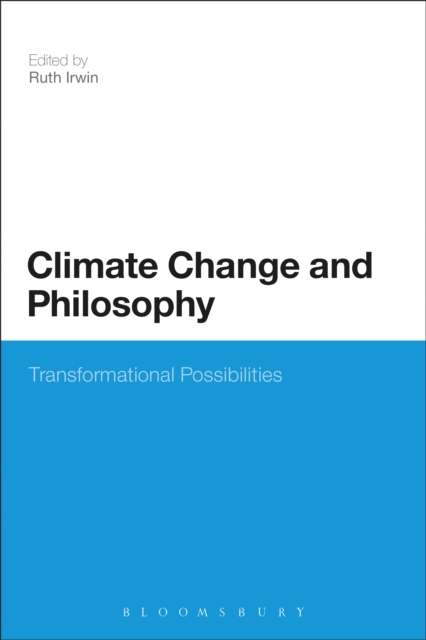
Climate change and philosophy : transformational possibilities
Climate Change and Philosophy presents ten original essays by an international team of expert contributors, exploring the important contribution philosophical inquiry can make to contemporary debates to do with climate change and the global environment.
eBook

Climate justice : integrating economics and philosophy
\"Climate justice requires sharing the burdens and benefits of climate change and its resolution equitably and fairly. It brings together justice between generations and justice within generations. In particular it requires that attempts to address justice between generations through various interventions designed to curb greenhouse emissions today do not end up creating injustice in our time by hurting the currently poor and vulnerable. The United Nations Sustainable Development Goals (SDGs) summit in September 2015, and the Conference of Parties (COP) to the Framework Convention on Climate Change in Paris in December 2015, brought climate change and its development impact centre stage in global discussions. In the run up to Paris, Mary Robinson, former President of Ireland and UN Secretary General's Special Envoy for Climate Change, instituted the Climate Justice Dialogue 'to mobilize political will and creative thinking to shape an ambitious and just international climate agreement in 2015'. The editors of this volume, an economist and a philosopher, served on the High Level Advisory Committee of the Climate Justice Dialogue. They noted the overlap and mutual enforcement between the economic and philosophical discourses on climate justice. But they also noted the great need for these strands to come together to support the public and policy discourse. Climate Justice: Integrating Economics and Philosophy is the result. Bringing together contributions from economists and philosophers, Climate Justice illustrates the different approaches, how they overlap and interact, and what they have already learned from each other and might still have to learn\"--Page 4 of cover.
Book
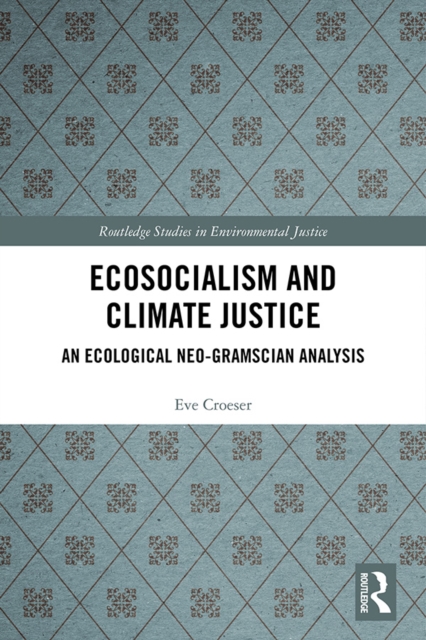
Ecosocialism and Climate Justice
This book investigates the broader climate movement to contextualise the role played by its climate justice wing, focusing specifically on the theoretical and practical contributions of ecosocialists.
Ecosocialism and Climate Justice provides an account of the shift from the Holocene to the Anthropocene in the context of the global spread of capitalist relations of production. Croeser begins by critically analysing the root causes of anthropogenic climate change and identifies the origins and development of the current climate movement within civil society. She then focuses on the climate justice movement, analysing the ways in which anthropogenic global warming may be challenged in a way that is socially just. Overall, this book provides further insight into the effectiveness of ecosocialist theory and activism in the context of existing global, national and local power relationships.
This book will be of great interest to students and scholars of climate justice, climate politics, critical global political economy studies and environmental activism.
eBook

A climate policy revolution : what the science of complexity reveals about saving our planet
\"In this book, Roland Kupers argues that the climate crisis is well suited to the bottom-up, rapid, and revolutionary change complexity science theorizes; he succinctly makes the case that complexity science promises policy solutions to address climate change\"-- Provided by publisher.
Book

Flourishing in the Age of Climate Change
Flourishing in the Age of Climate Change explores skills we need to successfully navigate the distinctive environmental, social, and economic challenges of the twenty-first century. Our inability to address increasing resource constraints, social conflict, and ecological decline lead many toward a deep pessimism that saps motivation for change.
Drawing on research from environmental science, ethics, psychology, sociology and educational theory, William M. Throop shows why cultivating underdeveloped skills involved in collaboration, humility, frugality and systems thinking can enable flourishing within our context. He also illustrates how we can strengthen such skills individually and how education can scale up their cultivation, which will be essential for achieving sustainability.
Flourishing in the Age of Climate Change is a hopeful, practical resource for readers passionate about creating a world where we can thrive, and where flourishing is widespread.
eBook
A climate policy revolution : what the science of complexity reveals about saving our planet
\"In this book, Roland Kupers argues that the climate crisis is well suited to the bottom-up, rapid, and revolutionary change complexity science theorizes; he succinctly makes the case that complexity science promises policy solutions to address climate change\".
Book

Environmental Law and Governance for the Anthropocene
The era of eco-crises signified by the Anthropocene trope is marked by rapidly intensifying levels of complexity and unevenness, which collectively present unique regulatory challenges to environmental law and governance. This volume sets out to address the currently under-theorised legal and consequent governance challenges presented by the emergence of the Anthropocene as a possible new geological epoch. While the epoch has yet to be formally confirmed, the trope and discourse of the Anthropocene undoubtedly already confront law and governance scholars with a unique challenge concerning the need to question, and ultimately re-imagine, environmental law and governance interventions in the light of a new socio-ecological situation, the signs of which are increasingly apparent and urgent. This volume does not aspire to offer a univocal response to Anthropocene exigencies and phenomena. Any such attempt is, in any case, unlikely to do justice to the multiple implications and characteristics of Anthropocene forebodings. What it does is to invite an unrivalled group of leading law and governance scholars to reflect upon the Anthropocene and the implications of its discursive formation in an attempt to trace some initial, often radical, future-facing and imaginative implications for environmental law and governance.
eBook