
Catalogue Search | MBRL


Are you sure you want to remove the book from the shelf?

{{itemTitle}}
23
result(s) for
"Climatic changes Popular works."
Sort by:

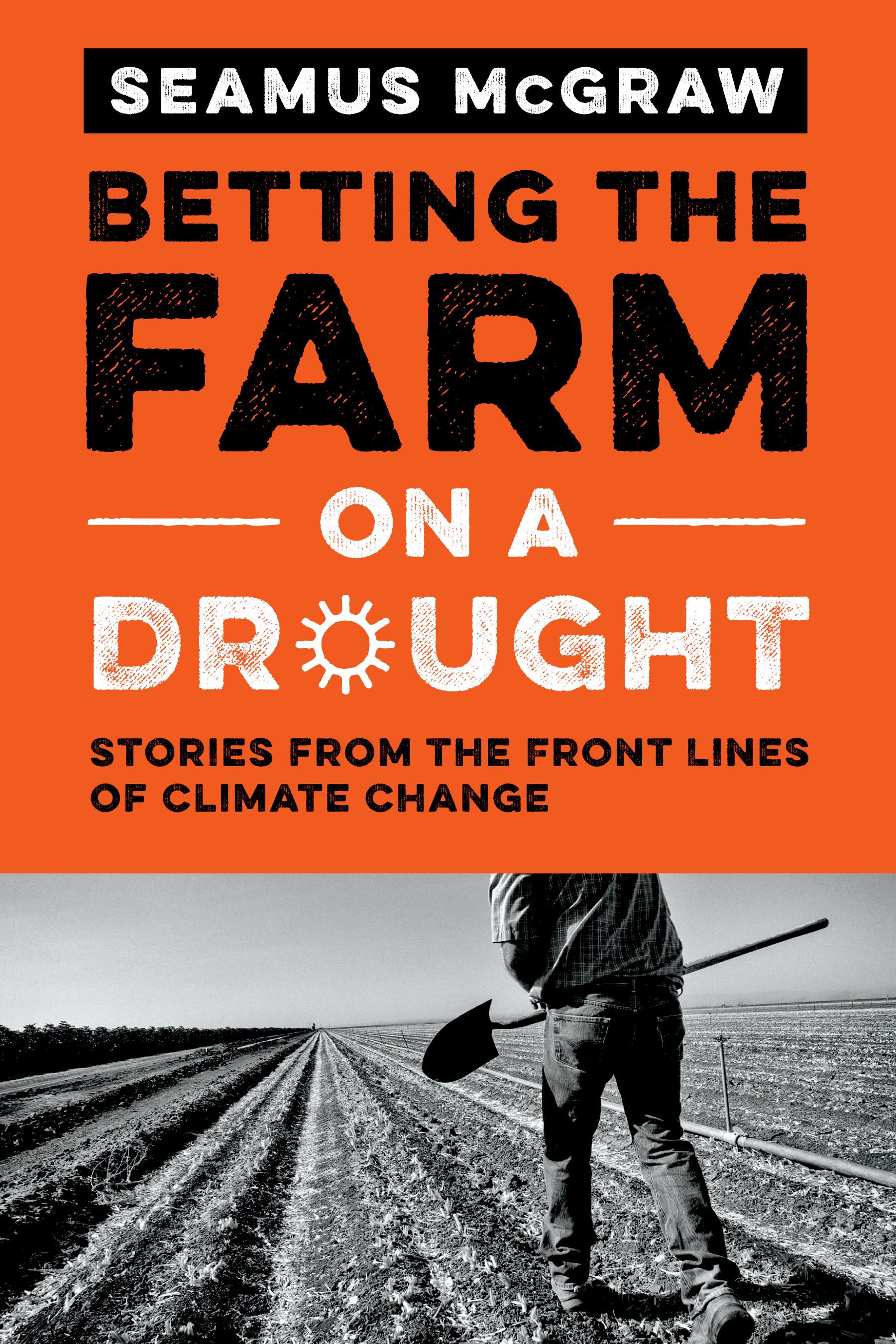
Betting the Farm on a Drought
Climate change has become one of the most polarizing issues of our time. Extremists on the left regularly issue hyperbolic jeremiads about the impending destruction of the environment, while extremists on the right counter with crass, tortured denials. But out in the vast middle are ordinary people dealing with stronger storms and more intense droughts than they’ve ever known. This middle ground is the focus of Betting the Farm on a Drought, a lively, thought-provoking book that lays out the whole story of climate change—the science, the math, and most importantly, the human stories of people fighting both the climate and their own deeply held beliefs to find creative solutions to a host of environmental challenges. Seamus McGraw takes us on a trip along America’s culturally fractured back roads and listens to farmers and ranchers and fishermen, many of them people who are not ideologically, politically, or in some cases even religiously inclined to believe in man-made global climate change. He shows us how they are already being affected and the risks they are already taking on a personal level to deal with extreme weather and its very real consequences for their livelihoods. McGraw also speaks to scientists and policymakers who are trying to harness that most renewable of American resources, a sense of hope and self-reliance that remains strong in the face of daunting challenges. By bringing these voices together, Betting the Farm on a Drought ultimately becomes a model for how we all might have a pragmatic, reasoned conversation about our changing climate.
eBook


Below Freezing
Below Freezing is a unique assemblage of scientific fact, newspaper reports, and excerpts from novels, short stories, nonfiction, history, creative nonfiction, and poetry--a commonplace book for our era of altering climate.
eBook

Unsettled : what climate science tells us, what it doesn't, and why it matters
The author points out that core questions about the way the climate is responding to our influence and what the impacts will be remain largely unanswered. He provides insights and perspective free from political agendas, dispels popular myths, and unveils little-known truths. He points out that the models we use to predict the future aren't able to accurately describe the climate of the past, suggesting they are deeply flawed.
Book
Global Climate Change Demystified
Tackling one of the most controversial subjects of our time, one of the world's foremost environmental and petroleum engineers explores the potential causes and ramifications of global climate change.
eBook


Cultural Dynamics of \u2028Climate Change and \u2028the Environment in \u2028Northern America
In Cultural Dynamics of Climate Change and the Environment in Northern America academics from various fields such as anthropology, art history, cultural studies, environmental science, history, political science, and sociology explore society–nature interactions in – culturally as well as ecologically – one of the most diverse regions of the world.; Readership: All interested in the cultural dimensions of climate change, and anyone concerned with environmental history, environmental sociology as well as environmental policy in North America.
eBook


The clean energy age
It’s time for a new approach to environmentalism that focusses on practical solutions rather than problems and speaks to ordinary citizens in simple terms. This clear, positive, and non-partisan guidebook offers Top 10 lists that will help individuals and organizations save money while taking aim at the source of most of our carbon emissions. Reviewing proven and unproven technologies and government programs, it explores opportunities for homeowners, governments, corporations, media, and others. While BF Nagy evaluates clean technology progress to date, he does not dwell on doom and gloom, seek to shame or scold, or propose unlikely overnight lifestyle upheavals. Instead he prioritizes everyday actions and reviews the paybacks and effectiveness of clean building technologies and vehicles, government/utility incentives, and finance structures. Organized for both quick reference and deep dives into the nuts and bolts of saving the plant from environmental ruin, The Clean Energy Age contains specific sections for individuals and organizations using appropriate language and exploring current trends and issues for homeowners, regional and local governments, small businesses, large corporations, investors, politicians, civil servants, urban planners, media people, entertainers, teachers, transportation people, medical professionals, manufacturers, farmers, and others. In addition to technology and government programs it reviews current clean tech business and economic realities and insights into what we can expect in the future. It explores electric vehicles, net-zero smart homes, the Internet of things, smart grids, solar, wind, and geothermal. Each Top 10 list offers detailed explanations as well as a simple, summary format. Other chapters on buildings, electricity, transportation, investment, business, politics & economics, government, and unproven technologies, provide support for the information found in the Top 10 lists and success stories accumulated during consultations with clean technology, government and business specialists. Organized for easy-access by people in different segments, there is something for everyone looking to combat climate change in these pages.
eBook