
Catalogue Search | MBRL


Are you sure you want to remove the book from the shelf?

{{itemTitle}}
57,034
result(s) for
"Climatology."
Sort by:


vast machine
Global warming skeptics often fall back on the argument that the scientific case for global warming is all model predictions, nothing but simulation; they warn us that we need to wait for real data, \"sound science.\" In A Vast Machine Paul Edwards has news for these doubters: without models, there are no data. Today, no collection of signals or observations--even from satellites, which can \"see\" the whole planet with a single instrument--becomes global in time and space without passing through a series of data models. Everything we know about the world's climate we know through models. Edwards offers an engaging and innovative history of how scientists learned to understand the atmosphere--to measure it, trace its past, and model its future. Edwards argues that all our knowledge about climate change comes from three kinds of computer models: simulation models of weather and climate; reanalysis models, which recreate climate history from historical weather data; and data models, used to combine and adjust measurements from many different sources. Meteorology creates knowledge through an infrastructure (weather stations and other data platforms) that covers the whole world, making global data. This infrastructure generates information so vast in quantity and so diverse in quality and form that it can be understood only by computer analysis--making data global. Edwards describes the science behind the scientific consensus on climate change, arguing that over the years data and models have converged to create a stable, reliable, and trustworthy basis for the reality of global warming.
eBook

What is climate?
Introduces the concept of climate, including the four seasons; describes how it differs all around the world, from tropical to arctic; and explains drastic climate change and how it is affecting the Earth.
BOOK

Effective radiative forcing and adjustments in CMIP6 models
The effective radiative forcing, which includes the instantaneous forcing plus adjustments from the atmosphere and surface, has emerged as the key metric of evaluating human and natural influence on the climate. We evaluate effective radiative forcing and adjustments in 17 contemporary climate models that are participating in the Coupled Model Intercomparison Project (CMIP6) and have contributed to the Radiative Forcing Model Intercomparison Project (RFMIP). Present-day (2014) global-mean anthropogenic forcing relative to pre-industrial (1850) levels from climate models stands at 2.00 (±0.23) W/sq. m, comprised of 1.81 (±0.09) W/sq. m from CO2, 1.08 (± 0.21) W/sq. m from other well-mixed greenhouse gases, −1.01 (± 0.23) W/sq. m from aerosols and −0.09 (±0.13) W/sq. m from land use change. Quoted uncertainties are 1 standard deviation across model best estimates, and 90 % confidence in the reported forcings, due to internal variability, is typically within 0.1 W/sq. m. The majority of the remaining 0.21 W/sq. m is likely to be from ozone. In most cases, the largest contributors to the spread in effective radiative forcing (ERF) is from the instantaneous radiative forcing (IRF) and from cloud responses, particularly aerosol–cloud interactions to aerosol forcing. As determined in previous studies, cancellation of tropospheric and surface adjustments means that the stratospherically adjusted radiative forcing is approximately equal to ERF for greenhouse gas forcing but not for aerosols, and consequentially, not for the anthropogenic total. The spread of aerosol forcing ranges from −0.63 to −1.37 W/sq. m, exhibiting a less negative mean and narrower range compared to 10 CMIP5 models. The spread in 4×CO2 forcing has also narrowed in CMIP6 compared to 13 CMIP5 models. Aerosol forcing is uncorrelated with climate sensitivity. Therefore, there is no evidence to suggest that the increasing spread in climate sensitivity in CMIP6 models, particularly related to high-sensitivity models, is a consequence of a stronger negative present-day aerosol forcing and little evidence that modelling groups are systematically tuning climate sensitivity or aerosol forcing to recreate observed historical warming.
Journal Article

Downscaling techniques for high-resolution climate projections : from global change to local impacts
\"Downscaling is a widely used technique for translating information from large-scale climate models to the spatial and temporal scales needed to assess local and regional climate impacts, vulnerability, risk and resilience. This book is a comprehensive guide to the downscaling techniques used for climate data. A general introduction of the science of climate modeling is followed by a discussion of techniques, models and methodologies used for producing downscaled projections, and the advantages, disadvantages and uncertainties of each. The book provides detailed information on dynamic and statistical downscaling techniques in non-technical language, as well as recommendations for selecting suitable downscaled datasets for different applications. The use of downscaled climate data in national and international assessments is also discussed using global examples. This is a practical guide for graduate students and researchers working on climate impacts and adaptation, as well as for policy makers and practitioners interested in climate risk and resilience\"-- Provided by publisher.
Book

A meta-analysis of crop yield under climate change and adaptation
A comprehensive summary of studies that simulate climate change impacts on agriculture are now reported in a meta-analysis. Findings suggest that, without measures to adapt to changing conditions, aggregate yield losses should be expected for wheat, rice and maize in temperate and tropical growing regions even under relatively moderate levels of local warming.
Feeding a growing global population in a changing climate presents a significant challenge to society
1
,
2
. The projected yields of crops under a range of agricultural and climatic scenarios are needed to assess food security prospects. Previous meta-analyses
3
have summarized climate change impacts and adaptive potential as a function of temperature, but have not examined uncertainty, the timing of impacts, or the quantitative effectiveness of adaptation. Here we develop a new data set of more than 1,700 published simulations to evaluate yield impacts of climate change and adaptation. Without adaptation, losses in aggregate production are expected for wheat, rice and maize in both temperate and tropical regions by 2 °C of local warming. Crop-level adaptations increase simulated yields by an average of 7–15%, with adaptations more effective for wheat and rice than maize. Yield losses are greater in magnitude for the second half of the century than for the first. Consensus on yield decreases in the second half of the century is stronger in tropical than temperate regions, yet even moderate warming may reduce temperate crop yields in many locations. Although less is known about interannual variability than mean yields, the available data indicate that increases in yield variability are likely.
Journal Article
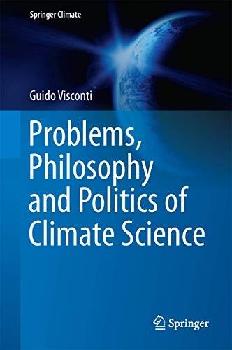
Problems, philosophy and politics of climate science
\"This book is a critical appraisal of the status of the so-called Climate Sciences (CS). These are contributed by many other basic sciences like physics, geology, chemistry and as such employ theoretical and experimental methods. In the last few decades most of the CS have been identified with the global warming problem and numerical models have been used as the main tool for their investigations. The produced predictions can only be partially tested against experimental data and may represent one of the reasons CS are drifting away from the route of the scientific method. On the other hand the study of climate faces many other interesting and mostly unsolved problems (think about ice ages) whose solution could clarify how the climatic system works. As for the global warming, while its existence is largely proved, scientifically it can be solved only with a large experimental effort carried out for a few decades. Problems can arise when not proved hypotheses are adopted as the basis for public policy without the recognition that they may be on shaky ground. The strong interactions of the Global Warming (GW) with the society create another huge problem of political nature for the CS.
Book

Uncertainty in simulating wheat yields under climate change
Projections of climate change impacts on crop yields are inherently uncertain(1). Uncertainty is often quantified when projecting future greenhouse gas emissions and their influence on climate(2). However, multi-model uncertainty analysis of crop responses to climate change is rare because systematic and objective comparisons among process-based crop simulation models(1,3) are difficult(4). Here we present the largest standardized model intercomparison for climate change impacts so far. We found that individual crop models are able to simulate measured wheat grain yields accurately under a range of environments, particularly if the input information is sufficient. However, simulated climate change impacts vary across models owing to differences in model structures and parameter values. A greater proportion of the uncertainty in climate change impact projections was due to variations among crop models than to variations among downscaled general circulation models. Uncertainties in simulated impacts increased with CO2 concentrations and associated warming. These impact uncertainties can be reduced by improving temperature and CO2 relationships in models and better quantified through use of multi-model ensembles. Less uncertainty in describing how climate change may affect agricultural productivity will aid adaptation strategy development and policymaking.
Journal Article

The global climate system : patterns, processes, and teleconnections
Over the last 20 years, developments in climatology have provided an array of explanations for the pattern of world climates. This textbook examines the Earth's climate systems in light of this incredible growth in data availability, data retrieval systems, and satellite and computer applications.
Book

The Pliocene Model Intercomparison Project Phase 2: Large-scale Climate Features and Climate Sensitivity
The Pliocene epoch has great potential to improve our understanding of the long-term climatic and environmental consequences of an atmospheric CO2 concentration near ∼400 parts per million by volume. Here we present the large-scale features of Pliocene climate as simulated by a new ensemble of climate models of varying complexity and spatial resolution based on new reconstructions of boundary conditions (the Pliocene Model Intercomparison Project Phase 2; PlioMIP2). As a global annual average, modelled surface air temperatures increase by between 1.7 and 5.2 ∘C relative to the pre-industrial era with a multi-model mean value of 3.2 ∘C. Annual mean total precipitation rates increase by 7 % (range: 2 %–13 %). On average, surface air temperature (SAT) increases by 4.3 ∘C over land and 2.8 ∘C over the oceans. There is a clear pattern of polar amplification with warming polewards of 60∘ N and 60∘ S exceeding the global mean warming by a factor of 2.3. In the Atlantic and Pacific oceans, meridional temperature gradients are reduced, while tropical zonal gradients remain largely unchanged. There is a statistically significant relationship between a model's climate response associated with a doubling in CO2 (equilibrium climate sensitivity; ECS) and its simulated Pliocene surface temperature response. The mean ensemble Earth system response to a doubling of CO2 (including ice sheet feedbacks) is 67 % greater than ECS; this is larger than the increase of 47 % obtained from the PlioMIP1 ensemble. Proxy-derived estimates of Pliocene sea surface temperatures are used to assess model estimates of ECS and give an ECS range of 2.6–4.8 ∘C. This result is in general accord with the ECS range presented by previous Intergovernmental Panel on Climate Change (IPCC) Assessment Reports.
Journal Article