
Catalogue Search | MBRL


Are you sure you want to remove the book from the shelf?

{{itemTitle}}
156
result(s) for
"Clinical psychology Vocational guidance."
Sort by:

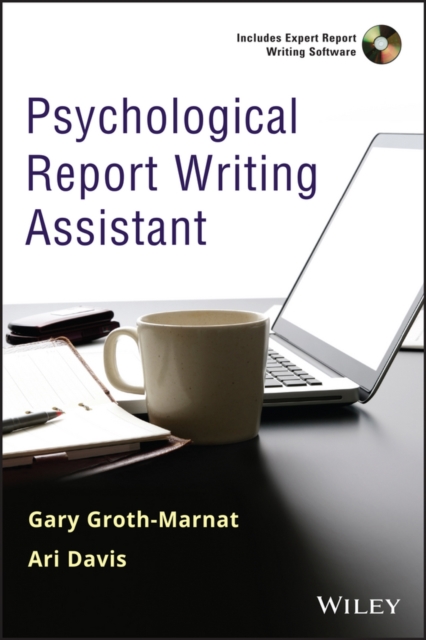
Psychological report writing assistant
Expert Report Writing Software—provides a step-by-step guide to writing clinically sound and rich psychological reports
The Psychological Report Writing Assistant software is a highly interactive program that guides the report writer through all phases of writing a report that is comprehensive, includes integrated interpretation, uses everyday language, and answers the referral questions. Key features include:
* A composition screen with links to resources to facilitate report writing
* Sample reports with links to guidelines on how to write sections of the report
* A comprehensive menu of treatment recommendations
* Search function to identify problem phrases with suggestions for alternative wording
* Compatible with Microsoft Windows
Blending the best of science with an appreciation for the art of doing clinical work, the accompanying guide:
* Describes six core qualities of an optimal psychological report
* Provides an overview of cognitive, neuropsychological, personality, psychoeducational, and forensic reports
* Offers guidelines for formatting and completing various sections of a report
* Discusses recommendations for treatment and for tailoring the report to the individual
* Includes instructions for navigating the software
Filling the need for an easy-to-use, intuitive tool for organizing and writing relevant psychological reports, Psychological Report Writing Assistant will help you quickly and easily create thorough and complete psychological reports.
eBook


JobTIPS: A Transition to Employment Program for Individuals with Autism Spectrum Disorders
This study evaluated the effectiveness of an internet accessed training program that included Theory of Mind-based guidance, video models, visual supports, and virtual reality practice sessions in teaching appropriate job interview skills to individuals with high functioning Autism Spectrum Disorders. In a randomized study, twenty-two youth, ages 16–19, were evaluated during two employment interviews. Half received a training intervention following the initial interview and the half who served as a contrast group did not. Their performance pre and post intervention was assessed by four independent raters using a scale that included evaluation of both Content and Delivery. Results suggest that youth who completed the JobTIPS employment program demonstrated significantly more effective verbal content skills than those who did not.
Journal Article

The Development and Content of the Vocational Advice Intervention and Training Package for the Study of Work and Pain (SWAP) Trial (ISRCTN 52269669)
Purpose There are substantial costs associated with sickness absence and struggling at work however existing services in the UK are largely restricted to those absent from work for greater than 6 months. This paper details the development of an early Vocational Advice Intervention (VAI) for adult primary care consulters who were struggling at work or absent due to musculoskeletal pain, and the structure and content of the training and mentoring package developed to equip the Vocational Advisors (VAs) to deliver the VAI, as part of the Study of Work and Pain (SWAP) cluster randomised trial. Methods In order to develop the intervention, we conducted a best-evidence literature review, summarised evidence from developmental studies and consulted with stakeholders. Results A novel early access, brief VAI was developed consisting of case management and stepped care (three steps), using the Psychosocial Flags Framework to identify and overcome obstacles associated with the health-work interface. Four healthcare practitioners were recruited to deliver the VAI; three physiotherapists and one nurse (all vocational advice was actually delivered by the three physiotherapists). They received training in the VA role during a 4-day course, with a refresher day 3 months later, along with monthly group mentoring sessions. Conclusions The process of development was sufficient to develop the VAI and associated training package. The evidence underpinning the VAI was drawn from an international perspective and key components of the VAI have the potential to be applied to other settings or countries, although this has yet to be tested.
Journal Article
Factors Associated with Participation in Employment for High School Leavers with Autism
This study aimed to identify the factors associated with participation in employment for high school leavers with autism. A secondary data analysis of the National Longitudinal Transition Study 2 (NLTS2) data was performed. Potential factors were assessed using a weighted multivariate logistic regression. This study found that annual household income, parental education, gender, social skills, whether the child had intellectual disability, whether the child graduated from high school, whether the child received career counseling during high school, and whether the child’s school contacted postsecondary vocational training programs or potential employers were the significant factors associated with participation in employment. These findings may have implications for professionals who provide transition services and post-secondary programs for individuals with autism.
Journal Article

A working life for people with severe mental illness
The history of mental health service delivery has been marked by an emphasis on clients’ vulnerabilities and deficits. As treatment programs have moved out of hospitals and into communities, however, the need to work with clients in developing real-world, practical skills, such as job training, has never been more important. Versions of this approach traditionally include skills training classes, job clubs, and sheltered employment, but have not been successful in helping people with severe mental illness gain competitive employment. This book describes the theory, empirical support, and practice of the Individual Placement and Support (IPS) approach to supported employment. IPS is the most widely studied and validated approach to supported employment for people with severe mental illness. The overall goals of IPS are to assist clients in finding jobs that are consistent with their preferences and skills, and to support their efforts in working. The book is divided into three sections: 1) Conceptual and Empirical Support for Individual Placement and Support; 2) Practice Guidelines for Implementing Supported Employment; and 3) Special Issues. Many vignettes and sample documents that provide practical information are included.
eBook

Linking career construction styles to career adaptability among university students: a canonical correlation analysis
Background
This study investigates the relationship between university students’ career construction styles and their career adaptability using Career Construction Theory (CCT) as a guiding framework. Career construction styles—crystallizing, exploring, and deciding—were examined in relation to the adaptability dimensions of concern, control, curiosity, and confidence.
Methods
This study utilized a quantitative, correlational research approach to investigate the association between university students’ career construction styles and their career adaptability resources. Canonical correlation analysis was chosen as the principal statistical method, with the first variable set encompassing three dimensions of career construction (Crystallizing, Exploring, and Deciding), and the second variable set consisting of four dimensions of career adaptability (Concern, Control, Curiosity, and Confidence). This study utilized a “Personal Information Form” together with the “Student Career Construction Inventory” and “Career Adaptability Scale” as instruments for collecting data and a cohort of 780 Turkish university students participated in research.
Results
Among the career construction dimensions, Crystallizing and Deciding showed the highest structure coefficients within the canonical variate representing Career Construction Styles. However, the proportion of variance in one set associated with the canonical variate of the other set was modest, suggesting that while these forms of behaviour contribute meaningfully to adaptability. Among adaptability resources, concern demonstrated the most substantial canonical loading, indicating that students who are able to define vocational identities and make informed career decisions tend to display stronger future orientation. Although the canonical correlation was statistically significant, redundancy indices indicated a modest proportion of variance in one variable set that is associated with the canonical variate derived from the other set, underscoring the multifaceted nature of career adaptability.
Conclusion
These findings reinforce the value of fostering vocational identity formation and decision-making skills in enhancing students’ adaptability, particularly during school-to-work transitions. The study offers implications for culturally informed career counseling interventions and emphasizes the need for longitudinal and multi-method approaches in future research to capture the dynamic interplay between career construction and adaptability.
Journal Article

Medical students: They’re not just little doctors! Impact of an online group-coaching program on medical student well-being: A randomized clinical trial
Physician burnout begins in medical school. Professional coaching can improve physician well-being, but generalizable evidence in medical students is lacking. We aim to evaluate a coaching program in a national sample of students.
A randomized clinical trial assessing a four-month, web-based, group coaching program was conducted between September 1, 2023, and December 31, 2023, among medical students from seven institutions. The primary outcome was burnout measured using the Maslach Burnout Inventory. Secondary outcomes included impostor syndrome, moral injury, self-compassion, and flourishing. A linear mixed effect model analysis was performed on an intent-to-treat basis.
Among the 390 participating students (mean [SD] age, 25.3 [2.38]), 197 were randomized to the intervention group. There were no significant post-coaching differences in burnout, moral injury or impostor syndrome between groups. After the coaching intervention, the intervention group had significantly greater self-compassion with an absolute difference of 3.00 points (SE = 1.29; 95% CI, 0.48 to 5.53 points; P = 0.021)), and significantly higher flourishing scores, with an absolute difference of 0.45 points (SE = 0.23; 95% CI, 0.01 to 0.90 points; P = 0.048) compared to the control.
Web-based group coaching did not have an impact on measures of distress in medical students, though did improve well-being outcomes including self-compassion and flourishing. Trial Registration: ClinicalTrials.gov Identifier: NCT05822375.
Journal Article

Evaluation of career planning group counseling and its effectiveness for intern male nursing students
Objective
To investigate the influence of group counselling on the career planning and career maturity of male nursing students.
Method
Sixty male nursing students were randomly selected from a specific-level first-class hospital in Hunan Province from July to August 2020 by using the convenience sampling method and were subsequently divided into the control group and the experimental group using the random number table method. The control group received routine pre-job training, including aspects concerning the hospital profile, nurse etiquette, nursing core systems, professional ethics, nursing emergency treatment and career prospects and planning. In the experimental group, career planning group counselling was added after the regular pre-service training (once a week) with each session lasting 2 h for a total of six training sessions. At six weeks and three months after the intervention, the career status evaluation scale and the college students' career maturity scale were used to compare the career planning and career maturity status of the two groups of male nursing students.
Results
After six weeks and three months of intervention, all the dimensions and total scores of both the career status evaluation scale and the career maturity scale in the experimental group were superior to those in the control group with statistically significant differences (all
P
< 0.05). The repeated measures of variance analysis indicated that the differences in the total score for career planning and the four dimensions in terms of intergroup effect, time effect and interaction effect between the two groups were statistically significant (
P
< 0.05). The intergroup effect, time effect and interaction effect of the total score for vocational maturity, career goal, career confidence, career value, career freedom and career reference of the two groups were statistically significant (
P
< 0.05), while the time effect of the relative dependency dimension was also statistically significant (
P
< 0.05).
Conclusion
Group counselling can significantly improve the career planning and career maturity status of male nursing students and has a certain long-term effect.
Journal Article