
Catalogue Search | MBRL


Are you sure you want to remove the book from the shelf?

{{itemTitle}}
140
result(s) for
"Clive Staples"
Sort by:

The Lion's Country
Using a philosophical lens to more deeply examine, appreciate, and understand C.S.Lewis's writings Drawing on C.S.Lewis's essays, sermons, and fiction, The Lion's Country offers a comprehensive exploration of Lewis's understanding of reality--important, Charlie W.
eBook
The Medieval Mind of C. S. Lewis
C. S. Lewis had one of the great minds of the twentieth century.
Many readers know Lewis as an author of fiction and fantasy literature, including the Chronicles of Narnia and the Space Trilogy. Others know him for his books in apologetics, including Mere Christianity and The Problem of Pain. But few know him for his scholarly work as a professor of medieval and Renaissance literature.
What shaped the mind of this great thinker? Jason Baxter argues that Lewis was deeply formed not only by the words of Scripture and his love of ancient mythology, but also by medieval literature. For this undeniably modern Christian, authors like Dante and Boethius provided a worldview that was relevant to the challenges of the contemporary world.
Here, readers will encounter an unknown figure to guide them in their own journey: C. S. Lewis the medievalist.
eBook
The intellectual world of C. S. Lewis
Marking the 50th anniversary of Lewis' death, The Intellectual World of C. S. Lewis sees leading Christian thinker Alister McGrath offering a fresh approach to understanding the key themes at the centre of Lewis' theological work and intellectual development.
* Brings together a collection of original essays exploring important themes within Lewis' work, offering new connections and insights into his theology
* Throws new light on subjects including Lewis' intellectual development, the uses of images in literature and theology, the place of myth in modern thought, the role of the imagination in making sense of the world, the celebrated 'argument from desire', and Lewis' place as an Anglican thinker and a Christian theologian
* Written by Alister McGrath, one of the world's leading Christian thinkers and authors; this exceptional pairing of McGrath and Lewis brings together the work of two outstanding theologians in one volume
eBook
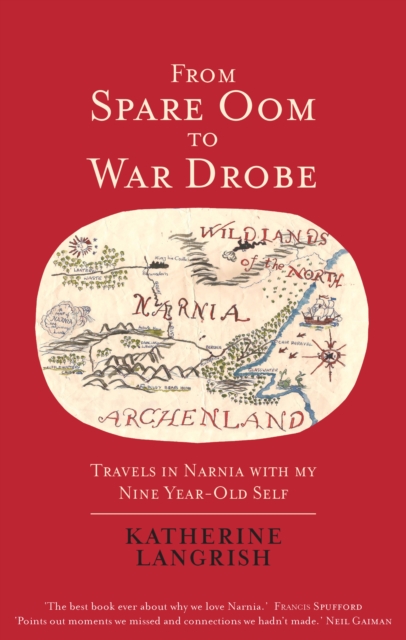
From Spare Oom to War Drobe
Back in the 1960s a little girl of nine who was deeply in love with Narnia wrote a book of short stories. Written in spiky blue ink with various crossings-out and spelling mistakes, Katherine Langrish's Tales of Narnia filled an old hard-cover notebook from front to back. Some of the stories were illustrated with dramatic, poster-painted scenes, and Katherine drew a map of Narnia on the inside back cover. Now a celebrated adult writer of children's and young adult's literature, Langrish has revisited C. S. Lewis's Seven Chronicles of Narnia to explore what they mean to her today. In From Spare Oom to War Drobe she analyses what once enchanted her and asks whether it still has the power to do so. Hand in hand with her nine year-old self, she traces many paths through Lewis's thick forest of allusions not only to Christianity, but to Plato, fairy tales, myths, legends, medieval romances, renaissance poetry and indeed to other children's books.Here are two very different ways of reading the Narnia stories: the adult, informed, rational way and the passionate childish way. For whenever children fall in love with a book they love it fiercely, loyally, completely; and as anyone it's ever happened to will know, it can be a transformative experience.The Foreword has been written by award-winning writer and broadcaster Brian Sibley, who dramatised the BBC radio adaptations of The Chronicles of Narnia, and wrote Shadowlands, a biography of C. S. Lewis.
eBook

Finding God in the Land of Narnia
\"Now at last they were beginning Chapter One of the Great Story...\" Bestselling authors Kurt Bruner and Jim Ware ( Finding God in The Lord of the Rings ) once again explore a world of fantasy to reveal what C.S.Lewis called \"the Great Story\" hidden within.
eBook
The Faun's Bookshelf
While visiting with Mr. Tumnus in The Lion, the Witch and the Wardrobe, Lucy Pevensie notices a bookshelf filled with such titles as Nymphs and Their Ways and Is Man a Myth? Be- ginning with these imaginary texts, Charlie W. Starr offers a comprehensive study of C. S. Lewis's theory of myth, including his views on Greek and Norse mythology, the origins of myth, and the implications of myth on thought, art, gender, theology, and literary and linguistic theory. For Lewis, myth represents an ancient mode of thought focused in the imagination—a mode that became the key that ultimately brought Lewis to his belief in Jesus Christ as the myth become fact.
Beginning with a f The Faun's Bookshelf goes on to discuss the many books Lewis imagined throughout his writings—books whose titles he made up but never wrote. It also presents the sylvan myths central to the first two book titles in Mr. Tumnus's library, including explorations of the relation- ship between myth and reality, the spiritual significance of natural conservation, and the spiritual and incarnational qualities of gender.
Starr then turns to the definition of myth, the literary qualities of myth, the mythic nature inherent in divine glory, humanity's destiny to embrace (or reject) that glory, and a deeper exploration of the epistemological ramifications of myth in relation to meaning, imagination, reason, and truth.
eBook

The Lion's World
Former Archbishop of Canterbury Rowan Williams opens a new window onto C.S. Lewis's The Chronicles of Narnia, revealing the moral wisdom and passionate faith beneath their perennial appeal.
eBook
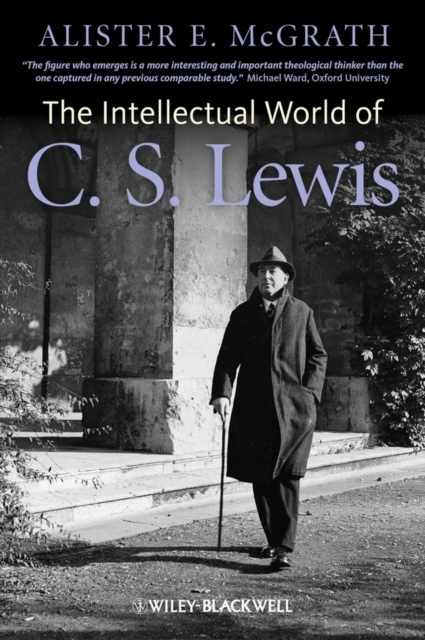
The intellectual world of C.S. Lewis
Marking the 50th anniversary of Lewis' death, The Intellectual World of C. S. Lewis sees leading Christian thinker Alister McGrath offering a fresh approach to understanding the key themes at the centre of Lewis' theological work and intellectual development. Brings together a collection of original essays exploring important themes within Lewis' work, offering new connections and insights into his theology Throws new light on subjects including Lewis' intellectual development, the uses of images in literature and theology, the place of myth in modern thought, the role of the imagination in making sense of the world, the celebrated 'argument from desire', and Lewis' place as an Anglican thinker and a Christian theologian Written by Alister McGrath, one of the world's leading Christian thinkers and authors; this exceptional pairing of McGrath and Lewis brings together the work of two outstanding theologians in one volume
eBook
Gaining a Face
Contrary to the popular perception that C.S. Lewis was merely a religious writer, there is a good case to be made for Lewis being one of the major British writers of the twentieth century if we look at him as a prime member of a resurgent Romantic movement after the Second World War. Much has been written on Lewiss thoughts on joy, a central aspect of his Romanticism. However, Lewis was at the same time a rationalist, and managed to merge his Rationalism with his Romanticism in a unique and.
eBook
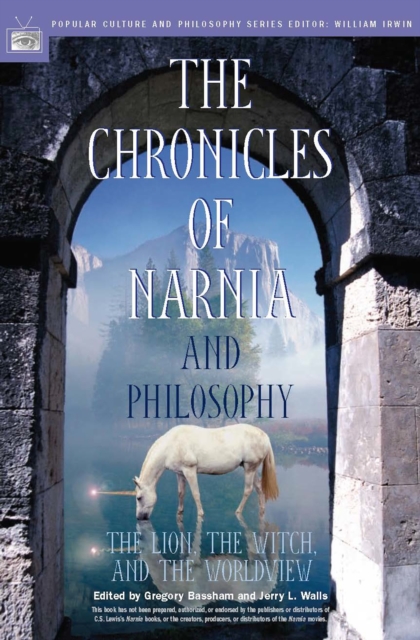
The chronicles of Narnia and philosophy : the lion, the witch, and the worldview
The Chronicles of Narnia series has entertained millions of readers, both children and adults, since the appearance of the first book in 1950. Here, scholars turn the lens of philosophy on these timeless tales. Engagingly written for a lay audience, these essays consider a wealth of topics centered on the ethical, spiritual, mythic, and moral resonances in the adventures of Aslan, the Pevensie children, and the rest of the colorful cast. Do the spectacular events in Narnia give readers a simplistic view of human choice and decision making? Does Aslan offer a solution to the problem of evil? What does the character of Susan tell readers about Lewis's view of gender? How does Lewis address the Nietzschean \"master morality\" embraced by most of the villains of the Chronicles? With these and a wide range of other questions, this provocative book takes a fresh view of the world of Narnia and expands readers' experience of it.
eBook