
Catalogue Search | MBRL


Are you sure you want to remove the book from the shelf?

{{itemTitle}}
10
result(s) for
"Clock and watch making History."
Sort by:

Masters of contemporary watchmaking
The book's many photographs offer a retrospective exhibition of the watches of George Daniels, Svend Andersen, Vincent Calabrese, Philippe Dufour, Antoine Preziuso, Franck Muller, Aniceto Jiménez Pita, Alain Silberstein, Marco Lang, Vianney Halter and Roger Smith.
Book
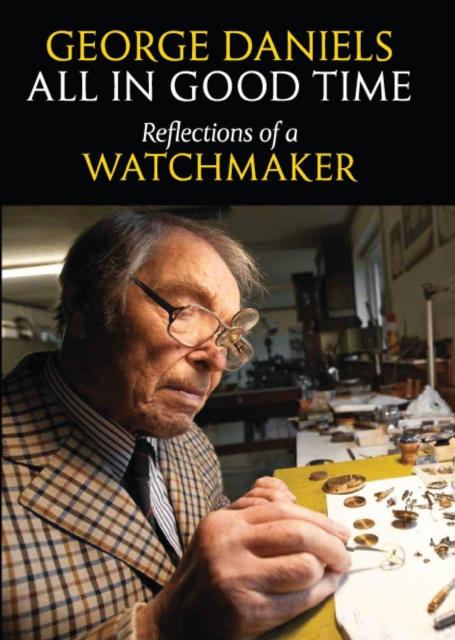
All in Good Time
All in Good Time is the remarkable story of George Daniels, the master mechanic, who was born into poverty but raised himself to become the greatest watchmaker of the twentieth century. Daniels stood alone in modern times as the inventor of the revolutionary co-axial escapement, the first substantial advance in portable mechanical timekeeping over the lever escapement, which had dominated ever since its invention in 1759. Daniels's love of mechanics embraced not only the minute, however - he was also a passionate collector and driver of historic motorcars. This revised and updated autobiography allows the reader to witness the triumph of intelligence, ingenuity, matchless skill and singularity of purpose over the most unpromising of beginnings.
eBook

The changing face of early modern time, 1550-1770
This book provides a reinterpretation of early modern clock and watch dials on the basis of use. Between 1550 and the emergence of a standard format in 1770, dials represented combinations of calendrical, lunar and astronomical information using multiple concentric rings, subsidiary dials and apertures. Change was gradual, but significant. Over the course of eight chapters and with reference to thirty-five exceptional images, this book unlocks the meaning embedded within these early combinations. The true significance of dial change can only be fully understood by comparing dials with printed paper sources such as almanacs, diagrams and craft pamphlets. Clock and watch makers drew on traditional communication methods, utilised different formats to generate trust in their work, and tried to be help users in different contexts. The calendar, lunar and astronomical functions were useful as a memory prompt for astrology up until the mid-late seventeenth century. After the decline of this practice, the three functions continued to be useful for other purposes, but eventually declined.
Book

Shaping the day : a history of timekeeping in England and Wales 1300-1800
Timekeeping is an essential activity in the modern world, and we take it for granted that our lives are shaped by the hours of the day. This book is a study of the practice of timekeeping in England and Wales between 1300 and 1800 and how it was brought about by centuries of technical innovation and circulation of ideas about time. The authors illustrate how a particular kind of common sense about time came into being, and how it developed during this period. The study cites famous figures like John Harrison, who solved the problem of longitude, and less familiar characters like sailors, gamblers, and burglars. Overturning many common perceptions of the past — for example, that clock time and the industrial revolution were intimately related — this historical study is interested in how ‘telling the time’ has come to dominate our way of life.
eBook
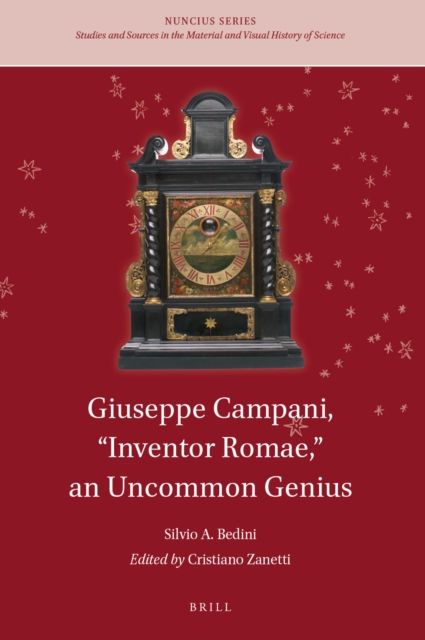
Giuseppe Campani, Inventor Romae, an Uncommon Genius
Giuseppe Campani, \"Inventor Romae,\" an Uncommon Genius offers an account of the life and creations of the most talented maker of optic lenses, silent clocks and projector clocks of the second half of the seventeenth century but also provides you with unique insights into the scientific and technological landscape of baroque Rome and its links to a broader European scene.
eBook

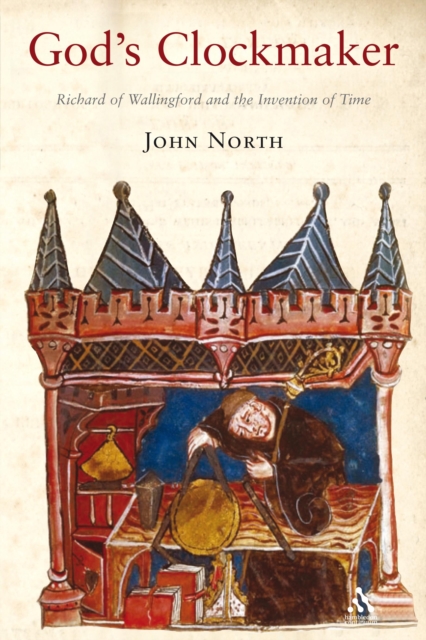
God's clockmaker : Richard of Wallingford and the invention of time
Clocks became common in late medieval Europe and the measurement of time began to rule everyday life. God's Clockmaker: Richard of Wallingford and the Invention of Time is a biography of England's greatest medieval scientist, a man who solved major practical and theoretical problems to build an extraordinary and pioneering astronomical and astrological clock. Richard of Wallingford (1292-1336), the son of a blacksmith, was a brilliant mathematician with a genius for the practical solution of technical problems. Trained at Oxford, he became a monk and then abbot of the great abbey of St Albans, where he built his clock. Although as abbot he held great power, he was also a tragic figure, becoming a leper. His achievement, nevertheless, is a striking example of the sophistication of medieval science, based on knowledge handed down from the Greeks via the Arabs.
eBook


The Wiki Man: Rory Sutherland
Here's a challenge for film buffs: can anyone remember, from the entire canon of cinema and television, a single scene set in an underground car park in which something unpleasant or nefarious did not occur? Yet I still rather like them. By far the best car park in London is the one found underneath Bloomsbury Square, which is in the shape of a double-helix. This allows you to drive all the way down and all the way up again with your steering wheel in one position. About once a year I park in the Mayfair car park at the bottom of Park Lane. I recently noticed that an annual season ticket for the car park is £3,900, which, provided you are happy to sleep in your car and wash in the nearby public toilets, makes it something of a bargain for central London property. I recently paid a fairly hefty £22 to park for three hours. On the positive side, if you want to look at spectacularly expensive cars, the Mayfair car park is a cheap alternative to visiting the Motor Show, and also gives you the mild thrill of visiting what is, following the closure of the Razzle Multistorey in Bexleyheath, the only car park in London to be named after a pornographic -magazine.
Magazine Article