
Catalogue Search | MBRL


Are you sure you want to remove the book from the shelf?

{{itemTitle}}
15
result(s) for
"Clothing and dress Japan History."
Sort by:

Japanese fashion cultures : dress and gender in contemporary Japan
\"From rococo to Edwardian fashions, Japanese street style has reinvented many western dress styles, reinterpreting and altering their meanings and messages in a different cultural and historical context. This wide ranging and original study reveals the complex exchange of styles and what they represent in Japan and beyond, contesting common perceptions of gender in Japanese dress and the notion that non-western fashions simply imitate western styles. Through case studies focussing on fashion image consumption in style tribes such as Kamikaze Girls, Lolita, Edwardian, Ivy Style, Victorian, Romantic and Kawaii, this ground-breaking book investigates the complexities of dress and gender and demonstrates the flexible nature of contemporary fashion and style exchange in a global context. Japanese Fashion Cultures will appeal to students and scholars of fashion, cultural studies, gender studies, media studies and related fields. \"-- Provided by publisher.
Book

Japanese Fashion Cultures
Blurb: From Rococo to Edwardian fashions, Japanese street style has reinvented many western dress styles, reinterpreting and altering their meanings and messages in a different cultural and historical context. This wide ranging and original study reveals the complex exchange of styles and what they represent in Japan and beyond, contesting common perceptions of gender in Japanese dress and the notion that non-western fashions simply imitate western styles. Through case studies focussing on fashion image consumption in style tribes such as Kamikaze Girls, Lolita, Edwardian, Ivy Style, Victorian, Romantic and Kawaii, this ground-breaking book investigates the complexities of dress and gender and demonstrates the flexible nature of contemporary fashion and style exchange in a global context. Japanese Fashion Cultures will appeal to students and scholars of fashion, cultural studies, gender studies, media studies and related fields.
eBook

Ametora : how Japan saved American style
\"From a rising fashion historian, the story of how Japan imitated, assimilated, perfected, and ultimately saved traditional American fashion Look closely at any typically \"American\" article of clothing these days, and you may be surprised to see a Japanese label inside. From high-end denim to oxford button-downs, Japanese designers have taken the classic American lookknown as ametora, or \"American traditional\"and turned it into a huge business for companies like Uniqlo, Kamakura Shirts, Evisu, and Kapital. This phenomenon is part of a long dialogue between Japanese and American fashion; in fact, many of the basic items and traditions of the modern American wardrobe are alive and well today thanks to the stewardship of Japanese consumers and fashion cognoscenti, who ritualized and preserved these American styles during periods when they were out of vogue in their native land. In Ametora, cultural historian W. David Marx traces the Japanese assimilation of American fashion over the past hundred and fifty years, showing how Japanese trendsetters and entrepreneurs mimicked, adapted, imported, and ultimately perfected American style, dramatically reshaping not only Japan's culture but also our own in the process\"--Publisher's website.
Book

Kimono
What is the kimono? Everyday garment? Art object? Symbol of Japan? As this book shows, the kimono has served all of these roles, its meaning changing across time and with the perspective of the wearer or viewer. Kimono: A Modern History begins by exposing the seventeenth- and eighteenth-century foundations of the modern kimono fashion industry. It explores the crossover between art and fashion in this period at the hands of famous Japanese painters who worked with clothing pattern books and painted directly onto garments. With Japans exposure to Western fashion in the nineteenth century, and Westerners exposure to Japanese modes of dress and design, the kimono took on new associations and came to symbolize an exotic culture and an alluring female form. In the aftermath of the Second World War, the kimono industry was sustained through government support. The line between fashion and art became blurred as kimonos produced by famous designers were collected for their beauty and displayed in museums, rather than being worn as clothing. Today, the kimono has once again taken on new dimensions, as the Internet and social media proliferate images of the kimono as a versatile garment to be integrated into a range of individual styles. Kimono: A Modern History, the inspiration for a major exhibition at the Metropolitan Museum of Art in New York, not only tells the story of a distinctive garments ever-changing functions and image, but provides a novel perspective on Japans modernization and encounter with the West.
eBook

The social life of kimono : Japanese fashion past and present
\"The kimono is an iconic garment with a history as rich and colourful as the textiles from which it is crafted. Deeply associated with Japanese culture both past and present, it has often been thought of as a highly gendered, rigidly traditional and unchanging national costume. This book challenges that perception, revealing the nuanced meanings and messages behind the kimono from the point of view of its wearers and producers, many of whom - both men and women - see the garment as a vehicle for self-expression. Taking a material culture approach, The Social Life of Kimono is the first study to combine the history of the kimono as a fashionable garment with an in-depth exploration of its multifaceted role today on both the street and the catwalk. Through case studies covering historical advertising campaigns, fashion magazines, interviews with contemporary kimono designers, large scale and small craft producers, and consumers who choose to wear them, The Social Life of Kimono gives a unique insight into making and meaning of this complex garment\"-- Provided by publisher.
Book

The Social Life of Kimono
The kimono is an iconic garment with a history as rich and colourful as the textiles from which it is crafted. Deeply associated with Japanese culture both past and present, it has often been thought of as a highly gendered, rigidly traditional, and unchanging national costume. This book challenges that perception, revealing the nuanced meanings and messages behind the kimono from the point of view of its wearers and producers, many of whom – both men and women – see the garment as a vehicle for self-expression. Taking a material culture approach, The Social Life of Kimono is the first study to combine the history of the kimono as a fashionable garment with an in-depth exploration of its multifaceted role today on both the street and the catwalk. Through case studies covering historical advertising campaigns, fashion magazines, interviews with contemporary kimono designers, large scale and small craft producers, and consumers who choose to wear them, The Social Life of Kimono gives a unique insight into making and meaning of this complex garment.
eBook

The stories clothes tell : voices of working-class Japan
\"This compelling social history tells the stories of ordinary people in modern Japan. Tatsuichi Horikiri spent a lifetime searching out old items of clothing and oral history accounts to shed light on those who used these items. He reveals not only the often desperate lives of these people, he illuminates their hopes, aspirations, and human values\"--Provided by publisher.
Book

Fabricating consumers
Since its early days of mass production in the 1850s, the sewing machine has been intricately connected with the global development of capitalism. Andrew Gordon traces the machine's remarkable journey into and throughout Japan, where it not only transformed manners of dress, but also helped change patterns of daily life, class structure, and the role of women. As he explores the selling, buying, and use of the sewing machine in the early to mid-twentieth century, Gordon finds that its history is a lens through which we can examine the modern transformation of daily life in Japan. Both as a tool of production and as an object of consumer desire, the sewing machine is entwined with the emergence and ascendance of the middle class, of the female consumer, and of the professional home manager as defining elements of Japanese modernity.
eBook

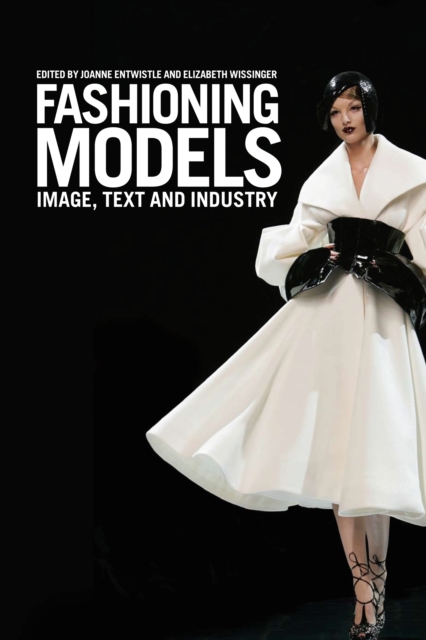
Fashioning Models
This volume presents a cutting-edge examination of modelling through race, class and gender, as well as its structure as an aesthetic marketplace within the global fashion economy. Accessible and highly engaging, Fashioning Models is essential reading for students and scholars of fashion and related disciplines.
eBook