
Catalogue Search | MBRL


Are you sure you want to remove the book from the shelf?

{{itemTitle}}
3,594
result(s) for
"Coaching Children"
Sort by:

Youth Soccer
As the adult game has increased in popularity, youth soccer has also seen significant expansion in recent years. The popularity of the youth game is set to continue. Young boy and girl players wish to emulate professional soccer stars and the professional game, often with long-term financial rewards in mind, is increasingly keen to develop young talent.
Applied sports science is now a well-established feature of the adult game but the sports science that supports modern football does not translate directly into the youth game. The coaches of young players need specific information about children. Themes explored in this text include:
growth of physiological systems
development of motor and perceptive skills
paediatric environmental physiology
prevention of injury
diet and nutrition
youth fitness and skills training
effective teaching and coaching of juniors
the role of football academies.
Youth Soccer: From Science to Performance blends current child-focused sports science theory with youth-specific coaching practice to help create soccer development strategies for children. It promotes knowledge and understanding in all these areas and will further professional expertise amongst coaches who wish to develop the all year round potential of youth soccer players and train the stars of the future.
1. An Introduction to the science of youth soccer 2. The growth of the physiological systems 3. Environmental factors in youth soccer 4. Injury in youth soccer players 5. The young female soccer player 6. Developing fitness in the young soccer player 7. Nutrition for young soccer players 8. Acquiring soccer skills: Effective practice and instruction 9. Perceptual and cognitive expertise: Developing game intelligence 10. The science of pedagogy and youth soccer coaching 11. Psychosocial considerations of elite youth player development 12. The role of the football academy.
eBook

101 youth football coaching sessions
\"Designed specifically for younger players, 101 youth football coaching sessions offers a range of progressive practice sessions to help young players develop.\"--Page 4 of cover.
Book
Game Sense
Game Sense is an exciting and innovative approach to coaching and physical education that places the game at the heart of the session. It encourages the player to develop skills in a realistic context, to become more tactically aware, to make better decisions and to have more fun. Game Sense is a comprehensive, research-informed introduction to the Game Sense approach that defines and explores key concepts and essential pedagogical theory, and that offers an extensive series of practical examples and plans for using Game Sense in real teaching and coaching situations.
The first section of the book helps the reader to understand how learning occurs and how this informs player-centred pedagogy. It also explains the relationship between Game Sense and other approaches to Teaching Games for Understanding. The second section of the book demonstrates how the theory can be applied in practice, providing a detailed, step-by-step guide to using Game Sense in eleven sports, including soccer, basketball, field hockey and softball.
No other book explores the Game Sense approach in such depth, or combines theory and innovative practical techniques. Game Sense is invaluable reading for all students of physical education or sports coaching, any in-service physical education teacher or any sports coach working with children or young people.
eBook

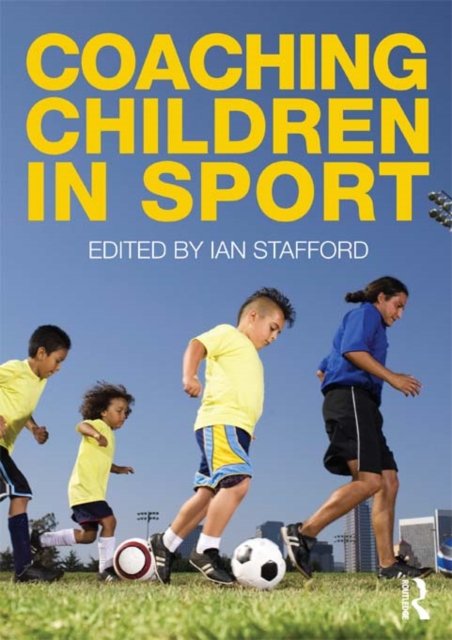
Coaching Children in Sport
All coaches working with children will know that they differ substantially from adults in their capabilities, capacity for development and in their ability to meet the demands that sport places upon them. Coaching Children in Sport provides an up-to-date, authoritative and accessible guide to core knowledge and coaching skills for anybody working with children in sport.
Written by a team of leading international coaching experts, teachers, psychologists and specialists in children's issues in sport and health, the book explains why children should not be treated as mini-adults in sport and helps coaches to devise effective ways of working that not only achieve results but also take into account the best interests of the child. It examines key topics such as:
fundamental coaching skills
coaching philosophies and models
children's physical and psychosocial development
children's motivation
safeguarding and child protection issues and coaching ethics
sport and children's health
talent identification and high performance coaching
reflective practice in sports coaching.
Including case studies, practical reflective activities and guides to further reading throughout, Coaching Children in Sport is an essential text for all courses and training programmes in sports coaching. It is also vital reading for all students, teachers and practitioners working with children in sport, physical education or developmental contexts.
eBook


Models-based Practice in Physical Education
This book offers a comprehensive synthesis of over 40 years of research on models in physical education to suggest Models-based Practice (MbP) as an innovative future approach to physical education. It lays out the ideal conditions for MbP to flourish by situating pedagogical models at the core of physical education programs and allowing space for local agency and the co-construction of practice.
Starting from the premise that true MbP does not yet exist, the book makes a case for the term \"pedagogical model\" over alternatives such as curriculum model and instructional model, and explains how learners' cognitive, social, affective and psychomotor needs should be organised in ways that are distinctive and unique to each model. It examines the core principles underpinning the pedagogical models that make up MbP, including pedagogical models as organising centres for program design and as design specifications for developing local programs. The book also explores how a common structure can be applied to analyse pedagogical models at macro, meso and micro levels of discourse. Having created a language through which to talk about pedagogical models and MbP, the book concludes by identifying the conditions - some existing and some aspirational - under which MbP can prosper in reforming physical education.
An essential read for academics, doctoral and post-graduate students, and pre-service and in-service teachers, Models-based Practice in Physical Education is a vital point of reference for anyone who is interested in pedagogical models and wants to embrace this potential future of physical education.
eBook

Teaching children's gymnastics : spotting and securing : step by step with thousands of ideas for children to spot each other
This is a guide to teaching children's gymnastics, from pre-school to beginner levels. It explores spotting and securing, which are two essential safety constituents when it comes to teaching and training gymnastics.
Book

The Spectrum of Teaching Styles in Physical Education
This is the first in-depth, practice-focused book to explain 'spectrum theory' and its application in physical education and sports coaching. Spectrum theory identifies 11 distinct teaching styles, with decision making as a central characteristic, and allows teachers to select age and developmentally appropriate styles across social, physical, ethical, emotional and cognitive channels. The book brings together leading thinkers in spectrum theory, to demonstrate how it can be applied to improve teaching and learning in PE and coaching.
Drawing on real-world research in schools and universities, the book considers the history of spectrum theory, and examines its significance across important areas such as physical education teacher education, sport pedagogy, teacher development, models such as Games Sense and Teaching Games for Understanding, skill acquisition and student learning and perception. Every chapter highlights the practical implications of research in real-world settings and considers how spectrum theory can enhance learning experiences.
This book is invaluable reading for all pre-service and in-service school physical education teachers, sports coaches, school pedagogical leaders and college lecturers.
eBook