
Catalogue Search | MBRL


Are you sure you want to remove the book from the shelf?

{{itemTitle}}
6,893
result(s) for
"Coaching Science"
Sort by:


The Effectiveness of Linear and Nonlinear Pedagogical Approaches in Team-Invasion Ball Sports: A Systematic Review
Background
In the sport sciences, skill development is often (implicitly) explained through two metatheoretical perspectives:
interactionism
and
transactionism
. Given certain assumptions, the former adheres to a linear pedagogical approach to learning, while the latter follows a nonlinear pedagogical approach. The aim of this systematic review was to compare the effects of linear and nonlinear pedagogical approaches on the development of technical and tactical skills in team-invasion ball sports.
Methods
A systematic search of six databases (EmBase, PubMed, SPORTDiscus, OVID Medline, CINAHL, and OVID PsychInfo) was undertaken from root to 1st May 2024. Included studies were critically appraised using the ROBINS-I and RoB2 instruments. A narrative and descriptive synthesis approach was utilised.
Results
From 7450 potential records, nine studies were included, which explored the effects of a nonlinear versus linear pedagogy for developing technical and tactical skills in team-invasion ball sports. While, for most outcomes, the results showed there were no significant differences, nonlinear pedagogy did appear more favourable in 34% of technical outcomes. Further, descriptive synthesis of four studies revealed that nonlinear pedagogy was significantly better for developing tactical skills in 66% of outcomes.
Conclusions
While based on limited studies, linear and nonlinear pedagogical approaches appear to achieve similar results with regards to technical skill development. However, nonlinear pedagogy was favoured in some studies. With regards to tactical skill development, nonlinear pedagogical approaches appear better than linear approaches. Further high-quality research is needed to confirm these findings and examine how they may be implicated by the representativeness of the assessment instruments.
Key Points
Both linear and nonlinear pedagogical approaches assist with skill development in team-invasion ball sports.
Nonlinear pedagogical approaches generally result in greater effects when developing tactical skills, while most literature shows there are no significant differences between approaches when developing technical skills.
Further high-quality research exploring the effects of these pedagogical approaches is required to substantiate these findings.
Questions remain regarding the representativeness of the assessment instruments used in the studies included in this review.
Registration
This systematic review is registered with Open Science Framework-
https://osf.io/za247/
Journal Article

Portuguese Coaches' Perceptions of and Preferences for Knowledge Sources Related to their Professional Background
The purpose of this study was to analyse Portuguese coaches' perceptions of, and preferences for, knowledge sources as related to professional background; namely academic education level, coach education level and coaching experience. The study's participants comprised 336 Portuguese coaches from twenty-two sports. A questionnaire was used to identify coaches' demographic characteristics and representations about their preferred sources of coaching knowledge. MANOVA using Tukey's HSD test was used to compare groups. The results highlighted that coaches perceived that coaching knowledge is built from a broad range of sources from personal coaching and playing experiences to more explicit formal, informal and non-formal learning situations. Results indicated that the coaches ascribed more importance to experiential sources such as working with experts, learning by doing, interacting with peer coaches and attending informal seminars and clinics, than to the formal learning situations provided by the national coaching certification programs. Differences, however, were found in that coaches who had a greater background within higher education (physical) and sport valued informal and non-formal learning sources more than did coaches who were defined as not coming from an academic background. The findings point to the importance of developing new learning, experientially-based, opportunities within the Portuguese context, where curricula content continues to be delivered via didactic means. Key pointsCoaches recognized that learning is obtained from a broad range of sources of coaching knowledge and each source has a particular role in the development of a coach.Experiential guided sources reached more importance to coaches as working with experts, learning by doing, attending seminars/clinics outside of the formal system and interaction with peers were the most acknowledged.The only source that is related to formal learning, national certification programs, was recognized as the less importance than all informal and non-formal learning situations.The profile of the source of coaching knowledge showed to be stable among coaches as only the academic education level differentiated the coaches' perceptions.
Journal Article

Routledge Handbook of Sports Performance Analysis
Sport performance analysis techniques help coaches, athletes and sport scientists develop an objective understanding of actual sport performance, as opposed to self-report, fitness tests or laboratory based experiments. For example, contemporary performance analysis enables elite sports people and coaches to obtain live feedback of match statistics and video sequences using flexible internet systems, systems that have become an indispensible tool for all those involved in high performance sport. The Routledge Handbook of Sports Performance Analysis is the most comprehensive guide to this exciting and dynamic branch of sport science ever to be published.
The book explores performance analysis across the four main contexts in which it is commonly used: support for coaches and athletes; the media; judging sport contests, and academic research. It offers an up-to-date account of methodological advances in PA research, assesses the evidence underpinning contemporary theories of sport performance, and reviews developments in applied PA across a wide range of sports, from soccer to track and field athletics. Covering every important aspect of PA, including tactics, strategy, mechanical aspects of technique, physical aspects of performance such as work-rate, coach behaviour and referee behaviour, this is an essential reference for any serious student, researcher or practitioner working in sport performance analysis, sport coaching or high performance sport.
eBook

Strength and Conditioning for Team Sports
Strength and Conditioning for Team Sports is designed to help trainers and coaches to devise more effective high-performance training programs for team sports. This remains the only evidence-based study of sport-specific practice to focus on team sports and features all-new chapters covering neuromuscular training, injury prevention and specific injury risks for different team sports. Fully revised and updated throughout, the new edition also includes over two hundred new references from the current research literature.
The book introduces the core science underpinning different facets of physical preparation, covering all aspects of training prescription and the key components of any degree-level strength and conditioning course, including:
physiological and performance testing
strength training
metabolic conditioning
power training
agility and speed development
training for core stability
training periodisation
training for injury prevention
Bridging the traditional gap between sports science research and practice, each chapter features guidelines for evidence-based best practice as well as recommendations for approaches to physical preparation to meet the specific needs of team sports players. This new edition also includes an appendix that provides detailed examples of training programmes for a range of team sports. Fully illustrated throughout, it is essential reading for all serious students of strength and conditioning, and for any practitioner seeking to extend their professional practice.
Paul Gamble has worked in high performance sport for over a decade, during which time he has coached elite athletes in an array of sports and at all ages and stages of development. Paul began his career working in professional rugby with English Premiership side London Irish, and has since worked in a range of sports, most recently serving as National Strength & Conditioning Lead for Scottish Squash. He has published a number of articles in peer-reviewed journals, chapters in edited textbooks and has previously written two textbooks as sole author.
1. Principles of Specificity and Transfer of Training Effects 2. Assessing Physiological and Physical Performance Parameters 3. Neuromuscular Training 4. Metabolic Conditioning 5. Strength Training 6. Power Development and Plyometric Training 7. Sports Speed and Agility Development 8. Lumbopelvic ‘Core’ Stability 9. Training for Injury Prevention – Identifying Risk Factors 10. Injury Prevention – Specific Training Interventions 11. Planning and Scheduling – Periodisation of Training 12. Physical Preparation for Youth Sports
eBook
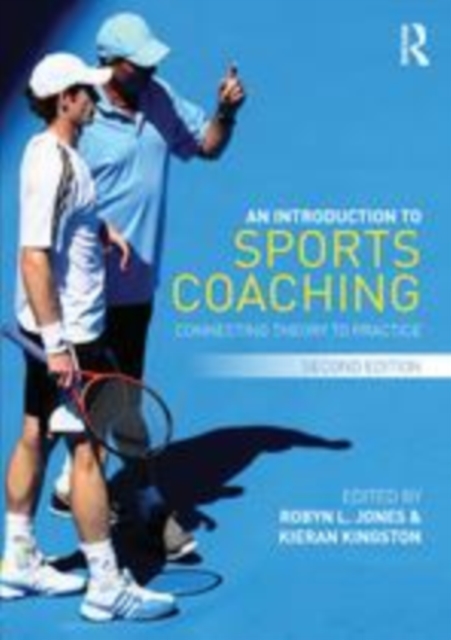
An Introduction to Sports Coaching
An Introduction to Sports Coaching provides students with an accessible and engaging guide to the scientific, social scientific, medical and pedagogical theory that underlies the practice of quality sports coaching. Now in a fully updated and revised second edition, it introduces students to the complex, messy, multi-faceted nature of coaching, and explores the full range of 'knowledges' which inform all successful coaching practice.
Written by a team of leading international sports coaching academics and practitioners, as well as sport scientists and social scientists, the book provides a concise guide to every key theme in sports coaching, including:
Reflective practice
Pedagogy
Skill acquisition
Psychology
Biomechanics
Physiology
Sport medicine and injury
Performance analysis
Sociology
History
Philosophy
Sport development
Each chapter makes a clear link between theory and practice, and includes discussion of real-life coaching scenarios and insights from practising international and club coaches. The book includes clear definitions of important themes and concepts, as well as seminar and review questions in each chapter designed to confirm understanding and encourage further enquiry.
No other introductory textbook explains the importance of an holistic approach to sports coaching practice. This is an essential companion to any sports coaching course.
eBook
Motor Learning in Practice
Motor Learning in Practice explores the fundamental processes of motor learning and skill acquisition in sport, and explains how a constraints-led approach can be used to design more effective learning environments for sports practice and performance. Drawing on ecological psychology, the book examines the interaction of personal, environmental and task-specific constraints in the development of motor skills, and then demonstrates how an understanding of those constraints can be applied in a wide range of specific sports and physical activities.
The first section of the book contains two chapters that offer an overview of the key theoretical concepts that underpin the constraints-led approach. These chapters also examine the development of fundamental movement skills in children, and survey the most important instructional strategies that can be used to develop motor skills in sport. The second section of the book contains eighteen chapters that apply these principles to specific sports, including basketball, football, boxing, athletics field events and swimming.
This is the first book to apply the theory of a constraints-led approach to training and learning techniques in sport. Including contributions from many of the world’s leading scholars in the field of motor learning and development, this book is essential reading for any advanced student, researcher or teacher with an interest in motor skills, sport psychology, sport pedagogy, coaching or physical education.
Part 1 1. The Constraints-Based Approach to Motor Learning: Implications for a Non-linear Pedagogy in Sport and Physical Education 2. Instructions as Constraints in Motor Skill Acquisition 3. Building the Foundations: Skill Acquisition in Children Part 2 4. Perceptual Training for Basketball Shooting 5. Saving Penalties, Scoring Penalties 6. Stochastic Perturbations in Athletics Field Events Enhance Skill Acquisition 7. Interacting Constraints and Inter-Limb Co-ordination in Swimming 8. The Changing Face of Practice for Developing Perception: Action Skill in Cricket 9. The \"Nurdle to Leg\" and Other Ways of Winning Cricket Matches 10. Manipulating Tasks Constraints to Improve Tactical Knowledge and Collective Decision-Making in Rugby Union 11. The Ecological Dynamics of Decision-Making in Sailing 12. Using Constraints to Enhance Decision-Making in Team Sports 13. Skill Development in Canoeing and Kayaking: An Individualised Approach 14. A Constraints-Led Approach to Coaching Association Football: The Role of Perceptual Information and the Acquisition of Co-ordination 15. Identifying Constraints on Children with Movement Difficulties: Implications for Pedagogues and Clinicians 16. Augmenting Golf Practice Through the Manipulation of Physical and Informational Constraints 17. Skill Acquisition in Dynamic Ball Sports: Monitoring and Controlling Action-effects 18. A Constraints-Based Training Intervention in Boxing 19. Researching Co-ordination Skill 20. Skill Acquisition in Tennis: Equipping Learners for Success
Ian Renshaw is Senior Lecturer in the School of Human Movement Studies at Queensland University of Technology, Australia. He has special interest in the enhancement of sports performance via the application of a non-linear pedagogy. Currently he works with the AIS/Cricket Australia Centre of Excellence as a skill acquisition consultant.
Keith Davids is Professor of Motor Control and Head of the School of Human Movement Studies at Queensland University of Technology, Australia. Over the past 25 years, he has published six books and numerous chapters and journal articles while holding research and teaching positions in Europe, New Zealand and Australia.
Geert J.P. Savelsbergh is Professor in the Faculty of Human Movement Sciences at VU University Amsterdam, Netherlands, and Visiting Professor at Manchester Metropolitan University, UK. He has special interest in the visual regulation of movements, especially in peak performance. Currently he works with the Olympic sailing and badminton team, as well as the Football Academy of Ajax Amsterdam.
eBook
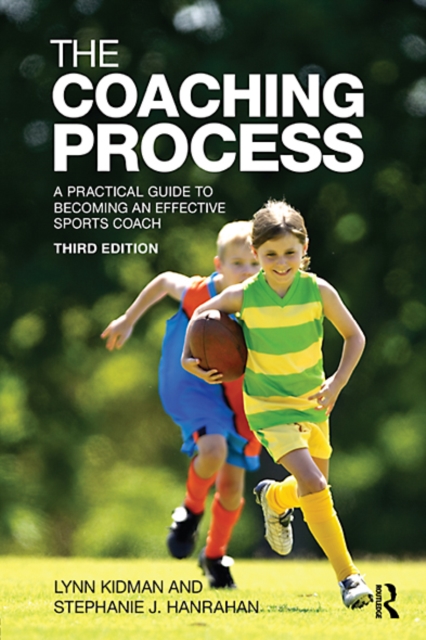
The Coaching Process
In this fresh and engaging introduction to sports coaching, Lynn Kidman and Stephanie Hanrahan guide students through the coaching process. Focusing on the practical aspects of sports coaching, the book helps students to develop their basic technical skills as well as strategies for working with individual and team athletes, and to plan and implement effective coaching sessions.
The book develops an \"athlete-centred approach\" to sports coaching, by which athletes take ownership of their learning, in turn strengthening their abilities to retain key skills and to make effective decisions during competition. Useful pedagogical features in each chapter, such as real life case studies, activities, self-reflection questions, and summaries of current research and best practice, encourage reflective practice and help student coaches to develop and extend their coaching techniques and philosophies.
The Coaching Process is invaluable reading for any student starting a sports coaching course at college or university, and for any coach working with athletes or children in sport who wants to improve their practical skills.
Part 1: Introduction 1. Successful Coaching 2. Developing a Coaching Philosophy Part 2: Athlete Development 3. Your Athletes 4. Managing Athletes 5. Creating a Positive Environment 6. Learning Skill 7. Coaching Strategies 8. Enhancing Performance with Mental Skills Part 3: Factors Influencing Coaching 9. Parents 10. The Balancing Act 11. What Now?
eBook
Coaches' perceptions of competence and acknowledgement of training needs related to professional competences
The purpose of the present study was to examine coaches' perceptions of competence and acknowledgement of training needs related to professional competences according to the professional experience and academic education. The participants were 343 coaches from several sports, who answered to a questionnaire that includes a scale focused on perceptions of competence and another scale on acknowledgment of training needs. An exploratory factor analysis with Maximum Likelihood Factoring was used with Oblimin rotation for the identification of emergent factors. Comparison on coaches' perceptions in function of coaching experience and coaches' academic background were made applying One-way ANOVA and Tukey's post hoc multiple comparisons. Factor analysis on coaches' perceptions of competence and acknowledgement of training needs made apparent three main areas of competences, i.e. competences related to annual and multi-annual planning; competences related to orientation towards practice and competition; and personal and coaching education competences. Coaches' perceptions were influenced by their experience, as low experienced coaches rated themselves at lower levels of competence and with more training needs; also coaches with high education, in Physical Education or others, perceived themselves as more competent than coaches with no higher education. Finally, the majority of the coaches perceived themselves to be competent but, nevertheless, they indicated to have training needs, which brings an important feedback to coach education. This suggests that coaches are interested in increasing their knowledge and competence in a broad range of areas which should be considered in future coach education programs. Key pointsCoaches' perceptions of competence and acknowledgement of training needs resulted in three main areas: competences related to annual and multi-annual planning, competences related to practice and competition orientation and, finally, personal and coaching education competences.The professional tasks that coaches had the most need in performing were related to the training orientation.Coaches with higher education degrees (P.E. or others) perceive themselves as more competent than coaches with no higher education.Low experienced coaches perceived themselves less competent than high experienced coaches. Also, they pointed out more training needs in issues related to practice and competition orientation, and annual and multi-annual planning.
Journal Article
Handball coaches' perceptions about the value of working competences according to their coaching background
The purpose of this study was to analyze the value attributed to given working competences, by Portuguese handball coaches according to their coaching background, certification level, coaching experience, and level of education. A sample of 207 handball coaches responded to a questionnaire which included demographic characteristics and a scale focused on perceptions of the level of importance attributed to working competences. Data analysis included an exploratory factorial analysis applying Maximum Likelihood Factoring (MLF) and Oblimin rotation. These factors were submitted to a One-way ANOVA and Tukey's post hoc multiple comparisons to analyse coaches' perceptions according to their coaching background. A six factor solution was found where three major domains of competences were highlighted; the first one related to training and competition (e.g. planning and conducting the training, team administration in competition, annual and multi-annual planning, and coaching methodology); the second one related to social and cultural issues and management (e.g. implementation of youth sport development projects, team leadership and coach education) and the third one related to the cognitive background (meta-cognitive competences). The importance ascribed to some working competences was influenced by their coaching experience and certification level. Highly experienced and qualified coaches perceived competences of everyday practice, social, cultural and management issues related to training and competition as more important than the other coaches. This study suggests the need to consider some working competences, until now not explicitly present in the Portuguese coaching education curriculum which could enable coaches to choose the best way to practice/work in a manner that will foster and support their professional development. Key pointsThree major domains of competences were highlighted by Portuguese handball coaches. The first one related to training and competition, the second one related to social and cultural issues and management and the third one related to the cognitive background.The importance ascribed by Portuguese handball coaches to some working competences was influenced by their coaching experience and certification level, as high experienced coaches and coaches with higher certification levels perceived competences related to training and competition of the everyday practice and social, cultural issues and management as more important.The value attributed by Portuguese handball coaches to working competences did not vary according to the coaches' academic education level.Portuguese handball coaches valued the meta-cognitive competences, the competences to implement sport development project and related to annual and multi-annual planning independently of their coaching background.
Journal Article