
Catalogue Search | MBRL


Are you sure you want to remove the book from the shelf?

{{itemTitle}}
1,340
result(s) for
"Cocaine -- History"
Sort by:

An anatomy of addiction : Sigmund Freud, William Halsted and the miracle drug, cocaine
The astonishing account of the decades-long cocaine use of Sigmund Freud and William Halsted. The author discusses the physical and emotional damage caused by the constant use of the then-heralded wonder drug, and of how each man ultimately changed the world in spite of it--or because of it.
Book

Cocaine
Cocaine examines the rise and fall of this notorious substance from its legitimate use by scientists and medics in the nineteenth century to the international prohibitionist regimes and drug gangs of today. Themes explored include:
Amsterdam's complex cocaine culture
the manufacture, sale and control of cocaine in the United States
Japan and the Southeast Asian cocaine industry
export of cocaine prohibitions to Peru
sex, drugs and race in early modern London Cocaine unveils new primary sources and covert social, cultural and political transformations to shed light on cocaine's hidden history.
eBook

Andean Cocaine
Illuminating a hidden and fascinating chapter in the history of globalization, Paul Gootenberg chronicles the rise of one of the most spectacular and now illegal Latin American exports: cocaine.Gootenberg traces cocaine's history from its origins as a medical commodity in the nineteenth century to its repression during the early twentieth century and its dramatic reemergence as an illicit good after World War II. Connecting the story of the drug's transformations is a host of people, products, and processes: Sigmund Freud, Coca-Cola, and Pablo Escobar all make appearances, exemplifying the global influences that have shaped the history of cocaine. But Gootenberg decenters the familiar story to uncover the roles played by hitherto obscure but vital Andean actors as well--for example, the Peruvian pharmacist who developed the techniques for refining cocaine on an industrial scale and the creators of the original drug-smuggling networks that decades later would be taken over by Colombian traffickers.Andean Cocaineproves indispensable to understanding one of the most vexing social dilemmas of the late twentieth-century Americas: the American cocaine epidemic of the 1980s and, in its wake, the seemingly endless U.S. drug war in the Andes.
eBook

Painful progress
For thousands of years people have sought explanations for pain and ways to ease it. Despite a better understanding of the mechanisms behind the sensation, much remains baffling, and the search for better treatments continues. By Stephanie Pain
Journal Article

Carl Koller, Cocaine, and Local Anesthesia: Some Less Known and Forgotten Facts
Modern-day local anesthesia began in 1884 with a discovery by a young unknown ophthalmologist from Vienna named Carl Koller, who placed a cocaine solution on the cornea, thus producing insensibility. The news of his discovery spread throughout the world in less than a month. “Not surprisingly,” a controversial priority discussion emerged. There is little information about this “dark side” of Koller’s discovery and only sparse data about the personalities involved in this controversy. In addition, Carl Koller’s decision to leave Vienna is also surrounded in secrecy. The story surrounding the revelation of the local anesthetic effect of cocaine and the personalities involved is fascinating and relatively unknown.
Journal Article

Cocaine and the Eye: A Historical Overview
Cocaine was brought to Europe after the discovery of America. In the 19th century, the active component of coca leaves, named cocaine, was extracted and several researchers started experimenting with the substance, describing many physiological and pathological effects of its action. The first scholar to practically demonstrate the possibility of using cocaine solution in medicine, mostly ophthalmology, was Carl Koller. Following this remarkable achievement cocaine became the substance most frequently applied for different types of anaesthesia. Halsted and Hall reported the first successful nerve block of the interior dental nerve with 4% cocaine solution. In 1892, Schleich published the results of his studies in which he used a 0.1–0.2% solution of cocaine hydrochloride intra- and subcutaneously, introducing the so-called infiltration anaesthesia. At the end of the 19th century it was, however, demonstrated that cocaine possessed many undesirable effects, including addiction, which triggered off interest in other, less toxic, anaesthetics.
Journal Article
Local Anesthetic Systemic Toxicity: A Historical Perspective
The most feared complication associated with the administration of local anesthetics is the profound and potentially lethal effect that these agents can have on cardiac conduction and function. This review traces the evolution of local anesthetic systemic toxicity beginning with the early deaths associated with the introduction of cocaine into clinical practice. The development of bupivacaine is discussed, with particular emphasis on the delayed recognition and acceptance of its inherent cardiotoxicity. Finally, the origins of lipid resuscitation are reviewed with respect to their theoretical foundation, as well as the confluence of events and experimental investigations that delivered this therapy into clinical practice.
Journal Article

Local anaesthesia through the action of cocaine, the oral mucosa and the Vienna group
Key Points
Discusses local anaesthesia, using cocaine, as introduced in Europe by the Vienna group, Freud, Koller and Königstein.
Highlights Freud, Koler and Koningstein tested the drug on their own oral mucosa.
Draws attention to disputes over a revolutionary discovery at this time.
Local anaesthesia through the action of cocaine was introduced in Europe by the Vienna group, which includeed Freud, Koller and Königstein. Before using the alkaloid in animal or human experimentation all these scientists tested it on their oral mucosa – so-called self-experimentation. Some of them with different pathologies (that is, in the case of Freud), eventually became addicted to the alkaloid. Here we attempt to describe the people forming the so-called 'Vienna group', their social milieu, their experiences and internal disputes within the setting of a revolutionary discovery of the times.
Journal Article

The Accidental Addict
One of the most remarkable tales of a concealed drug addiction began more than a century ago and involves a brilliant young doctor. Dr. Howard Markel writes about William Stewart Halsted, who by the age of 33 faced both professional and literal extinction because of a relentless addiction to cocaine.
All stories of addiction are tragic. Some addictions are so well concealed that, when discovered, they initially appear to be inconceivable. One of the most remarkable tales of a concealed drug addiction began more than a century ago and involves a brilliant young doctor. Talented, well educated, and socially prominent, he was a swift and decisive operator when speed was of paramount importance to surgical prowess. But by the age of 33, the physician faced both professional and literal extinction because of a losing battle against a relentless addiction to cocaine.
Yet less than a decade after reaching what recovery . . .
Journal Article
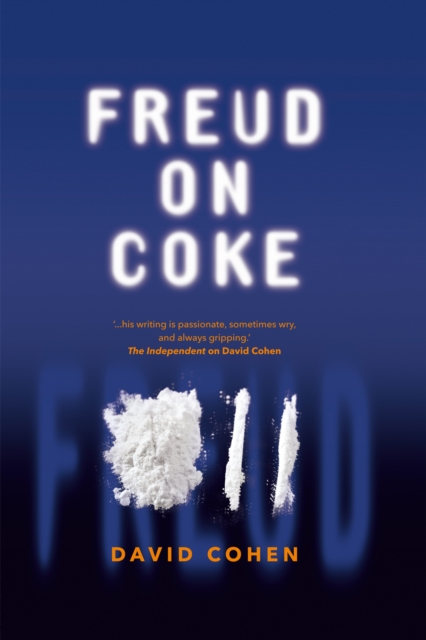
Freud on Coke
The story of Freud's involvement with cocaine and how it affected research long after he died... The book tells of a number of drug related tragedies Freud was involved in including the death of Ernest Fleischl and that of the less well known Otto Gross who was a good analyst, a cocaine addict and has advanced ideas about sex which led him to founding an orgiastic commune in Italy. Freud devotees will be unhappy with the book because it depicts their hero as all too human but it is a balanced view!.
eBook