
Catalogue Search | MBRL


Are you sure you want to remove the book from the shelf?

{{itemTitle}}
171
result(s) for
"Coetzee, J. M., 1940- Ethics."
Sort by:

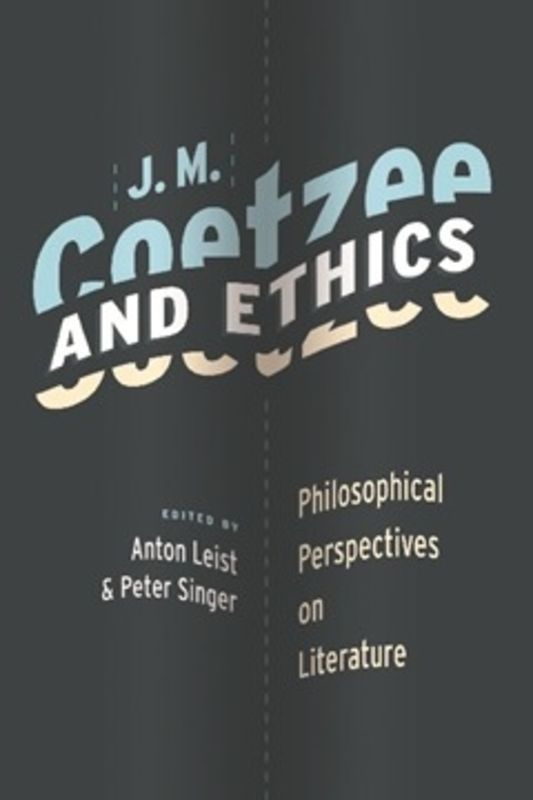
J. M. Coetzee and ethics
In 2003, South African writer J. M. Coetzee was awarded the Nobel Prize in Literature for his riveting portrayals of racial repression, sexual politics, the guises of reason, and the hypocrisy of human beings toward animals and nature. Coetzee was credited with being \"a scrupulous doubter, ruthless in his criticism of the cruel rationalism and cosmetic morality of western civilization.\" The film of his novel Disgrace, starring John Malkovich, brought his challenging ideas to a new audience. Anton Leist and Peter Singer have assembled an outstanding group of contributors who probe deeply into Coetzee's extensive and extraordinary corpus. They explore his approach to ethical theory and philosophy and pay particular attention to his representation of the human-animal relationship. They also confront Coetzee's depiction of the elementary conditions of life, the origins of morality, the recognition of value in others, the sexual dynamics between men and women, the normality of suppression, and the possibility of equality in postcolonial society. With its wide-ranging consideration of philosophical issues, especially in relation to fiction, this volume stands alone in its extraordinary exchange of ethical and literary inquiry.
eBook

J.M. Coetzee and the ethics of power : unsettling complicity, complacency, and confession
The present study looks closely into the unsettling effects Coetzee's novels have on the reader and explores the interconnectedness between stylistic choices and moral insights. Its overall aim is to disclose the effectiveness of Coetzee's narrative strategies to prompt the reader to engage in self-questioning and radical revisions of personal and social moral assumptions.
BOOK


The Wounded Animal
In 1997, the Nobel Prize-winning novelist J. M. Coetzee, invited to Princeton University to lecture on the moral status of animals, read a work of fiction about an eminent novelist, Elizabeth Costello, invited to lecture on the moral status of animals at an American college. Coetzee's lectures were published in 1999 asThe Lives of Animals, and reappeared in 2003 as part of his novelElizabeth Costello; and both lectures and novel have attracted the critical attention of a number of influential philosophers--including Peter Singer, Cora Diamond, Stanley Cavell, and John McDowell.
InThe Wounded Animal, Stephen Mulhall closely examines Coetzee's writings about Costello, and the ways in which philosophers have responded to them, focusing in particular on their powerful presentation of both literature and philosophy as seeking, and failing, to represent reality--in part because of reality's resistance to such projects of understanding, but also because of philosophy's unwillingness to learn from literature how best to acknowledge that resistance. In so doing, Mulhall is led to consider the relations among reason, language, and the imagination, as well as more specific ethical issues concerning the moral status of animals, the meaning of mortality, the nature of evil, and the demands of religion. The ancient quarrel between philosophy and literature here displays undiminished vigor and renewed significance.
eBook

From the Substantialist Subject to the Ethical Self: Examining the Problem Concerning Susan Barton's Substance in Coetzee's Foe through the Lens of Confucianist Reciprocity
This paper approaches J. M. Coetzee's poetics of reciprocity in the comparative context of Western philosophy and Confucianist reciprocity by analyzing the problems encountered by Susan Barton, the protagonist of his novel Foe , as she navigates the quest for her substantial being. It contends that Coetzee intricately problematizes Susan's substance—an important philosophical concept that equals \"being\" or \"ultimate self\"—to delve into his reflections on interpersonal relations. Critiquing the Substantialist conception of subjectivity, which stresses individual determinacy and distinctness, Coetzee envisions a new self–other dynamic that echoes Confucianist reciprocity, which puts an asymmetrically higher demand on the self and maintains that becoming a human being means striving to fulfill one's interpersonal relations rather than being absolutely substantial. Approaching Coetzee's poetics of reciprocity in light of Confucianism offers us an opening through which an ethical self–other relation might be reconstructed to reverse the tension between the self and the other in Western philosophy.
Journal Article

Apocalyptic Futures:Marked Bodies and the Violence of the Text in Kafka, Conrad, and Coetzee
The primary argument that Russell Samolsky makes in this book is that certain modern literary texts have apocalyptic futures. His contention, however, is not, as many eminent thinkers have claimed, that great writers have clairvoyant powers; rather he examines the ways in which a text might be written so as to incorporate an apocalyptic event into the orbit of its future reception. He is thus concerned with the way in which apocalyptic works might be said to solicit their future receptions. In analyzing this dialectic between an apocalyptic book and a future catastrophic event, Apocalyptic Futures also sets out to articulate a new theory and textual practice of the relation between literary reception and embodiment. Deploying the double register of marksto display the means by which a text both codes as well as targets mutilated bodies, his specific focus is on the way in which these bodies are incorporated into the field of texts by Franz Kafka, Joseph Conrad and J.M. Coetzee. Situating In the Penal Colonyin relation to the Holocaust, Heart of Darkness to the Rwandan genocide and Waiting for the Barbarians to the revelations of torture in apartheid South Africa and contemporary Iraq, he argues for the ethical and political importance of reading these literary works' apocalyptic futuresnow in our own urgent and perilous situation. To this end, he draws on contemporary messianic discourse to establish the ethical and political resistance of the marked body to its apocalyptic incorporation. In this regard, what is finally at stake in his analysis is his hope of finding the possibility of a hidden countervailing redemptive force at work in these and other texts.
eBook

Metaphorical Figures for Moral Complexity
If literary narrative as a practice is well suited to capture morally complex situations, that is in large part due to the work of literary (that is, narrative and stylistic) form . This article examines the specific contribution that metaphorical language makes to the literary negotiation of moral complexity. The discussion is positioned vis-à-vis debates on the specific forms of moral knowledge that literature can provide, which I distinguish from both propositional meanings and the dilemmas entertained by analytic philosophers (for instance, the trolley problem). Instead, I draw on metaphor theory to suggest that metaphorical language can enrich the moral resonance of literature by deepening (and complicating) readers' engagement with fictional characters and the situations in which they are embedded. These metaphorical figures probe the experience captured by Cora Diamond under the rubric of the \"difficulty of reality.\" This idea is illustrated through a close reading of Lauren Groff's short story \"Flower Hunters,\" which skillfully orchestrates metaphorical language so as to encapsulate the protagonist's existential and moral impasse in times of ecological crisis.
Journal Article

“An endless discourse of character”: J.M. Coetzee and distributive impersonality in Dusklands
This essay argues that rather than mere metafictional gesture, the several characters in Dusklands with the name “Coetzee” – the colonial adventurer, the Pentagon supervisor, the unsavoury historian, and the ambiguous translator – chart the various ways that J.M. Coetzee contends with the challenge of complicity on several fronts. The colonial legacy of South Africa, the Vietnam War, and the slippery ethics of both academic exegesis and translation – all these issues posed for Coetzee a constellation of complicitous scenarios to which he felt the need to respond in the novel. Thus long before Coetzee famously discussed its importance in 1991, the principle of impersonality shapes his strategy for navigating the nebulous space between self-blame and self-exoneration, individual responsibility and familial or national culpability. The philosophers Roberto Esposito and Giorgio Agamben provide a useful framework for analysing the complicated ethical nexus of what I term “distributive impersonality,” both in terms of the impersonal’s dynamic and the daunting task of bearing witness to human atrocity.
Journal Article
A Select Bibliography of Major Critical Works on J.M. Coetzee
In the 50 years since the publication of Dusklands J.M. Coetzee has become the most written about South African author. In the 1980s three publications devoted entirely to his work appeared (by Teresa Dovey, Dick Penner and Allan Gardner). By 1990 there was enough criticism in monographs, anthologies, journals, theses and press clippings to warrant a bibliography compiled by the National English Literary Museum (the former name of Amazwi South African Museum of Literature). The volume of criticism has grown exponentially, with multiple works appearing each year. There are several works which focus on specific books, such as Disgrace, the Jesus trilogy and Foe. This bibliography of major studies on Coetzee draws substantially from the collection at Amazwi, as well as additional texts located online. The books included are either entirely on Coetzee, or with enough emphasis for him to be mentioned in the title.
Journal Article