
Catalogue Search | MBRL


Are you sure you want to remove the book from the shelf?

{{itemTitle}}
134,547
result(s) for
"Coffee industry."
Sort by:

The world atlas of coffee : from beans to brewing : coffees explored, explained and enjoyed
\"The World Atlas of Coffee takes readers on a global tour of coffee-growing countries, presenting the bean in full-color photographs and concise, informative text. It covers where coffee is grown, the people who grow it and the cultures in which it is a way of life. It also covers the world of consumption -- processing, grades, the consumer and the modern culture of coffee\" -- Provided by publisher.
Book

Mobilizing Labour for the Global Coffee Market
Coffee has been grown on Java for the commercial market since the early eighteenth century, when the Dutch East India Company began buying from peasant producers in the Priangan highlands. What began as a commercial transaction, however, soon became a system of compulsory production. This book shows how the Dutch East India Company mobilised land and labour, why they turned to force cultivation, and what effects the brutal system they installed had on the economy and society.
eBook


Confronting the coffee crisis
Combining interdisciplinary research with case study analysis at scales ranging from the local to the global, Confronting the Coffee Crisis reveals the promise and the perils of efforts to create a more sustainable coffee industry
Our morning cups of coffee connect us to a global industry and an export crisis in the tropics that is destroying livelihoods, undermining the cohesion of families and communities, and threatening ecosystems. Confronting the Coffee Crisis explores small-scale farming, the political economy of the global coffee industry, and initiatives that claim to promote more sustainable rural development in coffee-producing communities. Contributors review the historical, political, economic, and agroecological processes within today's coffee industry and analyze the severely depressed export market that faces small-scale growers in Mexico and Central America.
The book presents a series of interdisciplinary, empirically rich case studies showing how small-scale farmers manage ecosystems and organize collectively as they seek useful collaborations with international NGOs and coffee companies to create opportunities for themselves in the coffee market. The findings demonstrate the interconnections among farmer livelihoods, biodiversity, conservation, and changing coffee markets. Additional chapters examine alternative trade practices, certification, and eco-labeling, discussing the politics and market growth of organic, shade-grown, and Fair Trade coffees. Combining interdisciplinary research with case-study analysis at scales ranging from the local to the global, Confronting the Coffee Crisis reveals the promise and the perils of efforts to create a more sustainable coffee industry.
Contributors
Christopher M. Bacon, David B. Bray, Sasha Courville, Jonathan A. Fox, Stephen R. Gliessman, David Goodman, Carlos Guadarrama-Zugasti, Shayna Harris, Roberta Jaffe, Maria Elena Martinez-Torres, V. Ernesto Mendez, Ellen Contreras Murphy, Tad Mutersbaugh, Seth Petchers, Jose Luis Plaza-Sanchez, Laura Trujillo, Silke Mason Westphal
eBook


Brewing justice
Fair trade is a fast-growing alternative market intended to bring better prices and greater social justice to small farmers around the world. But is it working? This vivid study of coffee farmers in Mexico offers the first thorough investigation of the social, economic, and environmental benefits of fair trade. Based on extensive research in Zapotec indigenous communities in the state of Oaxaca, Brewing Justice follows the members of the cooperative Michiza, whose organic coffee is sold on the international fair trade market. It compares these families to conventional farming families in the same region, who depend on local middlemen and are vulnerable to the fluctuations of the world coffee market. Written in a clear and accessible style, the book carries readers into the lives of these coffee producer households and their communities, offering a nuanced analysis of both the effects of fair trade on everyday life and the limits of its impact. Brewing Justice paints a clear picture of the complex dynamics of the fair trade market and its relationship to the global economy. Drawing on interviews with dozens of fair trade leaders, the book also explores the changing politics of this international movement, including the challenges posed by the entry of transnational corporations into the fair trade system. It concludes by offering recommendations for strengthening and protecting the integrity of fair trade.
eBook

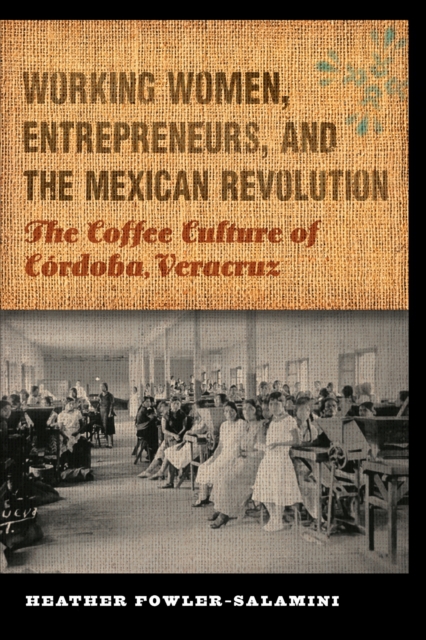
Working Women, Entrepreneurs, and the Mexican Revolution: The Coffee Culture of Córdoba, Veracruz
In the 1890s, Spanish entrepreneurs spearheaded the emergence of Córdoba, Veracruz, as Mexico's largest commercial center for coffee preparation and export to the Atlantic community. Seasonal women workers quickly became the major part of the agroindustry's labor force. As they grew in numbers and influence in the first half of the twentieth century, these women shaped the workplace culture and contested gender norms through labor union activism and strong leadership. Their fight for workers' rights was supported by the revolutionary state and negotiated within its industrial-labor institutions until they were replaced by machines in the 1960s.Heather Fowler-Salamini's Working Women, Entrepreneurs, and the Mexican Revolution analyzes the interrelationships between the region's immigrant entrepreneurs, workforce, labor movement, gender relations, and culture on the one hand, and social revolution, modernization, and the Atlantic community on the other between the 1890s and the 1960s. Using extensive archival research and oral-history interviews, Fowler-Salamini illustrates the ways in which the immigrant and women's work cultures transformed Córdoba's regional coffee economy and in turn influenced the development of the nation's coffee agro-export industry and its labor force.
eBook


Prioritize the key parameters of Vietnamese coffee industries for sustainability
Purpose
The purpose of this paper is to identify the critical parameters of the Vietnam coffee industry and develop a comprehensive structural relationship to rank them for effective sustainable development.
Design/methodology/approach
The team of ten experts, having experience of over eight years in the field of various coffee industries in Vietnam, was created to give scores to multiple parameters. Technique for order of preference by similarity to ideal solution (TOPSIS) technique is used to develop the model for fifteen key parameters and then to rank them.
Findings
From the data analysis and results, marketing and brand innovation, product quality, strategic planning and implementation have emerged as top three key parameters while new technology development, supply chain and logistics management, and alliance-joint venture are identified as the bottom three parameters. The findings provide a rank of parameters that help to other coffee industries to identify their key parameters. Besides, the key parameters defined as necessary inputs show the firms more active and well-prepared comprised of ten companies.
Practical implications
The key parameters of the success of any organization are essential contributions. Aiming to improve organizational performance, metrics should be identified as the source of strength to achieve high productivity, profitability and sustainable business performance.
Originality/value
The emphasis of study on key parameters will help organizations to achieve competitive advantage and high productivity for high sustainability in an organizational context.
Journal Article