
Catalogue Search | MBRL


Are you sure you want to remove the book from the shelf?

{{itemTitle}}
5
result(s) for
"Coin hoards -- Europe"
Sort by:

Silver, butter, cloth : monetary and social economies in the Viking age
Silver, Butter, Cloth advances current debates about the nature and complexity of Viking economic systems. It explores how silver and other commodities were used in monetary and social economies across the Scandinavian world of the Viking Age (c. 800-1100 AD) before and alongside the wide scale introduction of coinage. Taking a multi-disciplinary approach that unites archaeological, numismatic, and metallurgical analyses, Kershaw and Williams examine the uses and sources of silver in both monetary and social transactions, addressing topics such as silver fragmentation, hoarding, and coin production and re-use. Uniquely, it also goes beyond silver, giving the first detailed consideration of the monetary role of butter, cloth, and gold in the Viking economy. (Indeed, it is instrumental in developing methodologies to identify such commodity monies in the archaeological record.) The use of silver and other commodities within Viking economies is a dynamic field of study, fuelled by important recent discoveries across the Viking world. The 14 contributions to this book, by a truly international group of scholars, draw on newly available archaeological data from eastern Europe, Scandinavia, the North Atlantic, and the British Isles and Ireland, to present the latest original research. Together, they deepen understanding of Viking monetary and social economies and advance0new definitions of 'economy', 'currency', and 'value' in the ninth to eleventh centuries.
Book
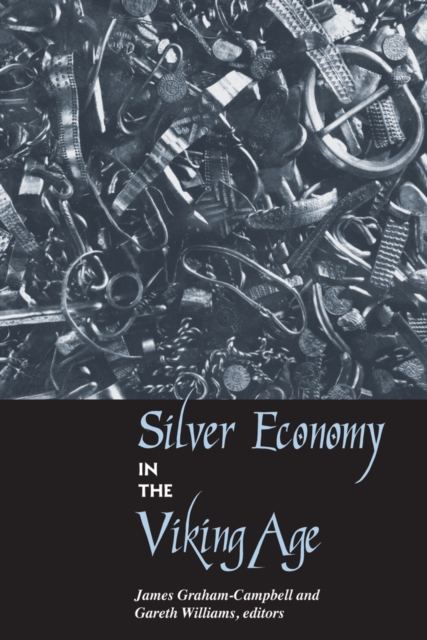
Silver Economy in the Viking Age
In this book contributions by archaeologists and numismatists from six countries address different aspects of how silver was used in both Scandinavia and the wider Viking world during the 8th to 11th centuries AD. The volume brings together a combination of recent summaries and new work on silver and gold coinage, rings and bullion, which allow a better appreciation of the broader socioeconomic conditions of the Viking world. This is an indispensable source for all archaeologists, historians and numismatists involved in Viking Studies.
eBook

Markets in Early Medieval Europe
Major sites such as Hamwic and Dorestad typically dominate any discussion of early medieval trade and emporia - this study is altogether atypical in many ways. Comprising nineteen papers taken from a conference held at Worcester College, Oxford in 2000, the focus here is very much on the smaller, more rural trading centres and inland markets of Northern Europe. The contributors reflect very different approaches to the material, including studies that examine up-to-date historical, archaeological and numismatic evidence from Britain, Denmark, the Netherlands, Norway and Sweden dating from the 7th to 9th century. The authors consider the rather controversial use of metal-detecting in identifying and defining new sites and patterns of interaction and exchange, highlighting its positive contribution. Contributors include Mark Blackburn, David Griffiths, Lars Jorgensen, Michael Metcalf, Julian D Richards, Peter Sawyer and Astrid Tummuscheit.
eBook

Miniature objects as representations of realia
Miniature objects are usually considered first as ritual objects, as substitutes for larger items, or as signifiers of abstract concepts. Too little attention is paid to their value as representations, and as a source for ancient day-to-day objects, or realia. But before we can use them as evidence for larger objects, we must first understand the manner in which any group of miniature objects depicts reality. Examples of miniature objects from Iron Age and Roman Western Europe are considered here using the art-historical concept of a continuum of representation, on which miniatures range from realistic to abstract modes of representation. Some miniatures offer direct and accurate evidence about realia, others are schematic or semi-abstract. While the latter modes of representation offer little direct evidence for the appearance of ancient realia, they nonetheless may indicate how realia were perceived.
Journal Article

The Pershore Hoards and Votive Deposition in the Iron Age
A large hoard of Iron Age coins was discovered by metal-detecting at Pershore, Worcestershire, in 1993. During small-scale archaeological excavation further Iron Age coins were recovered, including a likely second hoard. Further fieldwork in the same vicinity as the hoard(s) produced more Iron Age finds, including more coins, and a possible fragment of a twisted wire gold torc. In total 1494 Iron Age gold and silver coins were recovered. Geophysical survey indicated that the hoard(s) lay at the southern end of an extensive area of settlement which, based on the fieldwalking evidence, was mainly of Iron Age and Roman date. This covered an overall area of c. 10 ha, within which several areas of more intensive activity were defined, including enclosures and possible round-houses. It is suggested that the coin hoard(s) indicate the location of a Late Iron Age religious space in an elevated landscape position situated on the edge of a settlement which continued into the Roman period. As part of the archaeological strategy, specialist deep-search metal-detecting was undertaken in order to establish that the site has now been completely cleared of metalwork caches Trésors et dépôts votifs de Pershore à l’âge du fer, de Derek Hurst et Ian Leins Un important trésor de monnaies de l’âge du fer a été découvert par détecteur de métaux à Pershore dans le Worcestershire en 1993. Au cours de fouilles archéologiques à petite échelle, d'autres monnaies de l’âge du fer furent découvertes, y compris un probable second trésor. Des prospections supplémentaires dans la même zone que le/les trésor/s ont révélé d'autres trouvailles de l’âge du fer, y compris plus de monnaies et un éventuel fragment d'un torque en fil d'or torsadé. En tout 1494 monnaies d'or et d'argent de l’âge du fer ont été recouvrées. Une prospection géophysique a indiqué que le/les trésor/s se situait/aient à l'extrémité sud d'une zone d'occupation étendue qui, sur la base des témoignages des travaux d'arpentage, datait essentiellement de l’âge du fer et de la période romaine. Elle couvrait en tout une surface d'environ 10 ha, à l'intérieur de laquelle ont été définies plusieurs zones d'activité plus intensive, y compris des enceintes et d’éventuelles maisons rondes. On a proposé que la/les caches de monnaies indiquait/aien/t l'emplacement d'un espace religieux de la fin de l’âge du fer situé en position élevée dans un paysage en hauteur en bordure d'une occupation qui s'est prolongée jusque dans la période romaine. Dans le cadre de la stratégie archéologique, on a entrepris des recherches spécialisées approfondies avec détecteur de métaux afin d’établir qu'on avait bien dégagé du site toutes les caches de métaux Die Pershore Horte und Votivdeponierungen der Eisenzeit, von Derek Hurst und Ian Leins Ein großer Hort eisenzeitlicher Münzen wurde 1993 von Sondengängern bei Pershore, Worcestershire, entdeckt. Während einer kleinräumigen archäologischen Ausgrabung wurden weitere eisenzeitliche Münzen gefunden, darunter auch ein möglicher zweiter Hort. Weitere Untersuchungen im Umfeld des bzw. der Horte lieferten zusätzliche Funde aus der Eisenzeit, darunter ebenfalls Münzen sowie ein mögliches Fragment eines goldenen Torques aus gedrehtem Draht. Insgesamt wurden 1494 eisenzeitliche Gold- und Silbermünzen geborgen. Ein geographischer Survey deutet an, dass der/die Horte am südlichen Ende eines ausgedehnten Siedlungsgebiets liegen, das, wie Feldbegehungen zeigen, vor allem in die Eisen- und römische Zeit datiert. Dieses Gebiet erstreckt sich insgesamt über ungefähr 10 Hektar, worin mehrere Areale mit intensiveren Aktivitäten unterschieden werden können, darunter auch Befestigungen und möglichen Rundhäusern. Es wird vorgeschlagen, dass der/die Münzhorte die Existenz eines späteisenzeitlichen religiösen Raums in einer erhöhten Landschaftsposition anzeigen, am Rand eines Siedlungsraums, der in der römischen Zeit weiter genutzt wurde. Als Teil der archäologischen Forschungsstrategie wurde eine spezialisierte tiefgehende Metallsuche durchgeführt um sicherzustellen, dass der Fundplatz nun völlig frei von Metallfunden ist Los tesoros de Pershore y la deposición votiva durante la Edad del Hierro, por Derek Hurst y Ian Leins Una gran acumulación de monedas de la Edad del Hierro se descubrió mediante detector de metales en Pershore, Worcestershire, en 1993. Durante una pequeña intervención arqueológica se descubrió un mayor número de monedas, incluyendo una segunda acumulación. Una intervención arqueológica más extensa en la misma zona donde se descubrieron los depósitos, produjo un mayor número de hallazgos de la Edad del Hierro, incluyendo más monedas y fragmentos de un torque de oro de alambres trenzados. En total se registraron 1494 monedas de oro y plata de la Edad del Hierro. La prospección geofísica reveló que las acumulaciones se encontraban en el extremo sur de una extensa área de asentamiento que, basándose en la evidencia superficial de campo, se datan principalmente en la Edad del Hierro y época romana. El asentamiento abarca un área aproximada de 10 hectáreas, dentro de la cual se definieron áreas de actividad más intensiva, incluyendo cercados y posibles cabañas de planta redonda. Se sugiere que la(s) acumulación(es) de monedas indican la localización de un especio religioso del final de la Edad del Hierro en una zona elevada del paisaje, situado en uno de los márgenes del asentamiento que perdura en época romana. Como parte de la estrategia arqueológica, se llevó a cabo una búsqueda especializada en la detección de metales a gran profundidad con la finalidad de establecer que el sitio no se localizaba ningún otro hallazgo metálico
Journal Article