
Catalogue Search | MBRL


Are you sure you want to remove the book from the shelf?

{{itemTitle}}
1,408
result(s) for
"Coinage History."
Sort by:


Debasement
The debasement of coinage, particularly of silver, was a common feature of pre-modern monetary systems. Most coinages were issued by state authorities and the condition of a coinage is often seen (rightly or wrongly) as an indicator of the broader fiscal health of the state that produced it. While in some cases the motives behind the debasements or reductions in standards are clear, in many cases the intentions of the issuing authorities are uncertain. Various explanations have been advanced: fiscal motives (such as a desire to profit or a to cover a deficit caused by the failure to balance expenditure and revenues); monetary motives (such as changing demand for coined money or a desire to maintain monetary stability in the face of changing values of raw materials or labour costs); pressure from groups within society that would profit from debasement; misconduct at the mint; or the decline of existing monetary standards due to circulation and wear of the coinage in circulation. Certain explanations have tended to gain favour with monetary historians of specific periods, partly reflecting the compartmentalization of scholarship. Thus the study of Roman debasements emphasizes fiscal deficits, whereas medievalists are often more prepared to consider monetary factors as contributing to debasements. To some extent these different approaches are a reflection of discrepancies in the amount of documentary evidence available for the respective periods, but the divide also underlines fundamentally different approaches to the function of coinage: Romanists have preferred to see coins as a medium for state payments; whereas medievalists have often emphasized exchange as an important function of currency. The volume is inter-disciplinary in scope. Apart from bringing together monetary historians of different periods, it also contains contributions from archaeometallurgists who have experience with the chemical and physical composition of coins and technical aspects of production of base alloys
eBook


Roman Imperial Coinage. Volume I
Dr CHV Sutherland was for many years Keeper of the Heberden Coin Room in the Ashmolean Museum, with a special interest in the Julio-Claudian emperors and their coinage from 31 BC to AD 69. From 1939 he was co-editor and part-author of Roman Imperial Coinage, successively, with Harold Mattingly and EA Sydenham, and with RAG Carson, devoting years to the fundamental revision and rewriting of Mattingley and Sydenham’s original Volume I (1923) of the series, published in 1984. (NP) Sutherland’s revised Volume I has been out of print now for some years, but his study of the Julio-Claudian coinage, being the formative period of the long imperial series, is made newly available by Spink in this handsome reprint.
eBook


English Hammered Coinage
The third revised editions of Jeffrey North's two volume classic are newly reissued for 2018 to make them available to Spink customers for the first time in over ten years.Volume I includes hammered coins of the early Anglo Saxon, Viking, Regional Kings, Norman and Plantagenet periods up to the reign of Henry III, including 20 plates with hundreds.
eBook
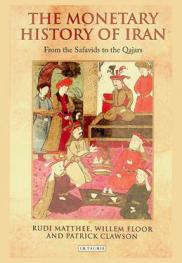
The monetary history of Iran : from the Safavids to the Qajars
This detailed study of Iran's monetary history, from the advent of the Safavid dynasty in 1501 to the end of Qajar rule in 1925, covers the of use of ready money and its circulation, the changing conditions of the country's mints, and the role of the state in managing money.
Book

The invention of coinage and the monetization of Ancient Greece
The invention of coinage was a conceptual revolution, not a technological one. Only with the invention of Greek coinage does the concept \"money\" clearly materialize in history. Coinage appeared at a moment when it fulfilled an essential need in Greek society, bringing with it rationalization and social leveling in some respects, while simultaneously producing new illusions, paradoxes, and elites.
In an argument of interest to scholars of ancient history and archaeology as well as to modern economists, David M. Schaps addresses a range of issues pertaining to major shifts in ancient economies, including money, exchange, and economic organization in the Near East and Greece before the introduction of coinage; the invention of coinage and the reasons for its adoption; and the development of using money to generate greater wealth.
eBook


A history of money
An account of the central importance of money in the ordinary business of the life of different people throughout the ages from ancient times to the present day. It includes the Barings crisis and the report by the Bank of England on Barings Bank; information on the state of Japanese banking; and, the changes in the financial scene in the US.
eBook