
Catalogue Search | MBRL


Are you sure you want to remove the book from the shelf?

{{itemTitle}}
9
result(s) for
"Coinage Iran History"
Sort by:
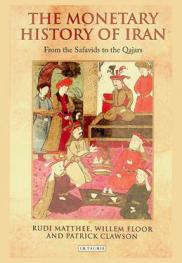
The monetary history of Iran : from the Safavids to the Qajars
This detailed study of Iran's monetary history, from the advent of the Safavid dynasty in 1501 to the end of Qajar rule in 1925, covers the of use of ready money and its circulation, the changing conditions of the country's mints, and the role of the state in managing money.
Book

Coins from Qasr-e Abu Nasr: archaeometallurgical and numismatic studies on pre-Islamic and Islamic coins excavated in South-Central Iran
A group of coins excavated at Qasr-e Abu Nasr, Shiraz, in south-central Iran, now in the collection of the Metropolitan Museum of Art, was studied and analyzed to examine the minting processes and to reconsider the numismatic history of the site. For this purpose, forty-three gold-, silver-, and copper-based coins were studied and analyzed by micro-X-ray fluorescence, scanning electron microscopy, energy dispersive X-ray spectroscopy, and metallographic techniques. The results of the analyses showed a wide range of alloy compositions. The gold coins are comprised of impure gold and electrum, while the silver coins are made of either near pure silver or debased silver copper. The copper-based coins are struck from a range of alloys, namely impure copper, tin bronze, leaded copper, and high-leaded tin bronze, closely correlated to the date and place of minting. The results of this interdisciplinary study provide new insights into the archaeology of Qasr-e Abu Nasr, as well as present new information about the history of minting on the Iranian Plateau.
Journal Article

Between Venice and Surat: The Trade in Gold in Late Safavid Iran
The Ottoman, Safavid, and Mughal states each in its own way reconstituted a common legacy of combined Perso-Islamic and Turco-Mongolian religious and political elements into sociopolitical structures that exhibit remarkable similarities alongside significant differences. This, as well as the myriad ways in which they interacted, culturally, politically, as well as economically, renders these three states more than simply a series of discreet and self-contained political entities. Premodern and early modern west and south Asia is most productively approached and analyzed as an interactive continuum.
Journal Article

SAFAVID IRAN'S SEARCH FOR SILVER AND GOLD
Safavid Iran's foreign trade is usually described as the highly profitable export of silk to Europe. That is at best an incomplete description. One problem is that it focuses on only one side of the trade (exports) rather than looking at both sides. Taken to its extreme, the usual story could make Iranians look like mad mercantilists determined to export without thinking much about what they got in return, while Europeans could look like crazed consumers so eager for Iranian silk that they would buy without thinking about the bill. At the very least, an account of trade should examine what is going in each direction, not just at what one side exports and the other side imports. That is one major lacuna of the usual story. Another is that it concentrates on Iranian–European trade without as much attention to Iranian trade with other areas. Safavid Iran's trade with Europe can be understood only in the context of its overall trade, for only in that context can we know whether Europe was an important market or an incidental one.
Journal Article

MINT CONSOLIDATION AND THE WORSENING OF THE LATE SAFAVID COINAGE: THE MINT OF HUWAYZA
The provincial town of Huwayza in ʿArabistan/Khuzistan, southwestern Iran, was a minting center from the early days of the Safavid period. Huwayza became an especially productive mint in the course of the seventeenth century, issuing a silver coinage, the mahmudi, that became the most widely circulating of all currencies throughout the Persian Gulf basin. A combination of extant mahmudis and written records about these coins permits an analysis that views the coinage of Huwayza through the prism of the economic problems that plagued Iran in the later Safavid period. The focus of the present article is twofold. The first part examines the place of Huwayza in the general consolidation of mints in seventeenth-century Iran and seeks to explain why ʿArabistan was somewhat of an exception to this trend. Part two makes an effort to substantiate the alleged deterioration of the Huwayza coinage as of the 1660s through numismatic techniques, relates this to the overall monetary situation in the country, and speculates on the causes and reasons for the demise of the Huwayza mahmudi at the turn of the eighteenth century. /// Huwayza, centre provincial situé en ʿArabistan/Khuzistan, au sud-ouest de l'Iran, possédait un atelier de monnaie dès le début de l'époque safavide. L'atelier monétaire de Huwayza atteignit son essor productif dans la seconde moitié du XVIIe siècle, avec la frappe d'un monnayage d'argent, le mahmudi, qui devint la monnaie la plus repandue dans le bassin entier du golfe Persique et jusqu'aux côtes occidentales de l'Inde. L'étude des pièces de monnaie preservées et des données écrites qui leur sont consacrées, nous permet d'analyser le mahmudi de Huwayza à la lumière des difficultés économiques qui accablaient l'Iran vers la fin de l'époque safavide. Le présent article a un double objectif. La première partie s'interroge sur la place de Huwayza dans l'unification des ateliers de frappe iraniens au XVIIe siècle, et sur les raisons pour lesquelles Huwayza ne s'était pas conformé à cette tendance générale. La seconde partie tente de vérifier, par des techniques numismatiques, la détérioration prétendue de la monnaie de Huwayza à partir de 1660. Enfin, en établissant un rapport entre le mahmudi de Huwayza et les conditions monétaires générales dans le pays, nous évoquons les causes de l'arrêt de l'émission de cette monnaie au tournant du XVIIIe siècle.
Journal Article
The Long Fall of the Safavid Dynasty: Moving beyond the Standard Views
If the Revolution of Persia has been so astonishing, when taken only in a general View, and according to the very imperfect Ideas we can form of it from the Gazettes and other publick News Papers, we may affirm, it will appear still more amazing, when we come to give a particular Account of the remote Causes and Events that prepar'd the Way to it for above twenty Years…
Journal Article

The significance of private archives for the study of the economic and social history of Iran in the late Qajar period
Since the last world war, there has been an increasing interest in preserving and utilizing archival material in Iran, but, despite several attempts, appropriate institutions have not as yet been established for this purpose. To substantiate their viewpoints, researchers often have to wait long periods before gaining access to the desired archival material. This, of course, does not imply that documents were not preserved in Iran. Throughout the entire Qajar period, the existence of a document chamber at the imperial court, in which documents of unequal value were preserved with reasonable care, indicates that the preservation of archival material is a long-established custom. There are also private archives of considerable interest, but unfortunately these materials were preserved for long periods only if they had legal or administrative importance. For example, the contracts for real estate transactions, or designations of waqf properties, were carefully preserved by heirs or distantly entitled parties, while documents of only practical interest usually disappeared within two or three generations.
Journal Article
