
Catalogue Search | MBRL


Are you sure you want to remove the book from the shelf?

{{itemTitle}}
635
result(s) for
"Coins, Ancient."
Sort by:

Sculpture and coins : Margarete Bieber as scholar and collector
This volume addresses the question of the relation between sculpture and coins - or large statuary and miniature art - in the private and public domain. It originates in the Harvard Art Museums 2011 Ilse and Leo Mildenberg interdisciplinary symposium celebrating the acquisition of Margarete Bieber's coin collection. The papers examine the function of Greek and Roman portraiture and the importance of coins for its identification and interpretation. The authors are scholars from different backgrounds and present case studies from their individual fields of expertise: sculpture, public monuments, coins, and literary sources. This book also pays homage to the art historian Margarete Bieber (1879-1978) whose work on ancient theater and Hellenistic sculpture remains seminal. She was the first woman to receive the prestigious travel fellowship from the German Archaeological Institute and the first female professor at the University of Giessen. Dismissed by the Nazis, she came to the United States and taught at Columbia. This publication cannot answer all the questions: its merit is to reopen and broaden a conversation on a topic seldom tackled by numismatists and archaeologists together since the time of Bernard Ashmole, Phyllis Lehmann and Lâeon Lacroix.
Book
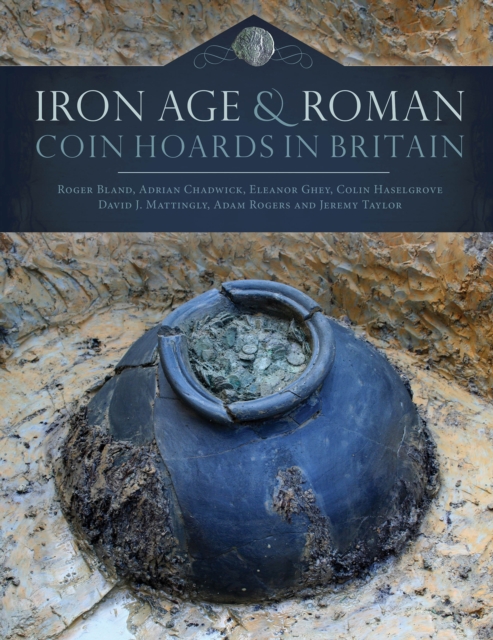
Iron Age and Roman Coin Hoards in Britain
More coin hoards have been recorded from Roman Britain than from any other province of the Empire.This comprehensive and lavishly illustrated volume provides a survey of over 3260 hoards of Iron Age and Roman coins found in England and Wales with a detailed analysis and discussion.Theories of hoarding and deposition and examined, national and.
eBook


Coins as Cultural Texts in the World of the New Testament
Coins have long been a vital part of the discipline of classical studies of the ancient world. However, many scholars have commented that coins have not been adequately integrated into the study of the New Testament. This book provides an interdisciplinary gateway to the study of numismatics for those who are engaged in biblical studies. Wenkel argues that coins from the 1st century were cultural texts with communicative power. He establishes a simple yet comprehensive hermeneutic that defines coins as cultural texts and explains how they might be interpreted today. Once coins are understood to be cultural texts, Wenkel proceeds to explain how these texts can be approached from three angles. First, the world in front of the coin is defined as the audience who initially read and responded to coins as cultural texts. The entire Roman Empire used coins for payment. Second, the world of the coin refers to the coin itself - the combination of inscriptions and images. This combination of inscription and image was used ubiquitously as a tool of propaganda. Third, the world behind the coin refers to the world of power and production behind the coins. This third angle explores the concept of authorship of coins as cultural texts.
eBook

Late iron age gold hoards from the low countries and the caesarian conquest of northern gaul
This volume presents eight new Iron Age gold hoards from the southern Netherlands and Belgium, consisting of gold coinages and in several cases also gold ornaments. The study of these hoards provides a wealth of new information on the archaeological contexts in which they were found, on the dating of many coin types and jewellery, and on the social role of gold in pre-Roman society. All these hoards seem to have been buried in the 50s BC, thus making a direct association with the historical context of Caesar's war campaigns in Northern Gaul very plausible. This makes the volume important for archaeologists as well as numismatists and historians
eBook

From Caesar to Augustus (c. 49 BC-AD 14) : using coins as sources
\"This unique book provides the student of Roman history with an accessible and detailed introduction to Roman and provincial coinage in the Late Republic and Early Empire in the context of current historical themes and debates. Almost two hundred different coins are illustrated at double life size, with each described in detail, and technical Latin and numismatic terms are explained. Chapters are arranged chronologically, allowing students quickly to identify material relevant to Julius Caesar, the second triumvirate, the relationship between Antony and Cleopatra, and the Principate of Augustus. Iconography, archaeological contexts, and the economy are clearly presented. A diverse array of material is brought together in a single volume to challenge and enhance our understanding of the transition from Republic to Empire\"-- Provided by publisher.
Book
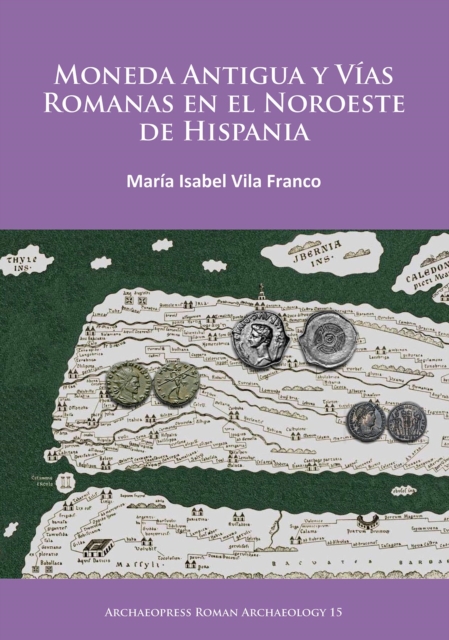
Moneda Antigua y Vías Romanas en el Noroeste de Hispania
This work seeks to understand the process of monetization within the economy of the Galicians and Asturians and the cultural ways in which the phenomenon occurred. Numismatic remains are studied in depth, found in four of the roads crossing the northwestern territory of the Iberian peninsula in Roman times; the tracks studied, as referenced in the Itinerary of Antonino, were XVII, XVIII, XIX and XX. All the coins discovered were imported, and so it was possible to mark precisely where the greatest influx of individuals and materials came from, as well as areas and zones of different speeds of monetization and, thus, Romanization. -Spanish Description: A través de este trabajo hemos pretendido comprender el proceso de monetización de la economía de galaicos y astures y las vías culturales por las que el fenómeno se produjo. Para ello hemos estudiado en profundidad los restos numismáticos aparecidos en cuatro de las calzadas que atravesaban el territorio noroccidental de la península ibérica en época romana, las vías XVII, XVIII, XIX y XX del Itinerario de Antonino. Debido a que toda la moneda que encontramos en este territorio es importada, hemos podido marcar con precisión cuáles fueron los horizontes de mayor entrada de individuos y materias, así como áreas y zonas de diferentes velocidades de monetización y con ello de romanización. Seguramente las zonas cercanas a campamentos, dónde se alojaron miles de soldados cuya única economía posible era la monetaria, conocieron y dependieron pronto del valor de la moneda. Igualmente los nuevos núcleos romanos administrativos hubieron de ser centros focales de monetización, aunque desconocemos el por qué no se abrieron cecas de moneda en estas ricas ciudades con importante tráfico de mineral y de gentes, como pueda ser el caso de Astorga o Braga.
eBook