
Catalogue Search | MBRL


Are you sure you want to remove the book from the shelf?

{{itemTitle}}
116
result(s) for
"Coins, Classical."
Sort by:


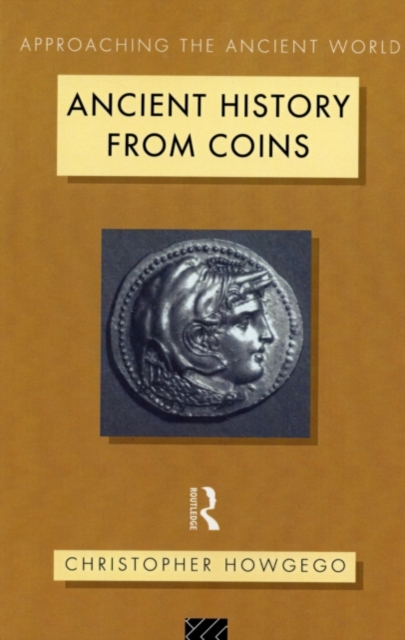
Ancient History from Coins
Like other volumes in this series, Ancient History from Coins demystifies a specialism, introducing students (from first year upwards) to the techniques, methods, problems and advantages of using coins to do ancient history.Coins are a fertile source of information for the ancient historian; yet too often historians are uneasy about using them as evidence because of the special problems attaching to their interpretation. The world of numismatics is not always easy for the non-specialist to penetrate or understand with confidence. Dr Howgego describes and anlyses the main contributions the study of coins can make to ancient history, showing shows through numerous examples how the character, patterns and behaviour of coinage bear on major historical themes. Topics range from state finance and economic policy to imperial domination and political propaganda through coins types.The period covered by the book is from the invention of coinage (ca 600BC) to AD 400.
eBook
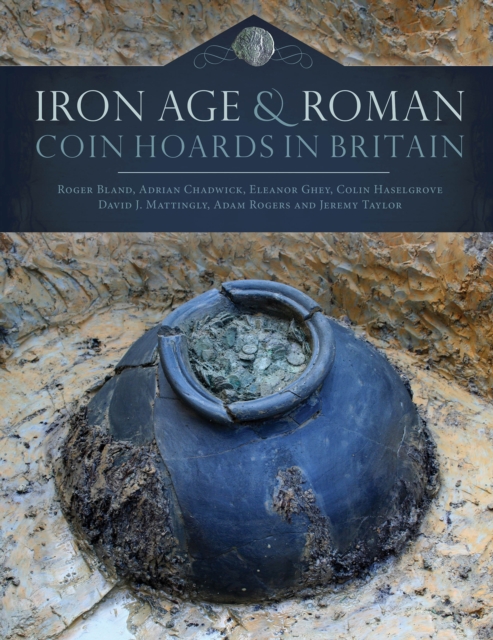
Iron Age and Roman Coin Hoards in Britain
More coin hoards have been recorded from Roman Britain than from any other province of the Empire.This comprehensive and lavishly illustrated volume provides a survey of over 3260 hoards of Iron Age and Roman coins found in England and Wales with a detailed analysis and discussion.Theories of hoarding and deposition and examined, national and.
eBook

El tesoro de Regina Turdulorum (Casas de Reina, Badajoz)
The Regina Turdulorum Hoard (Casas de Reina, Badajoz) was buried with 818 imitative antoniniani of Divo Claudio type, minted in copper. The vast majority of the coins bear the reverse legend CONSECRATIO. This figure makes the Regina Turdulorum hoard one of the most important in Spain and Portugal. In numismatic terms, the most common reverse type is the funeral pyre, as opposed to the eagle. In addition to this main group, there is a second group, where there are curious imitations that follow various prototypes for the manufacture of the reverse. The study of the posthumous coinage of Claudius II and his imitations represents one of the most complex tasks in ancient numismatics. The work is considerably complicated by the fact that they are highly copied coins, which means that regular issues are very difficult to distinguish from the imitations. In this sense, the hoard provides vital information for the western monetary circulation of the Roman Empire, contributing to the debate on Gallic and African imitations. It also opens the way to the hypothesis that Hispania may have been another centre for issuing Divo Claudio imitations. Although the latter remains to be proven, the tentative and open nature of this book provides the opportunity to open new lines of study in the hope that they will be resolved sooner rather than later.
eBook

The Cunetio and Normanby Hoards
The Cunetio and Normanby hoards are the two of the largest Roman coin hoards from Britain. They both comprise mostly ‘radiate’ coins struck in the second half of the 3rd century and are the most important catalogues for people identifying radiate coins in Britain dating from AD 253 to AD 275. The Cunetio hoard was originally published as a single volume, The Cunetio Treasure by EM Besly and RF Bland (British Museum Press, 1983); the Normanby hoard was published along with several other hoards in The Normanby Hoard and other Roman coin hoards: Coin Hoards from Roman Britain VIII edited by RF Bland and AM Burnett (British Museum Press, 1988). This edition provides the two hoards in one volume with a note on more recent work on the radiate coinage of AD 253-96 and notes to aid identification by Sam Moorhead.
eBook

KINGS, SATRAPS, LOCAL DYNASTS, AND CITIES IN ACHAEMENID IMPERJAL SPACE: PSEUDO-ARISTOTLE'S OIKONOMIKA AND NUMISMATIC REALITY
The complex pattern of coinage in the Achaemenid kingdom consists of multiple phenomena. Apart from the king, several other authorities minted coins. The minting activity of various representatives of the Great King-satraps and lower-rank officials, as well as military commanders-is of particular importance. The article discusses the current state of knowledge on this subject.
Journal Article

Study on eutectoid phase corrosion behavior and rust layer protection mechanism of bronze coins from the Western Han Dynasty (first century BC) in China
This article conducted a study on ancient bronze coins unearthed in Huxian, Shaanxi, China. It was found that the coins corroded along the eutectoid phase, and there was an obvious corrosion layering phenomenon. From the outside to the inside, they were the outer rust layer, the transition layer and the matrix layer. When analyzing the chemical composition and corrosion products in different regions, various techniques such as metallographic microscopy, X-ray photoelectron spectroscopy (XPS), scanning electron microscopy with energy-dispersive X-ray spectroscopy (SEM-EDS) and electron probe microanalysis (EPMA) were employed. It was determined that the outer rust layer primarily consisted of Cu
2
(OH)
3
Cl, while the transition layer was composed of an α phase and a corroded eutectoid phase (with the corrosion product being SnO
2
). In addition, combined with electrochemical tests, it was found that the rust layer has better protective performance on the substrate. Based on the above results, it is speculated that some ancient bronze cultural relics may have gone through two stages: the first stage is the market transaction stage after the coin casting is completed, and the second stage is the burial soil corrosion stage when the coins circulating in the market become funerary objects. Relevant research provides a certain theoretical basis for the protection of bronze cultural relics.
Journal Article

Oversimplifying quantum factoring
Building a device capable of factoring large numbers is a major goal of quantum computing; an algorithm for quantum factoring (Shor’s algorithm) exists, and a simple coin-tossing exercise is used to illustrate the dangers of oversimplification when implementing this algorithm experimentally.
A cautionary approach to quantum computing
Building a device capable of factoring larger numbers is a major goal of quantum computing. Some small-scale demonstrations of an algorithm for quantum factoring (known as Shor's algorithm) exist, but these have used simplifications dependent on knowing the factors in advance. John Smolin
et al
. use a simple coin-tossing exercise to illustrate the dangers of over-simplification, and suggest a more stringent test for experimental demonstrations of Shor's algorithm.
Shor’s quantum factoring algorithm exponentially outperforms known classical methods. Previous experimental implementations have used simplifications dependent on knowing the factors in advance. However, as we show here, all composite numbers admit simplification of the algorithm to a circuit equivalent to flipping coins. The difficulty of a particular experiment therefore depends on the level of simplification chosen, not the size of the number factored. Valid implementations should not make use of the answer sought.
Journal Article

The Rise and Fall of Classical Greece
Lord Byron described Greece as great, fallen, and immortal, a characterization more apt than he knew. Through most of its long history, Greece was poor. But in the classical era, Greece was densely populated and highly urbanized. Many surprisingly healthy Greeks lived in remarkably big houses and worked for high wages at specialized occupations. Middle-class spending drove sustained economic growth and classical wealth produced a stunning cultural efflorescence lasting hundreds of years.
Why did Greece reach such heights in the classical period-and why only then? And how, after \"the Greek miracle\" had endured for centuries, did the Macedonians defeat the Greeks, seemingly bringing an end to their glory? Drawing on a massive body of newly available data and employing novel approaches to evidence, Josiah Ober offers a major new history of classical Greece and an unprecedented account of its rise and fall.
Ober argues that Greece's rise was no miracle but rather the result of political breakthroughs and economic development. The extraordinary emergence of citizen-centered city-states transformed Greece into a society that defeated the mighty Persian Empire. Yet Philip and Alexander of Macedon were able to beat the Greeks in the Battle of Chaeronea in 338 BCE, a victory made possible by the Macedonians' appropriation of Greek innovations. After Alexander's death, battle-hardened warlords fought ruthlessly over the remnants of his empire. But Greek cities remained populous and wealthy, their economy and culture surviving to be passed on to the Romans-and to us.
A compelling narrative filled with uncanny modern parallels, this is a book for anyone interested in how great civilizations are born and die.
This book is based on evidence available on a new interactive website. To learn more, please visit: http://polis.stanford.edu/.
eBook