
Catalogue Search | MBRL


Are you sure you want to remove the book from the shelf?

{{itemTitle}}
650
result(s) for
"Cold War memory"
Sort by:

The Cold War : historiography, memory, representation
\"This volume describes and analyzes the cultural history and representation of the Cold War from an international perspective. That innovative approach focuses on master narratives of the Cold War, places of memory, public and private memorialization, popular culture, and schoolbooks. These general themes are illustrated through a case study of Cold War memory in Berlin, which was a unique former center of Cold War confrontation and competition\"--Provided by publisher.
Book

The Cold War
The traces of the Cold War are still visible in many places all around the world. It is the topic of exhibits and new museums, of memorial days and historic sites, of documentaries and movies, of arts and culture. There are historical and political controversies, both nationally and internationally, about how the history of the Cold War should be told and taught, how it should be represented and remembered. While much has been written about the political history of the Cold War, the analysis of its memory and representation is just beginning. Bringing together a wide range of scholars, this volume describes and analyzes the cultural history and representation of the Cold War from an international perspective. That innovative approach focuses on master narratives of the Cold War, places of memory, public and private memorialization, popular culture, and schoolbooks. Due to its unique status as a center of Cold War confrontation and competition, Cold War memory in Berlin receives a special emphasis.
eBook


‘When the body speaks back’: Socialization of body-mind dualism in body memories of Cold War childhoods
Studies focusing on East Central Europe have generously explored collective memory (lieux de mémoire, monuments, ceremonies) and nostalgia for a past regime, but rarely have they examined memories as carried in child bodies. In this paper, we analyze selected Cold War childhood memories to explore events in which children’s bodies seemingly act out of control. As a part of socialization, children are taught to consciously control their bodies to fit in the societies they have been born to. With learning to control the body, children also learn that bodies are separate from their minds and that their minds can govern and regiment their body. However, bodies also slip up, avert, or simply remain unaffected by these attempts, in a way ‘speaking back’ to regulating forces, thus troubling the modernist assumption of the separation between the mind and body. The aim of the paper is to show the complexities and limits of socialist or any modern(ist) forms of socialization in which the concerted efforts of the mind are mobilized to govern the body. Moreover, the discussion of body memory and the highlighted mechanisms of how socialization efforts create bodily memories adds to our understanding of the effects of pedagogical intentions in education.
Journal Article

The Cold War. Historiography, Memory, Representation
This volume describes and analyzes the cultural history and representation of the Cold War from an international perspective. That innovative approach focuses on master narratives of the Cold War, places of memory, public and private memorialization, popular culture, and schoolbooks. These general themes are illustrated through a case study of Cold War memory in Berlin, which was a unique former center of Cold War confrontation and competition.
eBook

Cold war cultures
The Cold War was not only about the imperial ambitions of the super powers, their military strategies, and antagonistic ideologies. It was also about conflicting worldviews and their correlates in the daily life of the societies involved. The term \"Cold War Culture\" is often used in a broad sense to describe media influences, social practices, and symbolic representations as they shape, and are shaped by, international relations. Yet, it remains in question whether - or to what extent - the Cold War Culture model can be applied to European societies, both in the East and the West. While every European country had to adapt to the constraints imposed by the Cold War, individual development was affected by specific conditions as detailed in these chapters. This volume offers an important contribution to the international debate on this issue of the Cold War impact on everyday life by providing a better understanding of its history and legacy in Eastern and Western Europe.
eBook

Dynamics of Memory and Identity in Contemporary Europe
The collapse of the Iron Curtain, the renationalization of eastern Europe, and the simultaneous eastward expansion of the European Union have all impacted the way the past is remembered in today's eastern Europe. At the same time, in recent years, the Europeanization of Holocaust memory and a growing sense of the need to stage a more \"self-critical\" memory has significantly changed the way in which western Europe commemorates and memorializes the past. The increasing dissatisfaction among scholars with the blanket, undifferentiated use of the term \"collective memory\" is evolving in new directions. This volume brings the tension into focus while addressing the state of memory theory itself.
eBook
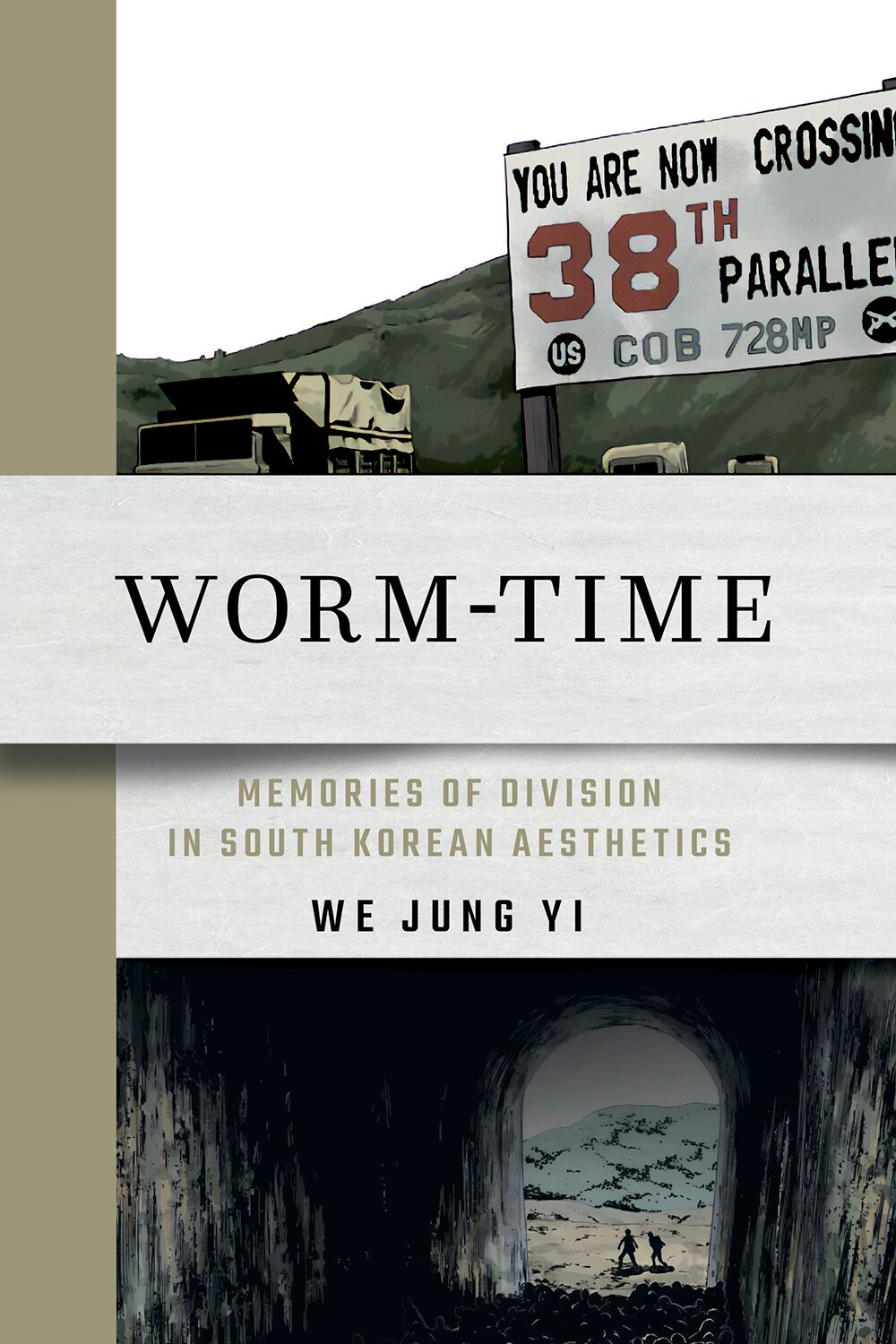
Worm-Time
Worm-Time challenges
conventional narratives of the Cold War and its end, presenting an
alternative cultural history based on evolving South Korean
aesthetics about enduring national division. From novels
of dissent during the authoritarian era to films and webtoons in
the new millennium, We Jung Yi's transmedia analyses unearth
people's experiences of \"wormification\"-traumatic survival,
deferred justice, and warped capitalist growth in the wake of the
Korean War.
Whether embodied as refugees, leftists, or broken families, Yi's
wormified protagonists transcend their positions as displaced
victims of polarized politics and unequal development. Through
metamorphoses into border riders who fly over or crawl through the
world's dividing lines, they reclaim postcolonial memories buried
in the pursuit of modernization under US hegemony and cultivate a
desire for social transformation. Connecting colonial legacies,
Cold War ideologies, and neoliberal economics, Worm-Time
dares us to rethink the post-WWII consensus on freedom, peace, and
prosperity.
eBook

Founding Father or National Traitor? Contested Memories of Syngman Rhee in Mid-1990s South Korea
The present study focuses on the 1990s as a pivotal era in the mnemonic landscape of post-authoritarian South Korea, and bridges the gap between the ample literature on the revolutionary 1980s and the \"history wars\" of the 2000s–2010s. Through a case study of the cultural memory of Syngman Rhee (1875–1965) and his role in the division of the Korean peninsula, this mnemohistorical account investigates how his memory became pivotal to South Korean mnemonic disputes in the 1990s. Contestations over the memory of Rhee during this period are dissected using critical discourse analysis, beginning with the \"re-discovery\" of Syngman Rhee in the early 1990s by conservative journalists and intellectuals. The article then explores how Chosun Ilbo and Joongang Ilbo , two of South Korea's largest newspapers, led extensive Syngman Rhee \"re-evaluation\" efforts in 1995 to revise South Korean cultural memory, before addressing how such efforts were met by fierce opposition from progressives. Although ultimately unsuccessful, these conservative re-evaluation efforts and the opposition that ensued veritably mapped the mnemonic coordinates for South Korea's later \"history wars.\" As such, the present study provides an insight into the origins of the mnemonic polarization that characterized South Korea in the mid-2000s. As a first historical dispute initiated by conservatives post-democratization, this \"re-discovery\" and \"re-evaluation\" of Syngman Rhee as South Korea's \"founding father\" arguably provided conservatives with a historical narrative for the post-Cold War era, cementing a pillar of conservative functional memory that would eventually merge into a \"foundation\"-centered narrative after the late 1990s.
Journal Article

The birth of the memory of Communism: memorial museums in Europe
This article argues that the memory of Communism emerged in Europe not due to the public recognition of pre-given historical experiences of peoples previously under Communist regimes, but to the particularities of the post-Cold War transnational political context. As a reaction to the uniqueness claim of the Holocaust in the power field structured by the European enlargement process, Communism memory was reclaimed according to the European normative and value system prescribed by the memory of the Holocaust. Since in the political context of European enlargement refusing to cultivate the memory of the Holocaust was highly illegitimate, the memory of Communism was born as the “twin brother” of Holocaust memory. The Europeanized memory of Communism produced a legitimate differentia specifica of the newcomers in relation to old member states. It has been publicly reclaimed as an Eastern European experience in relation to universal Holocaust memory perceived as Western. By the analysis of memorial museums of Communism, the article provides a transnational, historical, and sociological account on Communism memory. It argues that the main elements of the discursive repertoire applied in post-accession political debates about the definition of Europe were elaborated before 2004 in a pan-European way.
Journal Article