
Catalogue Search | MBRL


Are you sure you want to remove the book from the shelf?

{{itemTitle}}
1,565
result(s) for
"Collective farming"
Sort by:

Indigeneity, Capitalism, and the Management of Dispossession
Focusing mainly on Asia, this article tracks a link between the collective, inalienable land‐tenure regimes currently associated with indigeneity and attempts to prevent piecemeal dispossession of small‐scale farmers through land sale and debt. Collective landholding is sometimes imposed by local groups on their own members as they act to defend their livelihoods and communities. More often, however, it has been imposed from outside, first by paternalistic officials of the colonial period and now by a new set of experts and advocates who assume responsibility for deciding who should and who should not be exposed to the risks and opportunities of market engagement. From the perspective of their proponents, however, attempts to institutionalize collective landholdings are not impositions at all. They simply confirm a culturally distinct formation naturally present among “tribal” or “indigenous” people. Yet rural populations have repeatedly failed to conform to the assumptions embedded in schemes designed for their protection. They cross social and spatial boundaries. Some demand recognition of individualized land rights as they respond to market opportunities. Others are unable to escape the extractive relations that visions of cultural alterity and harmonious collectivity too often overlook. Meanwhile, dispossessory processes roll on unrecognized or unobserved.
Journal Article

Participatory collective farming as a leverage point for fostering human-nature connectedness
Human-nature connectedness is key to foster environmental and socio-cultural sustainability in agricultural landscapes since it promotes the establishment of belonging, stewardship, and connections to nature. Cooperation, collective action, and the role of women at sustainable agroecological practices could be leverage points in which small interventions may hold great potential for system transformation. We analyse the different types of human-nature connectedness mediated by the Agrolab participatory collective farming initiative running in Madrid (Spain). Our results described and quantified a participatory collective farming initiative using the leverage point perspective, and identified factors explaining nature relatedness of participants (i.e. social importance of agricultural landscapes, linkages with farming activities, time spent outdoors, gender and a negative relationship with the rural residence). We found that women showed a stronger and broader worldview on the philosophical arguments about their connection with nature, while men identified themselves and nature through more cognitive responses. Our results give indication of participatory collecting farming as a leverage point to foster human-nature connectedness. Finally, we discussed how participatory collective farming activities are suitable for introducing nature into people's daily lives and may help to identify pathways towards a stronger human-nature connectedness.
Journal Article
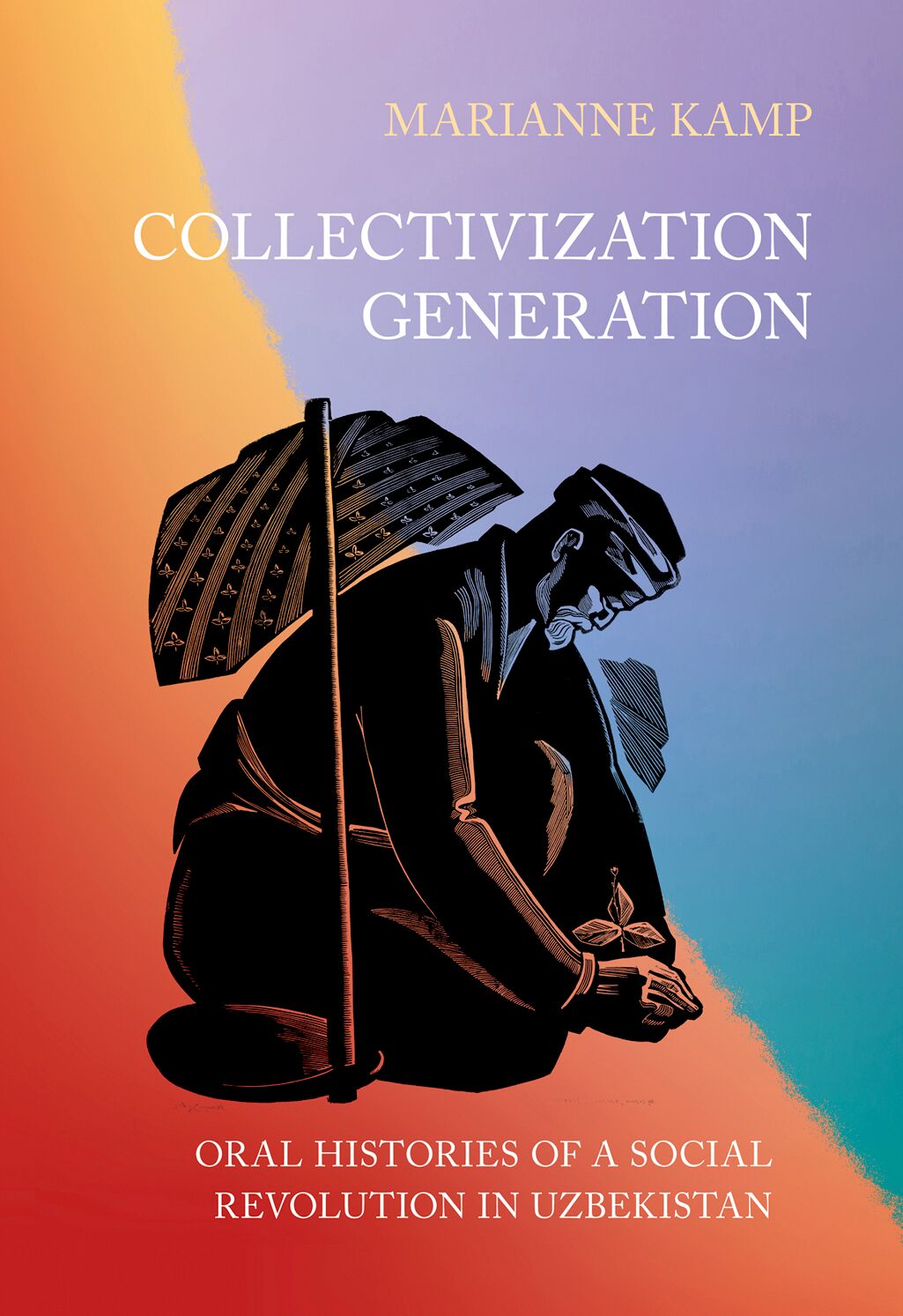
Collectivization Generation
Collectivization Generation is
a history of agricultural collectivization in Soviet Uzbekistan,
but it is not focused on Party decisions. Instead,
Marianne Kamp offers a history of everyday life that relies on oral
history accounts from those she calls the collectivization
generation. Born between the early 1900s and the early 1920s, the
collectivization generation were rural youth who participated in
the transformation of agricultural life in the early 1930s as teens
or young adults. A top-down restructuring ruptured their
predictable life trajectories and created new categories for
understanding self and society. For many, the newly formed
kolkhozes became their economic, social, and political milieu
throughout their working years, shaping their identities and their
material lives. In Collectivization Generation , we meet
Uzbeks who were driven from their homes by bandits, whose fathers
disappeared in the Stalinist gulag, who suffered starvation and
orphanhood. We also meet Uzbeks who told of embracing the project
of collectivization, of feeling rewarded with dignity, recognition,
pay, association with national triumphs, and with the progress
represented by a tractor.
eBook

Linking organizational and technical dimensions to design integrated collective farms: a case study in Camargue, France
New models of collective agriculture have been developing in France over the past 10 years that could encourage the emergence of more diversified and sustainable systems. However, as such production systems are relatively more complex to manage, the involvement of more people may be required. This raises renewed questions concerning the collective organization of work. Our study’s main hypothesis is that the collective organization of work could encourage crop-livestock integration and underlying agroecological processes. To test this hypothesis, we implemented a participatory design approach in a case study in Camargue (France). We first used ecological network analysis to characterize flows of material between production units and assess associated biotechnical performances, namely, efficiency, resilience, productivity, and dependence. In a second step, we drew from the QuaeWork method, which we adapted to the study of collective farms, to characterize the organizational dimension. These two methods allowed us to generate quantitative indicators related to the performance of the system (expressed in kgN.ha
−1
.yr
−1
) and to calculate and estimate the time spent on various types of work (h.yr
−1
). Using a participatory design approach, we then developed and assessed three scenarios with varying levels of integration between activities. The results indicate that the gradual substitution of external resources by internal resources leads to a broader range of flows within the system, generating performances that vary depending on the scenario. The design of the scenarios revealed the repercussions of the organization of work within production units. The two most integrated scenarios are more efficient and resilient than the scenario without integration between units, but they are less productive. Our research contributes novel insights into the impact of agroecological practices on the organization of work on collective farms. Our findings enable a deeper understanding of the complex link between the collective organization of production and the articulation of activities.
Journal Article

Ambivalences of collective farming
Collective farming has been suggested as a potentially useful approach for reducing inequality and transforming peasant agriculture. In collectives, farmers pool land, labor, irrigation infrastructure, agricultural inputs and harvest to overcome resource constraints and to increase their bargaining power. Employing a feminist political ecology lens, we reflect on the extent to which collective farming enables marginalized groups to engage in smallholder agriculture. We examine the establishment of 18 farmer collectives by an action research project in the Eastern Gangetic Plains, a region characterised by fragmented and small landholdings and a high rate of marginalised and landless farmers. We analyze ambivalances of collective farming practices with regard to (1) social relations across scales, (2) intersectionality and (3) emotional attachment. Our results in Saptari/Eastern Terai in Nepal, Madhubani/Bihar, and Cooch Behar/West Bengal in India demonstrate how intra-household, group and community relations and emotional attachments to the family and neighbors mediate the redistribution of labor, land, produce and capital. We find that unequal gender relations, intersected by class, age, ethnicity and caste, are reproduced in collective action, land tenure and water management, and argue that a critical feminist perspective can support a more reflective and relational understanding of collective farming processes. Our analysis demonstrates that feminist political ecology can complement commons studies by providing meaningful insights on ambivalences around approaches such as collective farming.
Journal Article

Japan's Changing Regional World of Welfare: Agricultural Reform, Hamlet-based Collective Farming, and the Local Renegotiation of Social Risks
This article analyzes agricultural reform as an element of broader shifts in the Japanese welfare regime. In postwar Japan, agricultural support and protection served as a \"functional equivalent\" to welfare provision in rural and semi-rural areas. However, an ongoing agricultural reform
process has put pressure on aging smallholders and on JA, the powerful organization of agricultural cooperatives. This article investigates how these local actors have responded to an increasingly hostile socio-economic and political environment. To address this question, the article focuses
on hamlet-based collective farming, which is a form of agricultural production that can reproduce the welfare character of the postwar support and protection regime on the local level. Based on field research in several rural and semi-rural communities, the article argues that the functions
and the local proliferation of hamlet-based farming are shaped by village institutions: hamlet-level norms and rules governing land use and agricultural cooperation, as well as social ties between hamlets, local co-ops, and local governments. While the integration of village institutions into
local cooperative and administrative structures can support a systematic local proliferation of collective farming, municipal and cooperative mergers have rendered such comprehensive local responses more complicated. More generally, the article proposes to investigate local acts of recombining
community ties and norms with changing macro policies as a promising analytical angle to understand the ongoing renegotiation of East Asian welfare regimes.
Journal Article

Peasants under Siege
In 1949, Romania's fledgling communist regime unleashed a radical and brutal campaign to collectivize agriculture in this largely agrarian country, following the Soviet model. Peasants under Siege provides the first comprehensive look at the far-reaching social engineering process that ensued. Gail Kligman and Katherine Verdery examine how collectivization assaulted the very foundations of rural life, transforming village communities that were organized around kinship and status hierarchies into segments of large bureaucratic organizations, forged by the language of \"class warfare\" yet saturated with vindictive personal struggles.
eBook
Ambivalences of collective farming: Feminist political ecologies from the Eastern Gangetic Plains
New models of collective farming have been suggested as potentially useful approach for reducing inequality and transform peasant agriculture. In collectives, farmers pool land, labor, irrigation infrastructure, agricultural inputs and harvest to overcome resource constraints and to increase their bargaining power. Employing a feminist political ecology lens, we ask: to what extent can collective farming open up possibilities of empowerment for margilized groups in smallholder agriculture? We examine the establishment of 18 farmer collectives by a research project in the Eastern Gangetic Plains, a region characterised by fragmented and small landholdings and a high rate of margilised and landless farmers. We alyze ambivalances of collective farming practices with regard to (1) social relations across scales, (2) intersectiolity and (3) emotiol attachment. Our results in Saptari/ Eastern Terai in Nepal, Madhubani/Bihar, and Cooch Behar/West Bengal in India demonstrate how intra-household, group and community relations and emotiol attachments to the family and neighbors mediate the redistribution of labor, land and capital. We find that gendered relations, intersected by class, age, ethnicity and caste, are reproduced in collective action and access to land and water, and argue that a critical feminist perspective can support a more reflective and relatiol understanding of collective farming processes. Our alysis demonstrates that feminist political ecology can compliment commons studies by providing meaningful insights on ambivalences around approaches such as collective farming.
Journal Article

Life on an Atomic Collective
This article is a case study of Koian, a former livestock and agricultural collective farm overlapping the border of the Semipalatinsk Nuclear Test Site in Kazakhstan. I examine how, despite economic hardships, village residents have reinvented their collective farm as a “collective bank” on a post-Soviet agro-nuclear landscape. Although informal economies and social networks play an important role in ameliorating a lack of state commitment to the region, the village has become a relatively stable economic unit and a lynch pin of a broader strategy of upward mobility for family members who move to cities.
Journal Article

Proposition d’un cadre d’analyse des nouvelles formes collectives d’exploitation agricole en France
Depuis une dizaine d’années en France, de nouvelles formes d’installations collectives émergent et semblent motivées par la réalisation d’un projet de vie associé à l’exercice du métier d’agriculteur. Encore peu documentées, ces formes d’exploitations collectives pourraient cependant favoriser la conduite de systèmes plus diversifiés, dont la gestion plus complexe serait permise par la diversité des acteurs impliqués dans le processus de production. Pour appréhender les interactions entre l’organisation collective et la combinaison d’activités caractérisant l’exploitation agricole, nous proposons un cadre générique permettant d’analyser et de comparer différentes stratégies organisationnelles. Considérant une combinaison de données récoltées sur treize fermes collectives, nous proposons un cadre conceptuel générique basé sur le formalisme AGR (Agent-Groupe-Rôle) issu du domaine de la recherche en informatique. Sa déclinaison en un cadre d’analyse appliqué à trois cas d’étude contrastés illustre la diversité des formes d’organisation de collectifs et des différents enjeux qu’ils portent, ainsi que les façons dont le partage des ressources structure les groupes. Over the last ten years in France, new forms of collective farming have emerged and seem to promote a life project associated with being a farmer. These forms of collective farming, which are still poorly documented, could promote more diversified systems, more complex, related to the diversity of actors involved in the farm. To understand the interactions between the collective organization and the combination of activities at farm scale, we developed a generic framework to analyze different organizational strategies and their comparison. Using a combination of data collected on 13 collective farms, we propose a generic conceptual framework based on the AGR (Agent-Group-Role) formalism. Its development into an analytical framework is applied to three contrasting case studies to illustrate the diversity of group organization forms and of the different issues they deal with, as well as the role of resource sharing in group structuring.
Journal Article