
Catalogue Search | MBRL


Are you sure you want to remove the book from the shelf?

{{itemTitle}}
19
result(s) for
"Collective memory Cambodia."
Sort by:

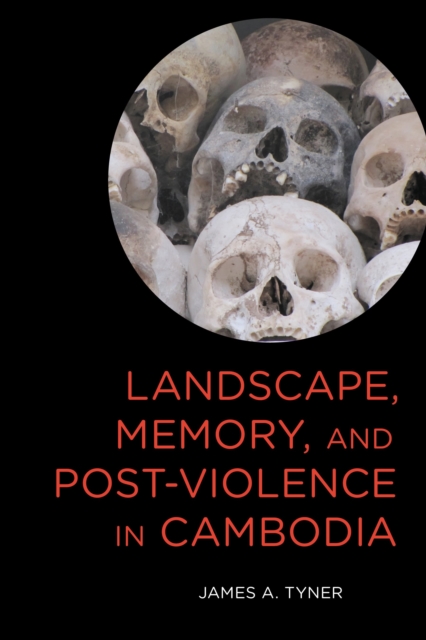
Landscape, memory, and post-violence in Cambodia
Between 1975 and 1979 the Khmer Rouge regime in Cambodia enacted a program of organized mass violence that resulted in the deaths of approximately one quarter of the country’s population. Over two million people died from torture, execution, disease and famine. From the commodification of the ‘killing fields’ of Choeung Ek to the hundreds of unmarked mass graves scattered across the country, violence continues to shape the Cambodian landscape.
Landscape, Memory, and Post-Violence in Cambodia explores the on-going memorialization of violence. As part of a broader engagement with war, violence and critical heritage studies, it explores how a legacy of organized mass violence becomes part of a cultural heritage and, in the process, how this heritage is ‘produced’. Existing literature has addressed explicitly the impact of war and armed conflict on cultural heritage through the destruction of heritage sites. This book inverts this concern by exploring what happens when sites of ‘heritage violence’ are under threat. It argues that the selective memorialization of Cambodia’s violent heritage negates the everyday lived experiences of millions of Cambodians and diminishes the efforts to bring about social justice and reconciliation. In doing so, it develops a grounded conceptual understanding of post-violence in conflict zones internationally.
eBook

War, Genocide, and Justice
In the three years, eight months, and twenty days of the Khmer Rouge's deadly reign over Cambodia, an estimated 1.7 million Cambodians perished as a result of forced labor, execution, starvation, and disease. Despite the passage of more than thirty years, two regime shifts, and a contested U.N. intervention, only one former Khmer Rouge official has been successfully tried and sentenced for crimes against humanity in an international court of law to date. It is against this background of war, genocide, and denied justice that Cathy J. Schlund-Vials explores the work of 1.5-generation Cambodian American artists and writers.
Drawing on what James Young labels \"memory work\"-the collected articulation of large-scale human loss-War, Genocide, and Justiceinvestigates the remembrance work of Cambodian American cultural producers through film, memoir, and music. Schlund-Vials includes interviews with artists such as Anida Yoeu Ali, praCh Ly, Sambath Hy, and Socheata Poeuv. Alongside the enduring legacy of the Killing Fields and post-9/11 deportations of Cambodian American youth, artists potently reimagine alternative sites for memorialization, reclamation, and justice. Traversing borders, these artists generate forms of genocidal remembrance that combat amnesic politics and revise citizenship practices in the United States and Cambodia.
Engaged in politicized acts of resistance, individually produced and communally consumed, Cambodian American memory work represents a significant and previously unexamined site of Asian American critique.
eBook

Places of Pain and Shame
Places of Pain and Shame is a cross-cultural study of sites that represent painful and/or shameful episodes in a national or local community’s history, and the ways that government agencies, heritage professionals and the communities themselves seek to remember, commemorate and conserve these cases – or, conversely, choose to forget them.
Such episodes and locations include: massacre and genocide sites, places related to prisoners of war, civil and political prisons, and places of ‘benevolent’ internment such as leper colonies and lunatic asylums. These sites bring shame upon us now for the cruelty and futility of the events that occurred within them and the ideologies they represented. They are however increasingly being regarded as ‘heritage sites’, a far cry from the view of heritage that prevailed a generation ago when we were almost entirely concerned with protecting the great and beautiful creations of the past, reflections of the creative genius of humanity rather than the reverse – the destructive and cruel side of history.
Why has this shift occurred, and what implications does it have for professionals practicing in the heritage field? In what ways is this a ‘difficult’ heritage to deal with? This volume brings together academics and practitioners to explore these questions, covering not only some of the practical matters, but also the theoretical and conceptual issues, and uses case studies of historic places, museums and memorials from around the globe, including the United States, Northern Ireland, Poland, South Africa, China, Japan, Taiwan, Cambodia, Indonesia, Timor and Australia.
1. Remembering Places of Pain and Shame 2. Let the Dead be Remembered: Interpretation of the Nanjing Massacre Memorial 3. The Hiroshima \"Peace Memorial\": Transforming Legacy, Memories and Landscapes 4. Auschwitz-Birkenau: The Challenges of Heritage Management Following the Cold War 5. \"Dig a Hole and Bury the Past in It\": Reconciliation and the Heritage of Genocide in Cambodia 6. The Myall Creek Memorial: History, Identity and Reconciliation 7. Cowra Japanese War Cemetry 8. A Cave in Taiwan: Comfort Women's Memories and the Local Identity 9. Postcolonial Shame: Heritage and the Forgotten Pain of Civilian Women Internees in Java 10. Difficult Memories: The Independence Struggle as Cultural Heritage in East Timor 11. Port Arthur, Norfolk Island, New Caledonia: Convict Prison Islands in the Antipodes 12. Hoa Lo Museum, Hanoi: Changing Attitudes to a Vietnamese Place of Pain and Shame 13. Places of Pain as Tools for Social Justice in the \"New\" South Africa: Black Heritage Preservation in the \"Rainbow\" Nation's Townships 14. Negotiating Places of Pain in Post-Conflict Northern Ireland: Debating the Future of the Maze/Prison/Long Kesh 15. Beauty Springing from the Breast of Pain . \"No Less than a Palace: Kew Asylum, its Planned Surrounds, and its Present-Day Residents 17. Between the Hostel and the Detention Centre: Possible Trajectories of Migrant Pain and Shame in Australia
\"William Logan and Keir Reeves are to be congratulated for putting together an outstanding collection of essays that critically evaluate the potentials and pitfalls of different sites of 'difficult heritage.' ... Importantly, these papers consistently strike the right tone between rigorous intellectual inquiry and respectful dialogue. The authors all seem acutely aware that these sites should not just be academic playthings but are vital to people’s sense of personhood, history, and justice.\" - Chip Colwell-Chanthaphonh, Denver Museum of Nature and Science, Current Anthropology , Volume 51, Number 3, June 2010
“This is an interesting and courageous book that explores a challenging and fascinating subject through many significant political and cultural sites. It makes an important contribution to, what is at least in Australia, a modest body of literature that critically engages with and examines heritage theory and practice and connects it with the constant work of communities and nations in trying to imagine, define and cohere identity.” - Peter Romey and Sharon Veale
eBook

Resonant Violence
From the Holocaust in Europe to the military dictatorships of Latin America to the enduring violence of settler colonialism around the world, genocide has been a defining experience of far too many societies. In many cases, the damaging legacies of genocide lead to continued violence and social divisions for decades. In others, however, creative responses to this identity-based violence emerge from the grassroots, contributing to widespread social and political transformation. Resonant Violence explores both the enduring impacts of genocidal violence and the varied ways in which states and grassroots collectives respond to and transform this violence through memory practices and grassroots activism. By calling upon lessons from Germany, Poland, Argentina, and the Indigenous United States, Resonant Violence demonstrates how ordinary individuals come together to engage with a violent past to pave the way for a less violent future.
eBook

Narrating atrocity
After a genocide, leaders compete to fill the postwar power vacuum and establish their preferred story of the past. Memorialisation, including through building memorials, provides a cornerstone of political power. The dominant public narrative determines the plotline; it labels victims and perpetrators, interprets history, assigns meaning to suffering, and sets the post-atrocity political agenda. Therefore, ownership of the past, in terms of the public account, is deeply contested. Although many factors affect the emergence of a dominant atrocity narrative, this article highlights the role of international interactions with genocide memorials, particularly how Western visitors, funders, and consultants influence the government’s narrative. Western consumption of memorials often reinforces aspects of dark tourism that dehumanise victims and discourage adequate context for the uninformed visitor. Funding and consultation provided by Western states and organisations – while offering distinct benefits – tends to encourage a homogenised atrocity narrative, which reflects the values of the global human rights regime and existing standards of memorial design rather than privileging the local particularities of the atrocity experience. As shown in the cases of Rwanda, Cambodia, and Bosnia, Western involvement in public memory projects often strengthens the power of government narratives, which control the present by controlling the past.
Journal Article

The farmer’s battlefield: traditional ecological knowledge and unexploded bombs in Cambodia
What role does traditional ecological knowledge play in the lives of smallholder farmers in post-conflict communities as they cope with the destructive impacts of war? In many cases, military weapons, such as unexploded bombs, are left behind in the surrounding landscape, forcing farmers to adapt their livelihood practices to the increased risk of death and injury. We analyze trends in the local production of knowledge in Ratanak Kiri province, Cambodia, an area heavily bombarded by the US Air Force during the Vietnam War. We argue that the system of traditional ecological knowledge has adapted to include basic information on bomb identification, location, and management strategies. This factual approach gives individuals the flexibility to generate their own views on whether they perceive unexploded ordnance as a violent hazard and/or an economic commodity. In a relatively short 50-year time period, the body of knowledge has been quickly accumulated and culturally transmitted to family and neighbors. Our findings suggest that traditional ecological knowledge should not be reduced to a static and ancient form of collective memory. We call for the expansion of the concept of traditional ecological knowledge to include short-term and dynamic processes of knowledge generation.
Journal Article

Perspectives on memory, forgiveness and reconciliation in Cambodia’s post-Khmer Rouge society
Transitional justice is a conspicuous feature of responses to mass atrocities. Rooted in accountability and redress for victims, transitional justice mechanisms influence and are influenced by collective memory of conflicts. This article looks at the dynamics between memory, trauma and forgiveness in Cambodia. Thirty years after the Khmer Rouge regime, Cambodians expressed limited knowledge of the past, a strong desire for the truth, and lingering feelings of hatred. The Extraordinary Chambers in the Courts of Cambodia (ECCC) created or renewed demand for truth, along with some desire for harm to come to the wrongdoers. Although the ECCC was set up several decades after the mass atrocities, the data suggest that the ECCC and the civil society movement associated with it may have had positive outcomes on addressing the legacy of the violence.
Journal Article


Folklorizing Northern Khmer Identity in Thailand: Intangible Cultural Heritage and the Production of \Good Culture\
Growing recognition of the contested nature of heritage has prompted critical reassessments of official heritage discourses and the demand for more inclusive heritage processes. Field research in Surin, Thailand, reveals the challenges of implementing participatory approaches in a context in which the concept of cultural heritage is employed to domesticate the nation's ethnic Others. The history of state-sponsored, folklorized performances of the ethnic Khmer genre of kantruem demonstrates the ways in which the recent listing of kantruem on Thailand's national registry of \"intangible culture\" elides histories of cross-border linkage with Cambodia and meanings of kantruem as a site of memory and affect.
Journal Article