
Catalogue Search | MBRL


Are you sure you want to remove the book from the shelf?

{{itemTitle}}
81
result(s) for
"Collective memory Italy."
Sort by:

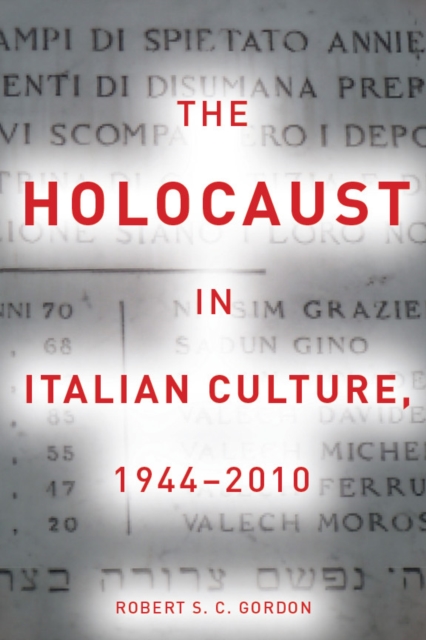
The Holocaust in Italian Culture, 1944–2010
The Holocaust in Italian Culture, 1944–2010 is the first major study of how postwar Italy confronted, or failed to confront, the Holocaust. Fascist Italy was the model for Nazi Germany, and Mussolini was Hitler's prime ally in the Second World War. But Italy also became a theater of war and a victim of Nazi persecution after 1943, as resistance, collaboration, and civil war raged. Many thousands of Italians—Jews and others—were deported to concentration camps throughout Europe. After the war, Italian culture produced a vast array of stories, images, and debate through which it came to terms with the Holocaust's difficult legacy. Gordon probes a rich range of cultural material as he paints a picture of this shared encounter with the darkest moment of twentieth-century history. His book explores aspects of Italian national identity and memory, offering a new model for analyzing the interactions between national and international images of the Holocaust.
eBook

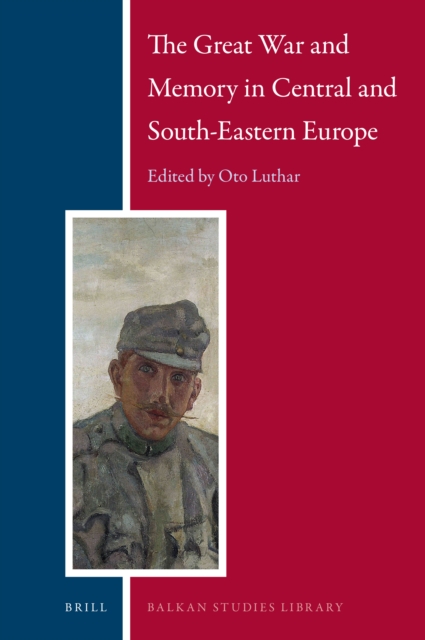
The Great War and Memory in Central and South-Eastern Europe
This volume presents a series of chapters about the Great War and memory in Central and South-Eastern Europe which will widen the insufficient and spotty representations of the Great War in that region. The contributors deliver an important addition to present-day scholarship on the more or less unknown war in the Balkans and at the Italian fronts. Although it might not completely fill the striking gap in the historical representations of the situation between the Slovene-Italian Soca-Isonzo river in the North-West and the Greek-Macedonian border mountains around Mount Kajmakcalan in the South-East, it will add significantly to the scholarship on the Balkan theatre of war and provide a much-needed account of the suffering of civilians, ideas, loyalties and cultural hegemonies, as well as memories and the post-war memorial landscape. The contributors are Vera Gudac Dodic, Silviu Hariton, Vijoleta Herman Kauric, Oto Luthar, Olga Manojlovic Pintar, Ahmed Pašic, Ignác Romsics, Daniela Schanes, Fabio Todero, Nikolai Vukov and Katharina Wesener.
eBook

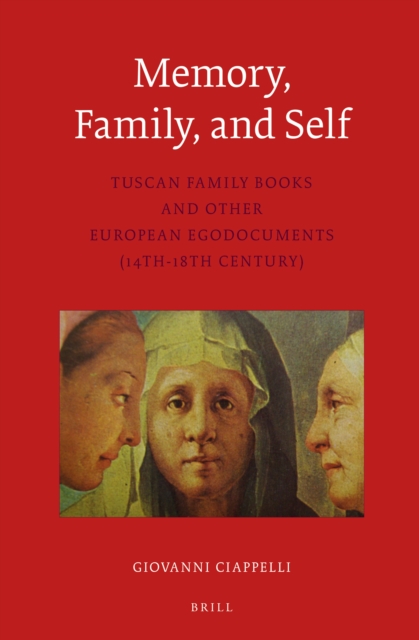
Memory, Family, and Self
The book deals with both a reconstruction of Tuscan family books' evolution and persistency, and several aspects of social history: reading and private libraries, domestic devotion, the memory of historical events. Starting with the Renaissance, the investigation broadens to the 17th-18th centuries and other forms of memory: private diaries and autobiographies. A final section is dedicated to the issue of memory in the egodocuments of early modern Europe.
eBook


COSTRUIRE MEMORIE, RITROVARE I LUOGHI. LA SHOAH E LE STRAGI DEL 1980 NEI MEMORIALI DI BOLOGNA
Tra la stazione di Bologna e l’area a nord nelle sue immediate vicinanze si radunano tre episodi memoriali molto diversi tra loro, sottilmente interrelati. La stazione in sé, con i segni della strage del 2 agosto 1980, si configura come un luogo di memoria per l’Italia repubblicana; sul lato settentrionale del ponte posto sul fascio ferroviario è stato inaugurato il 27 gennaio 2016 il Memoriale della Shoah, mentre il 27 giugno 2007, in un’area in trasformazione urbana posta alle spalle delle linee ferroviarie, è stato aperto il Museo per la memoria di Ustica. Tre eventi le cui memorie si innestano con modalità molto diversificate nei luoghi scelti per la costruzione dei segni commemorativi.
Between the station of Bologna and the area to the north in its immediate vicinity there are three very different memorials, subtly interrelated. The station itself, with the signs of the massacre of August the 2nd, 1980, appears as a place of memory for Republican Italy. On the northern side of the bridge on the railway track, the Holocaust Memorial was inaugurated on January 27th, 2016, while on June 27th, 2007, in an urban transformation area located behind the railway lines, the Museum for the Memory of Ustica. The memories of these three events (the Shoah, Ustica and the Bologna terrorist bombing) are mingled in very different ways in the places chosen for these memorials.
Magazine Article

Where Currents Meet
Where Currents Meet treats the Ukrainian and Russian components of cultural experience in Ukraine’s East as elements of a complex continuum. This study of cultural memory in post-Soviet space shows how its inhabitants negotiate the historical legacy they have inherited. Tanya Zaharchenko approaches contemporary Ukrainian literature at the intersection of memory studies and border studies, and her analysis adds a new voice to an ongoing exploration of cultural and historical discourses in Ukraine. This scholarly journey through storylines explores the ways in which younger writers in Kharkiv (Kharkov in Russian), a diverse, dynamic, but understudied border city in east Ukraine today come to grips with a traumatized post-Soviet cultural landscape. Zaharchenko’s book examines the works of Serhiy Zhadan, Andrei Krasniashchikh, Yuri Tsaplin, Oleh Kotsarev and others, introducing them as a “doubletake\" generation who came of age during the Soviet Union’s collapse and as adults revisited this experience in their novels. Filling the space between society and the state, local literary texts have turned into forms of historical memory and agents of political life.
eBook

Venetians in Constantinople
Historian Eric R Dursteler reconsiders identity in the early modern world to illuminate Veneto-Ottoman cultural interaction and coexistence, challenging the model of hostile relations and suggesting instead a more complex understanding of the intersection of cultures. Although dissonance and strife were certainly part of this relationship, he argues, coexistence and cooperation were more common.
Moving beyond the \"clash of civilizations\" model that surveys the relationship between Islam and Christianity from a geopolitical perch, Dursteler analyzes the lived reality by focusing on a localized microcosm: the Venetian merchant and diplomatic community in Muslim Constantinople.
While factors such as religion, culture, and political status could be integral elements in constructions of self and community, Dursteler finds early modern identity to be more than the sum total of its constitutent parts and reveals how the fluidity and malleability of identity in this time and place made coexistence among disparate cultures possible.
eBook