
Catalogue Search | MBRL


Are you sure you want to remove the book from the shelf?

{{itemTitle}}
170
result(s) for
"Collective memory Spain."
Sort by:

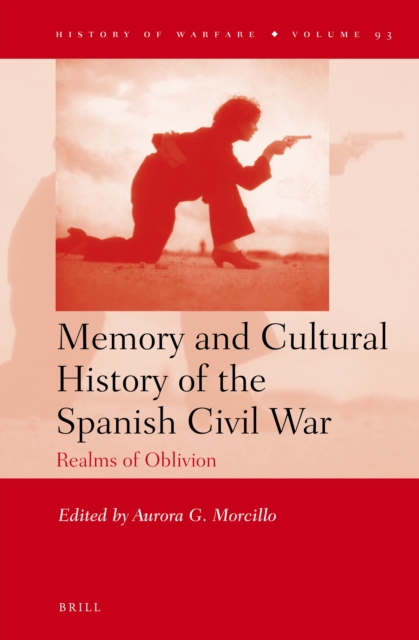
Memory and Cultural History of \u2029the Spanish Civil War
The volume addresses the study of political violence from a humanistic and democratic perspective. The chapters utilize the lens of gender, examine myths and otherness, reflect on structural hunger and fear, and narrate testimonials of exile abroad and in Spain. The methodologies employed are grounded in hermeneutics and discourse analysis.
eBook

Imperial emotions : cultural responses to myths of empire in fin-de-siècle Spain
This work reconsiders debates about historical memory from the perspective of the theory of emotions. Its main claim is that the demise of the Spanish empire in 1898 spurred a number of contradictory emotional responses, ranging from mourning and melancholia to indignation, pride, and shame. It shows how intellectuals sought to reimagine a post-Empire Spain by drawing on myth and employing a predominantly emotional register.
Book

Exhuming Loss
This book examines the contested representations of those murdered during the Spanish Civil War of the 1930s in two small rural communities as they undergo the experience of exhumation, identification, and reburial from nearby mass graves. Based on interviews with relatives of the dead, community members and forensic archaeologists, it pays close attention to the role of excavated objects and images in breaking the pact of silence that surrounded the memory of these painful events for decades afterward. It also assesses the significance of archaeological and forensic practices in changing relationships between the living and dead. The exposure of graves has opened up a discursive space in Spanish society for multiple representations to be made of the war dead and of Spain's traumatic past.
eBook

Memories of the Spanish Civil War
The Spanish Civil War left a legacy of destruction, resentment and deep ideological divisions in a country that was attempting to recover from economic stagnation and social inequality. After Franco’s victory, the repression and purge that ensued immersed Spain in a spiral of fear and silence which continued long after the dictator’s death, through ‘the pact of oblivion’ that was observed during the transition to democracy. Memories of the Spanish Civil War: Conflict and Community in Rural Spain attempts to break this silence by recovering the local memories of survivors of the Civil War and the early years of Franco’s dictatorship. Combining oral testimony gathered in one Andalusian village, with archival research, this ethnographic study approaches the expression of memory as an important site of socio-political struggle.
eBook

Memory battles of the Spanish Civil War : history, fiction, photography
\"The ability to forget the violent twentieth-century past was long seen as a virtue in Spain--even a duty. But the common wisdom has shifted as increasing numbers of Spaniards want to know what happened, who suffered, and who is to blame. Memory Battles of the Spanish Civil War shows how historiography, fiction, and photography have shaped how our views of the civil war (1936-39) and its long, painful aftermath. Faber traces the curious trajectories of iconic Spanish Civil War photographs by Robert Capa, Gerda Taro and David Seymour; critically reads a dozen recent Spanish novels and essays; interrogates basic scholarly assumptions about history, memory, and literature; and interviews nine scholars, activists, and documentarians who in the past decade and a half have helped redefine Spain's relationship to its past. In this shows how historiography, fiction, and photography have shaped how our views of the civil war (1936-39) and its long, painful aftermath book, Faber argues that recent political developments in Spain--from the grassroots call for the recovery of historical memory to the indignados movement and the foundation of Podemos--provide an opportunity for scholars in the humanities to rethink their practice and priorities and to engage more often, and more intentionally, with a broader audience.\"--Provided by publisher.
Book

Unearthing Franco's Legacy
Unearthing Franco's Legacy: Mass Graves and the Recovery of
Historical Memory in Spain addresses the political, cultural,
and historical debate that has ensued in Spain as a result of the
recent discovery and exhumation of mass graves dating from the
years during and after the Spanish Civil War (1936-39). The victor,
General Francisco Franco, ruled as a dictator for thirty-six years,
during which time he and his supporters had thousands of political
dissidents or suspects and their families systematically killed and
buried in anonymous mass graves. Although Spaniards living near the
burial sites realized what was happening, the conspiracy of silence
imposed by the Franco regime continued for many years after his
death in 1975 and after the establishment of a democratic
government.
While the people of Germany, France, and Italy have confronted
the legacies of the repressive regimes that came to power in those
countries during the 1920s, '30s, and '40s, the unearthing of the
anonymous dead in Spain has focused attention on how Spaniards have
only recently begun to revisit their past and publicly confront
Franco's legacy. The essays by historians, anthropologists,
literary scholars, journalists, and cultural analysts gathered here
represent the first interdisciplinary analysis of how present-day
Spain has sought to come to terms with the violence of Franco's
regime. Their contributions comprise an important example of how a
culture critiques itself while mining its collective memory.
eBook

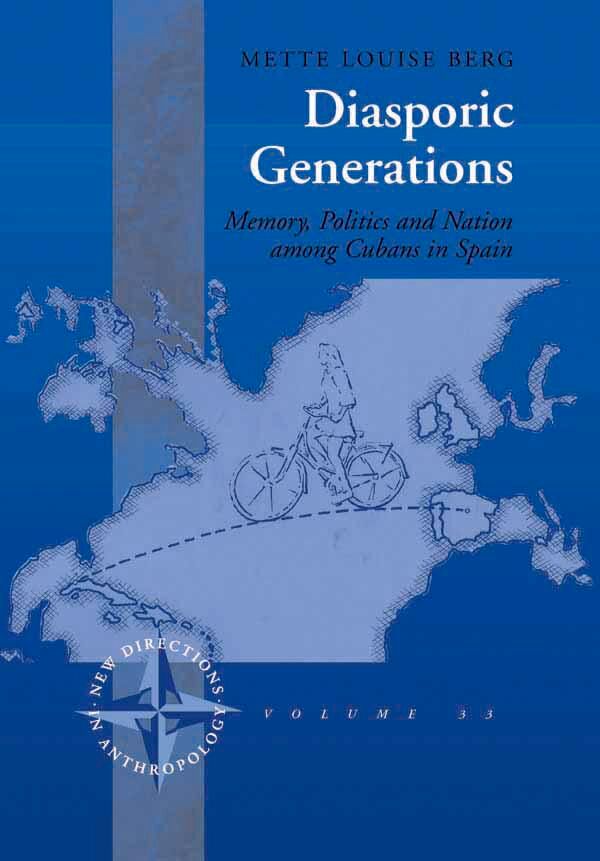
Diasporic Generations
Interpretations of the background to the Cuban diaspora – a political revolution and the subsequent radical transformation of the society and economy towards socialism – are politicised and highly contested. The Miami-based Cuban diaspora has had extraordinary success in putting its case high on the US political agenda and in capturing world media attention, but in the process the multiplicity of experiences within the diaspora has been overshadowed. This book gives voice to diasporic Cubans living in Spain, the former colonial ruler of Cuba. By focusing on their lived experiences of displacement, the book brings to light imaginative, narrative re-creations of the nation from afar. Drawing on extensive ethnographic fieldwork, the book argues that the Cuban diaspora in Spain consists of three diasporic generations, generated through distinct migratory experiences. This constitutes an important step forward in understanding the dynamics of memory-making and social differentiation within diasporas, and in appreciating why people within the same diaspora engage in different modes of transnational practices and homeland relations.
eBook