
Catalogue Search | MBRL


Are you sure you want to remove the book from the shelf?

{{itemTitle}}
89
result(s) for
"Collective memory Turkey."
Sort by:

Museums, emotion, and memory culture : the politics of the past in Turkey
\"Museums, Emotion, and Memory Culture examines the politics of emotion in history museums, combining approaches and concerns from a range of disciplines. Exploring the meanings and politics of memory contests in Turkey, the book asks what it means for museums to imbue the past with political agendas through spectacular, emotive representations. Providing an in-depth examination of emotional practice in two Turkish museums that present contrasting representations of the national past, the book analyses relationships between memory, governmentality, identity and emotion. The museums discussed celebrate Ottoman and Early Republican pasts, linking to geo- and party politics, people's senses of who they are, popular memory culture, and competing national stories and identities vis-لa-vis Europe and the wider world. Both museums use dramatic, emotive panoramas as key displays and the research at the heart of this book explores this seemingly anachronistic choice, and how it links with memory cultures to prompt visitors to engage imaginatively, socially, politically and morally with a particular version of the past. Although the book focuses on museums in Turkey, it uses this as a platform to address broader questions about memory culture, emotion and identity. As such, Museums and Memory Culture should be of great interest to academics and students around the world who are engaged in the study of museums, heritage, culture, history, politics, anthropology, sociology and the psychology of emotion\"-- Provided by publisher.
Book
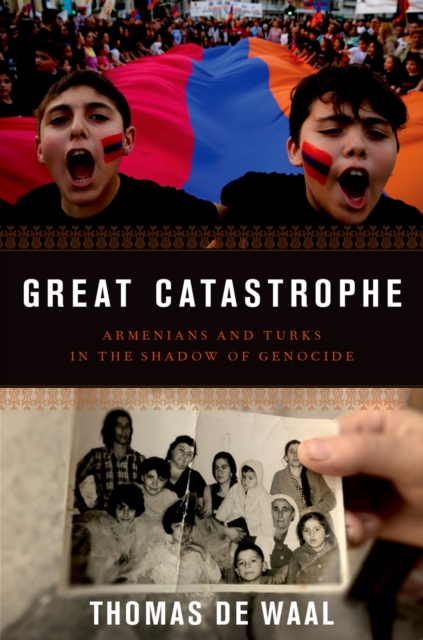
Great catastrophe : Armenians and Turks in the shadow of genocide
Drawing on archival sources, reportage and moving personal stories, de Waal tells the full story of Armenian-Turkish relations since the Genocide in all its extraordinary twists and turns. He looks behind the propaganda to examine the realities of a terrible historical crime and the divisive \"politics of genocide\" it produced.
eBook

Memory, patriarchy and economy in Turkey : narratives of political power
Through the narrative analysis of texts, ranging from political speeches to museum documents as well as graffiti and posters from protests, this book tries to shed light on contemporary Turkish politics as well as offering a glance into how narratives operate in the political realm. Following the journey of political narratives and counternarratives in the Turkish context facilitates the mapping of the cultural terrain while being attentive to power, resistance and dynamism. By analysing narratives of collective memory, patriarchy and economic development, all of which are deeply embedded culturally, it traces the ways in which narratives shape politics.
Book
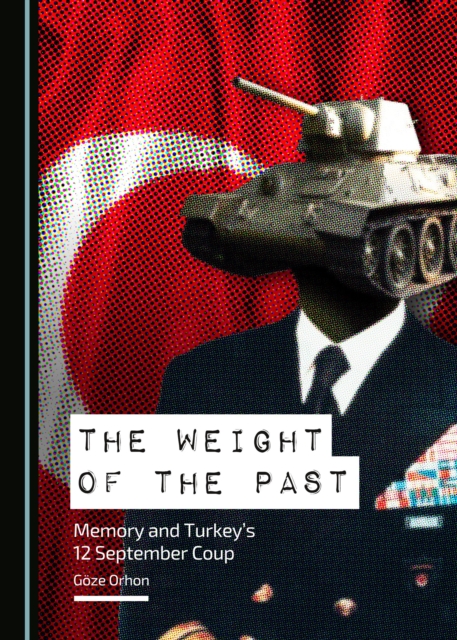
The Weight of the Past
The 12 September 1980 coup represented a \"milestone\" in Turkey, the consequences of which have shadowed the lives of the peoples of Turkey for more than thirty years. The coup was instrumental in the profound economic, political and social transformation of the country, while, on the other hand, it aimed at destroying any public opposition deemed likely to jeopardise the course of this transformation. The remembrance of the period as laden with experiences of profound transformation, alongsid.
eBook

Great catastrophe : Armenians and Turks in the shadow of genocide
\"The destruction of the Armenians of the Ottoman Empire in 1915-16 was a brutal mass crime that prefigured other genocides in the 20th century. By various estimates, more than a million Armenians were killed and the survivors were scattered across the world. Although it is now a century old, the issue of what most of the world calls the Armenian Genocide of 1915 has not been consigned to history. It is a live and divisive political issue that mobilizes Armenians across the world, touches the identity and politics of modern Turkey, and has consumed the attention of U.S. politicians for years. In Great Catastrophe, the eminent scholar and reporter Thomas de Waal looks at the changing narratives and politics of the Armenian Genocide and tells the story of recent efforts by courageous Armenians, Kurds, and Turks to come to terms with the disaster as Turkey enters a new post-Kemalist era. The story of what happened to the Armenians in 1915-16 is well-known. Here we are told the much less well-known story of what happened to Armenians, Kurds, and Turks in its aftermath. First Armenians were divided between the Soviet Union and a worldwide diaspora, with different generations and communities of Armenians constructing new identities, while bitter intra-Armenian quarrels sometimes broke out into violence. In Turkey, the Armenian issue was initially forgotten and suppressed, only to return to the political agenda in the context of the Cold War, an outbreak of Armenian terrorism in the 1970s and the growth of modern 'identity politics' in the age of genocide-consciousness. In the last decade, Turkey has begun to confront its taboos and finally face up to the Armenian issue. New, more sophisticated histories are being written of the deportations of 1915, now with the collaboration of Turkish scholars. In Turkey itself there has been an astonishing revival of oral history, with tens of thousands of people coming out of the shadows to reveal a long-suppressed Armenian identity. However, a normalization process between the Armenian and Turkish states broke down in 2010. Drawing on archival sources, reportage and moving personal stories, de Waal tells the full story of Armenian-Turkish relations since the Genocide in all its extraordinary twists and turns. He strips away the propaganda to look both at the realities of a terrible historical crime and also the divisive 'politics of genocide' it produced. The book throws light not only on our understanding of Armenian-Turkish relations but also of how mass atrocities and historical tragedies shape contemporary politics\"-- Provided by publisher.
Book


Transnational tourism experiences at Gallipoli
This book offers a fresh account of the Anzac myth and the bittersweet emotional experience of Gallipoli tourists. Challenging the straightforward view of the Anzac obsession as a kind of nationalistic military Halloween, it shows how transnational developments in tourism and commemoration have created the conditions for a complex, dissonant emotional experience of sadness, humility, anger, pride and empathy among Anzac tourists. Drawing on the in-depth testimonies of travellers from Australia and New Zealand, McKay shines a new and more complex light on the history and cultural politics of the Anzac myth. As well as making a ground breaking, empirically-based intervention into the culture wars, this book offers new insights into the global memory boom and transnational developments in backpacker tourism, sports tourism and \"dark\" or \"dissonant\" tourism.
Book
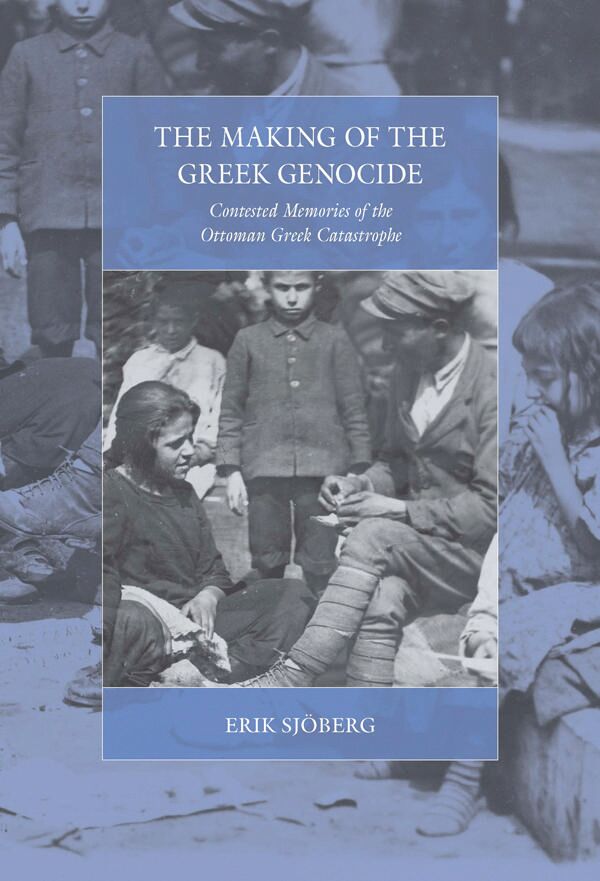
The making of the Greek genocide
During and after World War I, over one million Ottoman Greeks were expelled from Turkey, a watershed moment in Greek history that resulted in hundreds of thousands of deaths. And while few dispute the expulsion's tragic scope, it remains the subject of fierce controversy, as activists have fought for international recognition of an atrocity they consider comparable to the Armenian genocide. This book provides a much-needed analysis of the Greek genocide as cultural trauma. Neither taking the genocide narrative for granted nor dismissing it outright, Erik Sjöberg instead recounts how it emerged as a meaningful but contested collective memory with both nationalist and cosmopolitan dimensions.
eBook

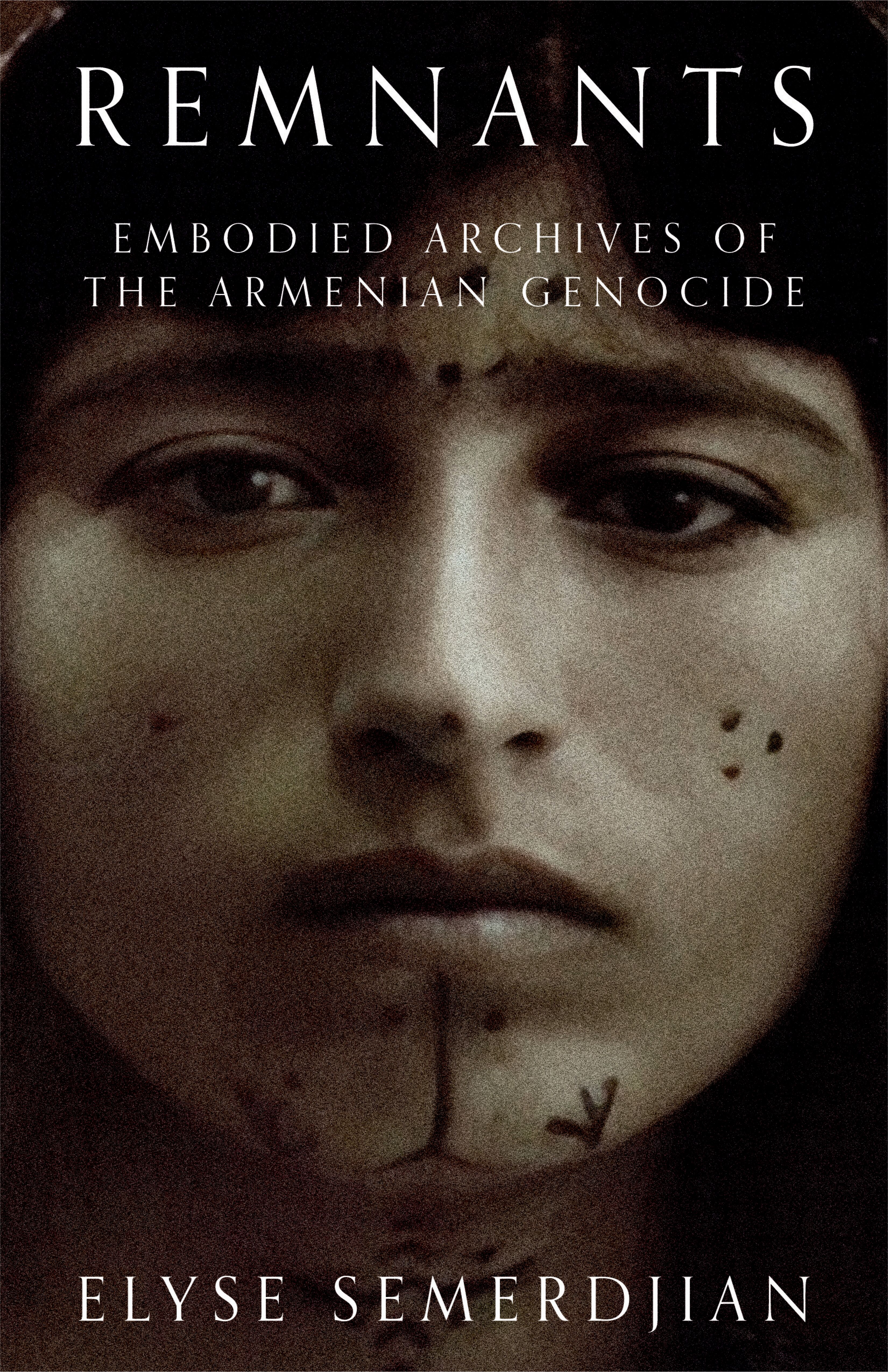
Remnants
A groundbreaking and profoundly moving exploration of the Armenian genocide, told through the traces left in the memories and on the bodies of its women survivors.
Foremost among the images of the Armenian Genocide is the specter of tattooed Islamized Armenian women. Blue tribal tattoos that covered face and body signified assimilation into Muslim Bedouin and Kurdish households. Among Armenians, the tattooed survivor was seen as a living ethnomartyr or, alternatively, a national stain, and the bodies of women and children figured centrally within the Armenian communal memory and humanitarian imaginary. In Remnants, these tattooed and scar-bearing bodies reveal a larger history, as the lived trauma of genocide is understood through bodies, skin, and—in what remains of those lives a century afterward—bones.
With this book, Elyse Semerdjian offers a feminist reading of the Armenian Genocide. She explores how the Ottoman Armenian communal body was dis-membered, disfigured, and later re-membered by the survivor community. Gathering individual memories and archival fragments, she writes a deeply personal history, and issues a call to break open the archival record in order to embrace affect and memory. Traces of women and children rescued during and after the war are reconstructed to center the quietest voices in the historical record. This daring work embraces physical and archival remnants, the imprinted negatives of once living bodies, as a space of radical possibility within Armenian prosthetic memory and a necessary way to recognize the absence that remains.
eBook