
Catalogue Search | MBRL


Are you sure you want to remove the book from the shelf?

{{itemTitle}}
145
result(s) for
"Collective memory-United States"
Sort by:


The \Good War\ in American Memory
The \"Good War\" in American Memory dispels the long-held myth that Americans forged an agreement on why they had to fight in World War II. John Bodnar's sociocultural examination of the vast public debate that took place in the United States over the war's meaning reveals that the idea of the \"good war\" was highly contested.
Bodnar's comprehensive study of the disagreements that marked the American remembrance of World War II in the six decades following its end draws on an array of sources: fiction and nonfiction, movies, theater, and public monuments. He identifies alternative strands of memory—tragic and brutal versus heroic and virtuous—and reconstructs controversies involving veterans, minorities, and memorials. In building this narrative, Bodnar shows how the idealism of President Franklin Roosevelt's Four Freedoms was lost in the public commemoration of World War II, how the war's memory became intertwined in the larger discussion over American national identity, and how it only came to be known as the \"good war\" many years after its conclusion.
eBook

Smashing statues : the rise and fall of America's public monuments
\"A leading expert's exploration of the past, present, and future of public monuments in America. An urgent and fractious national debate over public monuments has erupted in America. Some people risk imprisonment to tear down long-ignored hunks of marble; others form armed patrols to defend them. Why do we care so much about statues? And who gets to decide which ones should stay up and which should come down? Erin L. Thompson, the country's leading expert in the tangled aesthetic, legal, political, and social issues involved in such battles brings much-needed clarity in Smashing Statues. She traces the turbulent history of American monuments and its abundant ironies, starting with the enslaved man who helped make the statue of Freedom atop the US Capitol, and explores the surprising motivations behind such contemporary flashpoints as the toppling of a statue of Columbus at the Minnesota State Capitol. Written with great verve and thoroughly researched, Smashing Statues gives readers the context they need to consider the fundamental question: Whose voices must be heard and whose pain must remain private?\"-- Provided by publisher.
Book

Body Counts
Body Counts: The Vietnam War and Militarized Refuge(es)examines how the Vietnam War has continued to serve as a stage for the shoring up of American imperialist adventure and for the (re)production of American and Vietnamese American identities. Focusing on the politics of war memory and commemoration, this book retheorizes the connections among history, memory, and power and refashions the fields of American studies, Asian American studies, and refugee studies not around the narratives of American exceptionalism, immigration, and transnationalism but around the crucial issues of war, race, and violence-and the history and memories that are forged in the aftermath of war. At the same time, the book moves decisively away from the \"damage-centered\" approach that pathologizes loss and trauma by detailing how first- and second-generation Vietnamese have created alternative memories and epistemologies that challenge the established public narratives of the Vietnam War and Vietnamese people. Explicitly interdisciplinary,Body Countsmoves between the humanities and social sciences, drawing on historical, ethnographic, cultural, and virtual evidence in order to illuminate the places where Vietnamese refugees have managed to conjure up social, public, and collective remembering.
eBook


Racing for innocence : whiteness, gender, and the backlash against affirmative action
How is it that recipients of white privilege deny the role they play in reproducing racial inequality? Racing for Innocence addresses this question by examining the backlash against affirmative action in the late 1980s and early 1990s—just as courts, universities, and other institutions began to end affirmative action programs.
This book recounts the stories of elite legal professionals at a large corporation with a federally mandated affirmative action program, as well as the cultural narratives about race, gender, and power in the news media and Hollywood films. Though most white men denied accountability for any racism in the workplace, they recounted ways in which they resisted—whether wittingly or not— incorporating people of color or white women into their workplace lives. Drawing on three different approaches—ethnography, narrative analysis, and fiction—to conceptualize the complexities and ambiguities of race and gender in contemporary America, this book makes an innovative pedagogical tool.
eBook
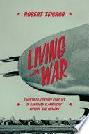
Living with war : twentieth-century conflict in Canadian and American history and memory
\"Canada and the United States: we think of one as a peaceable kingdom, the other as a warrior nation. But do our expectations about each country's attitudes to war and peace match the realities? In Living with War, Robert Teigrob examines how war is experienced and remembered on both sides of the 49th parallel. Surveying popular and scholarly histories, films and literature, public memorials, and museum exhibits in both countries, he comes to some startling conclusions. Americans may seem more patriotic, even jingoistic, but they are also more willing to debate the pros and cons of their military actions. Canadians, though more diffident in their public displays of patriotism, are more willing than their southern neighbors to accept the official narrative that depicts just wars fought in the service of a righteous cause. A provocative book that complements critiques of contemporary Canadian militarism such as Warrior Nation, Living with War offers an intriguing look at the relationship with the military past on both sides of the border.\"-- Provided by publisher.
Book

Rivers, memory, and nation-building
Rivers figure prominently in a nation's historical memory, and the Volga and Mississippi have special importance in Russian and American cultures. Beginning in the pre-modern world, both rivers served as critical trade routes connecting cultures in an extensive exchange network, while also sustaining populations through their surrounding wetlands and bottomlands. In modern times, \"Mother Volga\" and the \"Father of Waters\" became integral parts of national identity, contributing to a sense of Russian and American exceptionalism. Furthermore, both rivers were drafted into service as the means to modernize the nation-state through hydropower and navigation. Despite being forced into submission for modern-day hydrological regimes, the Volga and Mississippi Rivers persist in the collective memory and continue to offer solace, recreation, and sustenance. Through their histories we derive a more nuanced view of human interaction with the environment, which adds another lens to our understanding of the past.
eBook


Memories of War
Even in the midst of the Civil War, its battlefields were being dedicated as hallowed ground. Today, those sites are among the most visited places in the United States. In contrast, the battlegrounds of the Revolutionary War had seemingly been forgotten in the aftermath of the conflict in which the nation forged its independence. Decades after the signing of the Constitution, the battlefields of Yorktown, Saratoga, Fort Moultrie, Ticonderoga, Guilford Courthouse, Kings Mountain, and Cowpens, among others, were unmarked except for crumbling forts and overgrown ramparts. Not until the late 1820s did Americans begin to recognize the importance of these places.
InMemories of War, Thomas A. Chambers recounts America's rediscovery of its early national history through the rise of battlefield tourism in the first half of the nineteenth century. Travelers in this period, Chambers finds, wanted more than recitations of regimental movements when they visited battlefields; they desired experiences that evoked strong emotions and leant meaning to the bleached bones and decaying fortifications of a past age. Chambers traces this impulse through efforts to commemorate Braddock's Field and Ticonderoga, the cultivated landscapes masking the violent past of the Hudson River valley, the overgrown ramparts of Southern war sites, and the scenic vistas at War of 1812 battlefields along the Niagara River. Describing a progression from neglect to the Romantic embrace of the landscape and then to ritualized remembrance, Chambers brings his narrative up to the beginning of the Civil War, during and after which the memorialization of such sites became routine, assuming significant political and cultural power in the American imagination.
eBook