
Catalogue Search | MBRL


Are you sure you want to remove the book from the shelf?

{{itemTitle}}
855
result(s) for
"College athletes United States."
Sort by:

Student athletes : merging academics and sports
\"Applying concepts, data, and other information from various sources in the literature when and where appropriate, the book reveals and examines the behavior, contribution, and impact of student athletes (SAs) on campuses of American colleges and universities. It highlights, in part, SAs' progress academically while they devoted time and resources to participate in one or more of their schools' individual and/or team sports in Division I, II, and/or III of the National Collegiate Athletic Association, or in the National Association of Intercollegiate Athletics and/or National Junior College Athletic Association.\"--back cover.
Book
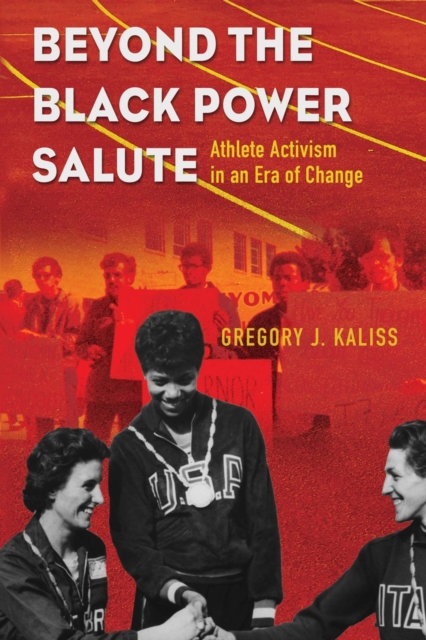
Beyond the Black Power Salute
Unequal opportunity sparked Jim Brown’s endeavors to encourage Black development while Billie Jean King fought so that women tennis players could earn more money and enjoy greater freedom. Gregory J. Kaliss examines these events and others to guide readers through the unprecedented wave of protest that swept sports in the 1960s and 1970s. The little-known story of the University of Wyoming football players suspended for their activism highlights an analysis of protests by college athletes. The 1971 Muhammad Ali–Joe Frazier clash provides a high-profile example of the Black male athlete’s effort to redefine Black masculinity. An in-depth look at the American Basketball Association reveals a league that put Black culture front and center with its style of play and shows how the ABA influenced the development of hip-hop. As Kaliss describes the breakthroughs achieved by these athletes, he also explores the barriers that remained--and in some cases remain today.
eBook

20 secrets to success for NCAA student-athletes who won't go pro
The vast majority of student-athletes dreaming of athletic stardom won't make it to the pros. Yet, the discipline and skills they've developed while balancing a sport and academics make them ideally suited for satisfying careers elsewhere.
eBook

What made Maddy run : the secret struggles and tragic death of an all-American teen
A sports journalist relates the story of Ivy League freshman and track star Maddy Holleran, who seemingly had it all and succeeded at everything she tried, but who secretly grappled with mental illness before taking her own life during the spring semester.
Book

The NCAA and the Exploitation of College Profit-Athletes
A well-constructed and reasoned debunking of the
mythology of amateurism in for-profit NCAA athletics
For the last 60-plus-years, as the revenue-generating capacity
of Power Five football and men's basketball has dramatically
increased, NCAA Division I Power Five football and men's basketball
players (college profit-athletes) have been economically exploited,
their labor has been severely restricted. To mask this inequity,
the NCAA and its members created, disseminated, and embedded a
fictitious \"collegiate model of athletics\" established and
repeatedly modified for the benefit of member schools, designed to
ensure profit-athletes were denied employment status and just
compensation for their athletic labor.
The NCAA and the Exploitation of College Profit-Athletes: An
Amateurism That Never Was provides a comprehensive historical,
sociological, legal, financial, and managerial argument for the
reclassification of profit-athletes as employees. Such a
reclassification would permit profit-athletes to gain not only fair
financial compensation but also equal access to educational
benefits that have been promised but systematically denied.
The authors trace how Power Five college sports have morphed
into a hyper professionalized and commercialized sport-business
enterprise. They provide evidence that at least since 1956 the
NCAA's amateurism has been a collusive, exploitative, and
racialized \"pay for play\" scheme that disproportionately affects
Black profit-athletes. The authors cut through the institutional
doublespeak of approved benefits, cost-of-attendance stipends, or
name, image, likeness (NIL) collectives to lay bare the immorality
of Power Five college sports.
The NCAA and the Exploitation of College
Profit-Athletes makes the case that profit-athletes (and their
representatives) must have the right to unionize and freely
negotiate a collective bargaining agreement with management (e.g.,
NCAA, Power Five conferences and athletic departments). In
addition, this book offers a forward-thinking structure in which
individual labor contracts, or a potential collective bargaining
agreement, address profit-athlete compensation and working
conditions.
eBook

Intercollegiate athletics, inc. : how big-time college sports cheat students, taxpayers, and academics
\"Intercollegiate Athletics, Inc. examines the corrupting influence and damaging financial effects of big-time intercollegiate athletics, especially football and to a lesser extent basketball, on American higher education. Students, scholars, sports fans, and those interested in learning how big-time football and basketball have cast such an enormous-and often baleful-shadow upon American colleges and universities will profit from this provocative and engagingly written book\"-- Provided by publisher.
Book

Reclaiming the game
In Reclaiming the Game, William Bowen and Sarah Levin disentangle the admissions and academic experiences of recruited athletes, walk-on athletes, and other students. In a field overwhelmed by reliance on anecdotes, the factual findings are striking--and sobering. Anyone seriously concerned about higher education will find it hard to wish away the evidence that athletic recruitment is problematic even at those schools that do not offer athletic scholarships.
eBook


The Myth of the Amateur
In this in-depth look at the heated debates over paying college athletes, Ronald A. Smith starts at the beginning: the first intercollegiate athletics competition—a crew regatta between Harvard and Yale—in 1852, when both teams received an all-expenses-paid vacation from a railroad magnate. This striking opening sets Smith on the path of a story filled with paradoxes and hypocrisies that plays out on the field, in meeting rooms, and in courtrooms—and that ultimately reveals that any insistence on amateurism is invalid, because these athletes have always been paid, one way or another.From that first contest to athletes’ attempts to unionize and California’s 2019 Fair Pay to Play Act, Smith shows that, throughout the decades, undercover payments, hiring professional coaches, and breaking the NCAA’s rules on athletic scholarships have always been part of the game. He explores how the regulation of male and female student-athletes has shifted; how class, race, and gender played a role in these transitions; and how the case for amateurism evolved from a moral argument to one concerned with financially and legally protecting college sports and the NCAA. Timely and thought-provoking, The Myth of the Amateur is essential reading for college sports fans and scholars.
eBook