
Catalogue Search | MBRL


Are you sure you want to remove the book from the shelf?

{{itemTitle}}
2,771
result(s) for
"College preparation programs."
Sort by:

Teach like a champion 2.0 : 62 techniques that put students on the path to college
\"One of the most influential teaching guides ever--updated!Teach Like a Champion 2.0 is a complete update to the international bestseller. This teaching guide is a must-have for new and experienced teachers alike. Over 700,000 teachers around the world already know how the techniques in this book turn educators into classroom champions. With ideas for everything from classroom management to inspiring student engagement, you will be able to perfect your teaching practice right away.The first edition of Teach Like a Champion influenced thousands of educators because author Doug Lemov's teaching strategies are simple and powerful. Now, updated techniques and tools make it even easier to put students on the path to college readiness. Here are just a few of the brand new resources available in the 2.0 edition: Over 70 new video clips of real teachers modeling the techniques in the classroom A selection of never before seen techniques inspired by top teachers around the world Brand new structure emphasizing the most important techniques and step by step teaching guidelines Updated content reflecting the latest best practices from outstanding educators With the sample lesson plans, videos, and teachlikeachampion.com online community, you will be teaching like a champion in no time. The classroom techniques you'll learn in this book can be adapted to suit any context. Find out why Teach Like a Champion is a \"teaching Bible\" for so many educators worldwide\"-- Provided by publisher.
Book
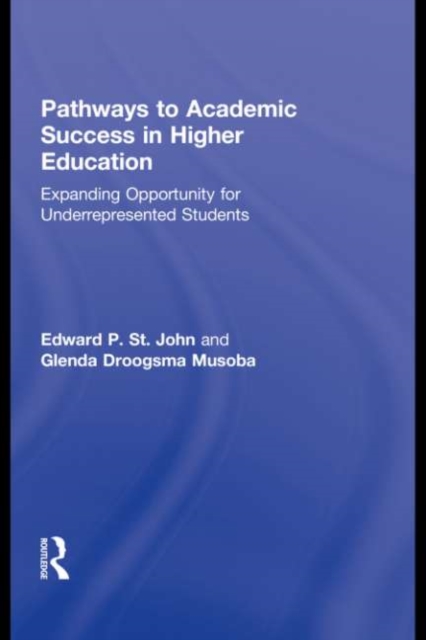
Pathways to Academic Success in Higher Education
Pathways to Academic Success in Higher Education examines two major challenges facing the nation. The first is preparing high school students for college, a reform that has been tackled largely through state policy initiatives. The second is creating new pathways to academic success for underrepresented students in higher education, a challenge that must be addressed within a decentralized system of higher education.
Part one: Presents and documents key findings from research on K-12 education policy.
Part two: Provides action research using a state data system to inform colleges and universities.
Part three: Focuses on the future of policy and organizational initiatives to improve opportunity.
This book integrates studies conducted over nearly a decade and offers guidance on how best to understand and promote retention and success once students have gained access.
Edward P. St. John is Algo D. Henderson Collegiate Professor of Higher Education at the University of Michigan.
Glenda Droogsma Musoba is Assistant Professor of Higher Education at Florida International University.
1. Introduction
Part I . Reforming Academic Preparation
2. Rationales for Reform
3. A National Challenge
4. Academic Preparation
Part II. Expanding Postsecondary Opportunity
5. Pathways Approach
6. Low-Income Students
7. College Transitions
8. Persistence and Academic Support
9. Making Changes
10. Degree Attainment
Part III. Pathways to Academic Success
11. Reforming Policy
12. Conclusion: Change on Campuses
References
eBook

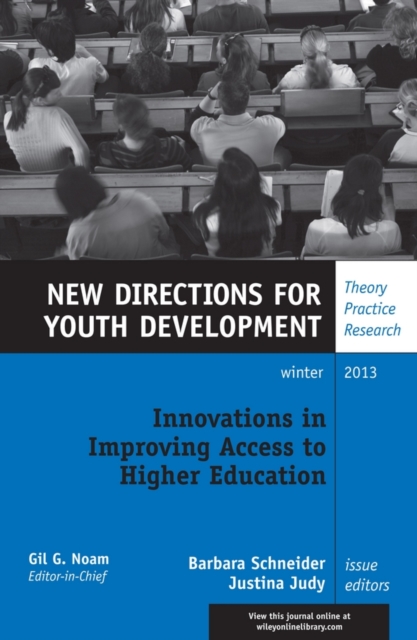
Innovations in improving access to higher education
Gaining an understanding about the barriers in transitioning from high school to college is crucial to improving college access and matriculation-particularly for low-income families and first-generation college-goers. These obstacles include many factors, such as: Lack of access to resources at home or school Not having a rigorous college-preparatory curriculum or not taking advantage of these courses Misperceptions about the college-going process. This volume introduces innovative and effective ways to ease the transition process. One essential question examined is the role of high schools and whether they should take a more active role in preparing students for college. While some interventions in this issue are designed for school-wide implementation, others are more targeted and focus on certain aspects of the college process such as financial aid, but all recognize the role of high schools in shaping students' college-going aspirations and behavior. By including the most cutting-edge and rigorous research on improving college access, this volume: Delineates the obstacles adolescents face in their transition from high school to college Increases understanding of the mechanisms contributing to gaps in college enrollment Highlights how interventions can help to ease these challenges. This is the 140th volume of New Directions for Youth Development, the Jossey-Bass quarterly report series dedicated to bringing together everyone concerned with helping young people, including scholars, practitioners, and people from different disciplines and professions.
eBook

Question everything : the rise of AVID as America's largest college readiness program
\"How AVID levels the playing field, helping underserved students come out ahead In Question Everything, award-winning education writer Jay Mathews presents the stories and winning strategies behind the Advancement Via Individual Determination program (AVID). With the goal of preparing students for the future - whether that future includes college or not - AVID teaches students the personal management skills that will help them survive and thrive. Focused on time management, presentation, and cooperation, the AVID program leads not only to impressive educational outcomes, but also to young adults prepared for life after school. This book tells the stories of AVID educators, students, and families to illustrate how and why the program works, and demonstrates how teachers can employ AVID's strategies with their own students. Over the past thirty years, AVID has grown from a single teacher's practice to an organization serving 400,000 middle- and high-school students in 47 states and 16 countries. Question Everything describes the ideas and strategies behind the upward trajectory of both the program and the students who take part. Learn which foundational skills are emphasized for future success Discover how AVID teaches personal management skills in the academic context Contrast AVID student outcomes with national averages Consider implementing AVID concepts and techniques into current curricula As college readiness becomes a top priority for the Federal Government, the Gates Foundation, and other influential organizations, AVID's track record stands out as one of success. By leveling the playing field and introducing \"real-world\" realities early on, the program teaches students skills that help them in the workplace and beyond\"-- Provided by publisher.
Book

Exam Schools
What is the best education for exceptionally able and high-achieving youngsters? Can the United States strengthen its future intellectual leadership, economic vitality, and scientific prowess without sacrificing equal opportunity? There are no easy answers but, as Chester Finn and Jessica Hockett show, for more than 100,000 students each year, the solution is to enroll in an academically selective public high school.Exam Schoolsis the first-ever close-up look at this small, sometimes controversial, yet crucial segment of American public education. This groundbreaking book discusses how these schools work--and their critical role in nurturing the country's brightest students.
The 165 schools identified by Finn and Hockett are located in thirty states, plus the District of Columbia. While some are world renowned, such as Boston Latin and Bronx Science, others are known only in their own communities. The authors survey the schools on issues ranging from admissions and student diversity to teacher selection. They probe sources of political support, curriculum, instructional styles, educational effectiveness, and institutional autonomy. Some of their findings are surprising: Los Angeles, for example, has no \"exam schools\" while New York City has dozens. Asian-American students are overrepresented--but so are African-American pupils. Culminating with in-depth profiles of eleven exam schools and thoughtful reflection on policy implications, Finn and Hockett ultimately consider whether the country would be better off with more such schools.
At a time of keen attention to the faltering education system,Exam Schoolssheds positive light on a group of schools that could well provide a transformative roadmap for many of America's children.
eBook

When grit isn't enough : a high school principal examines how poverty and inequality thwart the college-for-all promise
\"Examines major myths informing American education and explores how educators can better serve students, increase college retention rates, and develop alternatives to college that don't disadvantage students on the basis of race or income. As the founder and co-headmaster of the Boston Arts Academy (BAA), an urban high school that boasts a 94 percent college acceptance rate, Linda Nathan could have rested on her laurels. But after ushering in fourteen years of graduating classes, Nathan took stock of the graduates: of those who went to college, 63 percent graduated and 37 percent dropped out. Although these stats are good, given that the national drop-out and transfer rate from college after the first year is 40 percent, Nathan feels like she failed the students who didn't graduate. This led her to reflect on the assumptions she herself has perpetuated about education: that college is for all, that hard work and determination are enough to get you through, that America is a land of equality. Seeing a rift between these false promises and the lived experiences of her students, Nathan argues that it is time for educators to face these uncomfortable issues head-on and ask the tough questions: How can colleges better acknowledge and address institutional racism and increase retention rates? And for those who sought a career without college, how could high school have paved an alternate path to success? Nathan includes the voices of BAA alumni/ae whose lived experiences provide a window through which to view urban education today and help imagine greater purposes for schooling\"-- Provided by publisher.
Book

Increasing access to college : extending possibilities for all students
At a time when college enrollment rates for low income and under-represented students are far below those of non-minority students, policies and practices designed to increase access should be a priority for colleges, universities, high schools, and community agencies. Increasing Access to College examines pre-college enrichment programs that offer a specific and immediate remedy.
eBook

Technology and engagement : making technology work for first generation college students
\"Technology and Engagement is based on a four-year study of how first generation college students use social media, aimed at improving their transition to and engagement with their university. Through web technology, including social media sites, students were better able to maintain close ties with family and friends from home, as well as engage more with social and academic programs at their university. This 'ecology of transition' was important in keeping the students focused on why they were in college, and helped them become more integrated into the university setting. By showing the gains in campus capital these first-generation college students obtained through social media, the authors offer concrete suggestions for how other universities and college-retention programs can utilize the findings to increase their own retention of first-generation college students\"-- Provided by publisher.
Book

Innovations in Improving Access to Higher Education
Gaining an understanding about the barriers in transitioning from high school to college is crucial to improving college access and matriculation-particularly for low-income families and first-generation college-goers. These obstacles include many factors, such as: Lack of access to resources at home or school Not having a rigorous college-preparatory curriculum or not taking advantage of these courses Misperceptions about the college-going process. This volume introduces innovative and effective ways to ease the transition process. One essential question examined is the role of high schools and whether they should take a more active role in preparing students for college. While some interventions in this issue are designed for school-wide implementation, others are more targeted and focus on certain aspects of the college process such as financial aid, but all recognize the role of high schools in shaping students' college-going aspirations and behavior. By including the most cutting-edge and rigorous research on improving college access, this volume: Delineates the obstacles adolescents face in their transition from high school to college Increases understanding of the mechanisms contributing to gaps in college enrollment Highlights how interventions can help to ease these challenges. This is the 140th volume of New Directions for Youth Development, the Jossey-Bass quarterly report series dedicated to bringing together everyone concerned with helping young people, including scholars, practitioners, and people from different disciplines and professions.
eBook