
Catalogue Search | MBRL


Are you sure you want to remove the book from the shelf?

{{itemTitle}}
8,870
result(s) for
"College teaching Case studies."
Sort by:

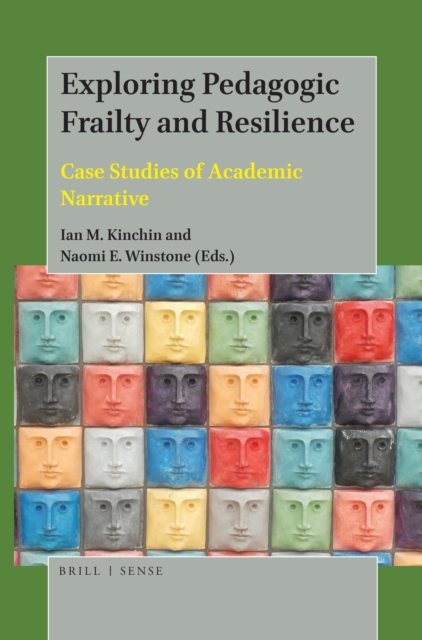
Exploring Pedagogic Frailty and Resilience
Exploring Pedagogic Frailty and Resilience provides exemplar case studies of academics' reflective narratives, initiated by map-mediated interviews and framed by the model of pedagogic frailty. These provide an authentic commentary about the current state of university teaching as a resource for professional development.
eBook


Catalyst in Action
Published in association with In 2017, Bret Eynon and Laura M. Gambino released High-Impact ePortfolio Practice, which drew broad acclaim from faculty and educational leaders. \"An instant classic,\" wrote one reviewer. \"The book I've been waiting for!\" exclaimed another. With compelling evidence of the impact of ePortfolio \"done well,\" and a practical framework for educators to follow, this research study quickly led to the formal recognition of ePortfolio as a validated High Impact Practice.Now, with Catalyst in Action: Case Studies of High-Impact ePortfolio Practice, Eynon and Gambino have taken the next step. The book offers 20 powerful case studies, drawn from campuses ranging from Bronx Community College to Yale University, from the University of South Carolina, to Dublin University and Arizona State. In High Impact ePortfolio Practice, Eynon and Gambino outlined the Catalyst Framework, spotlighting the strategies needed to launch, build and sustain a \"high-impact\" ePortfolio practice. Linking integrative social pedagogy to technology, assessment and professional development, the Catalyst Framework offers guiding principles and classroom-based ePortfolio practices that improve student success, deepen the student learning experience, and catalyze learning-centered institutional change. In Catalyst in Action, teams of faculty and college leaders detail their experiences exploring and testing the Framework on their campuses. Working with diverse groups of students in a broad range of disciplines and settings, the case study authors put Eynon and Gambino's integrative strategies into practice. Catalyst in Action shares their findings and their insights. As higher education enters a challenging new era, it must find new ways adapt and change, to support and demonstrate student growth and development. Catalyst in Action is a powerful combination of intensive research and practical experiencing. Offering exciting new evidence and fresh new insights, Catalyst in Action
eBook


Impact/Impasse
Impact/Impasse argues for the value of everyday life in
college classrooms. Quantifiable categories such as high-impact
practice, student engagement, and integrative learning have
captured the imagination of a generation of higher education
researchers, practitioners, administrators, and policymakers. But
they miss those mundane moments, or \"impasses,\" that resist capture
by metrics while nevertheless shaping student outcomes.
Impact/Impasse blends critical theories and ethnographic
research-conducted before and during the COVID-19 pandemic-to argue
that learning happens in ordinary moments. Indeed, in sharing
anecdotes from both in-person and virtual classrooms, the coauthors
show how the so-called new normal is little different from the old
in its neoliberal attachment to data. Impact/Impasse
provides a conceptual and practical foundation for an alternative
approach to valuing impacts on their own terms, in excess of
quantification.
eBook

Cross-Cultural Teaching and Learning for Home and International Students
Cross cultural teaching and learning for home and international students maps and discusses the increasing internationalisation of teaching and learning at universities around the world. This new phenomenon brings both opportunities and challenges, as it introduces what can be radically different teaching, learning and assessment contexts for both students and staff. This book moves beyond the rhetoric of internationalisation to examine some of the more complex issues for practitioners, researchers, students and those working in transnational or non-Anglophone contexts. It recognises that although universities around the world enthusiastically espouse internationalisation as part of their mission, there is currently little information available about carrying out this vision in terms of pedagogy and curriculum at a practical level. This book fills that gap comprehensively, organising its information around four main themes:
New ways of teaching, learning and assessing: Challenges and opportunities for teaching practice, student engagement and participation, assessment and supervision of learning.
New ways of designing and delivering curriculum: Internationalising the curriculum for all students within 'home' and 'abroad' contexts.
New ways of thinking and acting: Developing the global citizen, intercultural learning and respectful dialogue, responding to student diversity and equity, enhancing graduate employability and future life trajectories.
New ways of listening: Discovering and responding to new or unfamiliar voices among students and staff, embracing 'other' academic and intellectual traditions.
Illustrated by a wide range of examples from around the world, this book brings together contemporary work and thinking in the areas of cross cultural teaching and
eBook

Quick hits for teaching with technology
How should I use technology in my courses? What impact does technology have on student learning? Is distance learning effective? Should I give online tests and, if so, how can I be sure of the integrity of the students' work? These are some of the questions that instructors raise as technology becomes an integral part of the educational experience. In Quick Hits for Teaching with Technology, award-winning instructors representing a wide range of academic disciplines describe their strategies for employing technology to achieve learning objectives. They include tips on using just-in-time teaching, wikis, clickers, YouTube, blogging, and GIS, to name just a few. An accompanying interactive website enhances the value of this innovative tool.
eBook
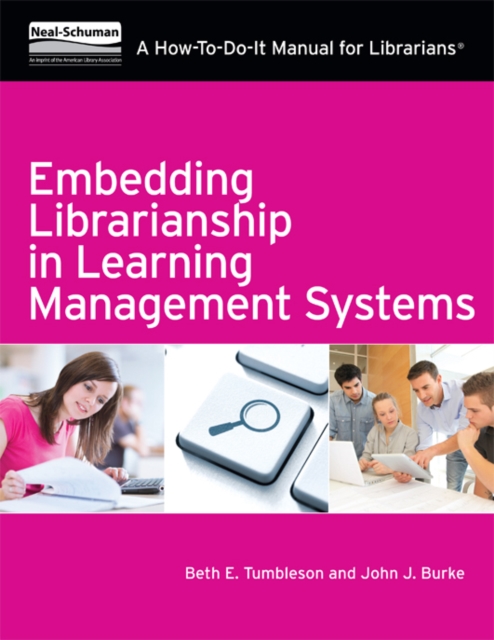
Embedding librarianship in learning management systems
The authors look at collaborating with faculty and engaging with students to the point where they begin their research: in their learning management system (LMS) classroom. The embedded librarian develops a sense of partnership, participation, and community with students and faculty, becoming an active participant in the course.
eBook
Communities and Organizations
How does organizations' embeddedness in broader social and cultural communities influence their behavior? And how has this changed with recent communication technology advances and globalization trends? In this volume, we consider how diverse types of communities influence organizations, as well as the associated benefit of developing a richer accounting for community processes in organizational theory. One goal of the volume is to move beyond the focus on social proximity and networks that has characterized existing work on communities. The papers in this volume consider specific topics that expand the definition of community beyond geography to include how transnational communities form and affect organizations' perception, the development of a community-form (C-form) organization as an important organizational architecture for understanding twenty-first century business, and how virtual communities influence key organizational processes. While there has been a recent revival of research into the effects of both geographic and non-geographic communities on organizational behaviors, this volume is the first effort to bring both perspectives together in order to aid in the identification of common and disparate mechanisms across multiple types of communities and how community as an organizing logic sits vis-a-vis other logics related to the market, corporation, family and religion.
eBook