
Catalogue Search | MBRL


Are you sure you want to remove the book from the shelf?

{{itemTitle}}
274,518
result(s) for
"College teaching."
Sort by:


Transforming Digital Learning and Assessment
Responding to both the trend towards increasing online enrollments as the demand for face-to-face education declines, and to the immediate surge in remote learning owing to the COVID-19 pandemic, this book provides vital guidance to higher education institutions on how to develop faculty capacity to teach online and to leverage the affordances of an ever-increasing array of new and emerging learning technologies.This book provides higher education leaders with the context they need to position their institutions in the changing online environment, and with guidance to build support in a period of transition.It is intended for campus leaders and administrators who work with campus teams charged with identifying learning technologies to meet an agreed upon program- or institution-level educational needs; for those coordinating across campus to build consensus on implementing online strategies; and for instructional designers, faculty developers and assessment directors who assist departments and faculty effectively integrate learning technologies into their courses and programs. It will also appeal to faculty who take an active interest in improving online teaching.The contributors to this volume describe the potential of artificial intelligence algorithms, such as those that fuel learning analytics software that mines LMS data to enable faculty to quickly and efficiently assess individual students progress in real time, prompting either individual attention or the need to more generally clarify concepts for the class as whole. They describe and provide access to a hybrid professional development MOOC and an associated WIKI that curate information about a wide range of learning software solutions currently available; and present case studies that offer guidance on building the buy-in and consensus needed to successfully integrate learning technologies into course, program- and institution-level contexts.In sum, this book provides readers with a comprehensive understanding of the technological capabilities available to them and identifies collaborative processes related to engaging and building institutional support for the changes needed to provide the rapidly growing demand for effective and evidence-based online learning.
eBook


Undergraduate Research at Community Colleges
Co-published with the Council on Undergraduate Research This book highlights the exciting work of two-year colleges to prepare students for their future careers through engagement in undergraduate research. It emerged from work in five community college systems thanks to two National Science Foundation grants the Council for Undergraduate Research received to support community colleges' efforts to establish undergraduate research programs. Chapters one, two, and three provide background information about community colleges, undergraduate research, and the systems the author worked with: California, City University of New York, Maricopa Community College District - Arizona, Oklahoma, and Tennessee. Chapter four examines success strategies. The next five chapters look at five approaches to undergraduate research: basic/applied, course-based, community-based, interdisciplinary, and partnership research. Chapters ten, eleven and twelve discuss ways to assess and evaluate undergraduate research experiences, inclusive pedagogy, and ways to advance undergraduate research. Today there are 942 public community colleges in the United States, providing affordable access to 6.8 million students who enrolled for credit in one of the public two-year institutions in the United States. Students are more prepared for the next step in their education or careers after participating in quality UR experiences.
eBook


Teaching as the Art of Staging
College teachers all too often still play Sage on the Stage - lecturing to rooms full of passive and supposedly absorbed students. The cutting-edge opposite is still supposed to be the Guide on the Side - facilitating wherever students themselves are already going, mentoring and coaching them along the way. But who says that these are the only - or the best - alternatives? This book advances another and sharply different model: the Impresario with a Scenario, a teacher who serves as class mobilizer, improviser, and energizer, staging dramatic, often unexpected and self-unfolding learning challenges and adventures with students.In this book, the author argues that to pose a single alternative to lecturing is profoundly limiting. In fact, he says there is no reason to have to choose between \"student-centered\" and \"teacher-centered\" pedagogies. The best ways to teach and learn are both. The same applies to the false choice between \"active\" students and \"active\" teachers - there can be more than enough activity for everyone. In particular, the author argues that we need a model in which the teacher is notably pro-active - a kind of activity for which certain theatrical metaphors seem especially appropriate.Picture a college teacher who regularly sets up classroom scenarios - challenging problems, unscripted dramas, role-plays, simulations, and the like - such that the scenario itself frames and drives most of the action and learning that follows. For teaching as staging, the primary work of the teacher is staging such scenarios. The basic goal is to put students into an urgently engaging and self-unfolding scenario, trusting them to carry it forward, while being prepared to join in as needed.This book offers a conceptual and practical framework for Teaching as Staging, grounding the approach with illustrative and sometimes provocative narrative from the literature as well as the author's own practice.Teaching as the Art of Staging offers a visionary challenge to the
eBook

Learning from each other : refining the practice of teaching in higher education
\"Learning from Each Other includes 20 original chapters written by well-known experts in the field of teaching and learning. Conceived for both new and experienced faculty at community colleges, four-year institutions, and research-intensive universities, the volume also addresses the interests of faculty and graduate students in programs designed to prepare future faculty and campus individuals responsible for faculty professional development. With the aim of cultivating engagement amongst students and deepening their understanding of the content, topics covered in this edited volume include: employing the science of learning in a social science context understanding the effects of a flipped classroom on student success pedagogical techniques to create a community of inquiry in online learning environments the risks and rewards of co-teaching reaching and teaching \"non-traditional\" students facilitating learning and leadership in student team projects connecting students with the community through research issues of assessment, including backward design, developing and using rubrics, and defining and implementing the scholarship of teaching and learning Through Learning from Each Other, all faculty who care about their teaching, but especially faculty in the social sciences, can successfully employ curricular innovations, classroom techniques, and advances in assessment to create better learning environments for their students\"--Provided by publisher.
Book
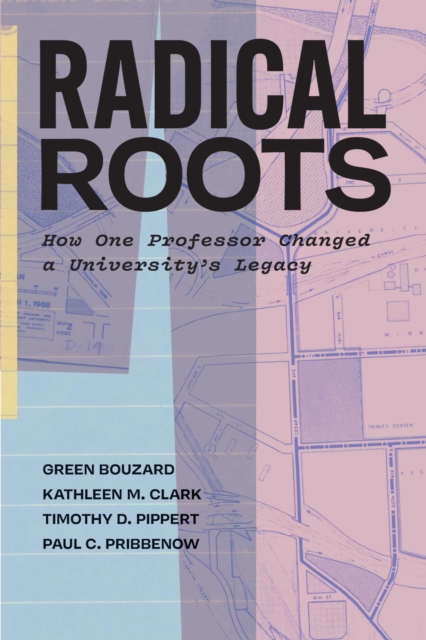
Radical Roots
Radical Roots: How One Professor Transformed a University tells the story of Joel Torstenson, a sociology professor at Augsburg University in Minneapolis, Minnesota. In the 1960s, Torstenson challenged his university to embrace its urban setting and to design its curricular, co-curricular, and community engagement programs to advance its mission of Education for service. The compelling story of Torstenson's legacy at Augsburg over the past 60 years offers lessons for colleges and universities across the country committed to democratic engagement in their work at the intersections of mission and place. Augsburg University's saga as an urban settlement has not always been embraced by the university. Though location and place are central to the university's identity, it is not sufficient to explain the integrative power of the university's character. For that purpose, it is critical that place be understood through the lens of Augsburg's academic mission and work. This integrated view of place and mission required a new way of imagining the university's core work of educating students. The purpose of this book is two-fold. The first is to document and celebrate the legacy of Professor Joel Torstenson, and to understand the impact of this legacy's inception, evolution, and current manifestations and impact at Augsburg and in the wider world. Professor Torstenson cared deeply about the public purpose of higher education, and Torstenson's model for what this public purpose might look like prompted massive transformation in Augsburg University's trajectory. The resulting experiments in education and commitment to the city flowered into a legacy that has spurred Augsburg University to create an innovative model for 21st Century education. This model has impacted everything from student learning and community life, to teaching and curricular structure, to the public mission of the institution and its presence in the city and world. Torstenson's creative-and even radical-work in the 1960s and '70s has been carried through the decades by continued innovation in teaching and learning based in experiential education, and a commitment to place and community building. This legacy has simultaneously advanced the public purpose and mission of the University. Secondly, this book shares what are some of the lessons learned from fifty years of innovation following Torstenson's vision, with the hope that these lessons might serve the broader community of colleges, universities, faculty, staff, and students engaged in similar pursuits. Augsburg's innovative experiential education, place-based community engagement, and public and anchor institution work has been and will continue to be a model for other institutions. We believe that Torstenson's legacy, and the lessons learned through the years of its evolution, has lessons to teach and models to follow for our sibling institutions across the United States. The volume includes discussion prompts and questions after each section. There is also a companion website (www.augsburg.edu/radicalroots) that includes additional resources related to the volume's themes.Perfect for course such as: Higher Education and Democracy in the United States; Principles of Experiential Education; Place Matters: Higher Education and Community Engagement; Universities as Anchor Institutions in their Communities; Introduction to Citizen Professionalism: Leading in the 21st Century; Public Work, Social Responsibility, and Vocation in a World of Extremes; Accompaniment: Developing Democratic Skills and Fostering Healing with Communities; Curricular Innovations in Higher Education; and Principles of Higher Education Pedagogy
eBook


Teaching gradually
This book covers a wide range of topics designed to appeal to graduate student instructors across disciplines, from those teaching discussion sections, to those managing studio classes and lab sessions, to those serving as the instructor of record for their own course.
eBook