
Catalogue Search | MBRL


Are you sure you want to remove the book from the shelf?

{{itemTitle}}
11,956
result(s) for
"Colonial art"
Sort by:

Painting in Latin America, 1550-1820
\"Surveys the diverse styles, subjects, and iconography of painting in Latin America between the 16th and 19th centuries. While European art forms were widely disseminated, copied, and adapted throughout Latin America, colonial painting is not a derivative extension of Europe. The ongoing debate over what to call it--mestizo, hybrid, Creole, Indo-Hispanic, tequitqui--testifies to a fundamental yet unresolved question of identity\"-- Provided by publisher.
Book

Object and Apparition
When Christianity was imposed on Native peoples in the Andes, visual images played a fundamental role, yet few scholars have written about this significant aspect.Object and Apparitionproposes that Christianity took root in the region only when both Spanish colonizers and native Andeans actively envisioned the principal deities of the new religion in two- and three-dimensional forms. The book explores principal works of art involved in this process, outlines early strategies for envisioning the Christian divine, and examines later, more effective approaches.Maya Stanfield-Mazzi demonstrates that among images of the divine there was constant interplay between concrete material objects and ephemeral visions or apparitions. Three-dimensional works of art, specifically large-scale statues of Christ and the Virgin Mary, were key to envisioning the Christian divine, the author contends. She presents in-depth analysis of three surviving statues: the Virgins of Pomata and Copacabana (Lake Titicaca region) and Christ of the Earthquakes from Cusco.Two-dimensional painted images of those statues emerged later. Such paintings depicted the miracle-working potential of specific statues and thus helped to spread the statues' fame and attract devotees. \"Statue paintings\" that depict the statues enshrined on their altars also served the purpose of presenting images of local Andean divinities to believers outside church settings.Stanfield-Mazzi describes the unique features of Andean Catholicism while illustrating its connections to both Spanish and Andean cultural traditions. Based on thorough archival research combined with stunning visual analysis,Object and Apparitionanalyzes the range of artworks that gave visual form to Christianity in the Andes and ultimately caused the new religion to flourish.
eBook

Journeys to new worlds : Spanish and Portuguese colonial art in the Roberta and Richard Huber collection
This beautifully illustrated catalogue showcases 120 Spanish and Portuguese artworks from the seventeenth and eighteenth centuries, all highlights from the dazzling collection of Roberta and Richard Huber. Featuring works in a variety of mediums and from far-flung places, including paintings, silver, and furniture from South America and sculptures in ivory from the Spanish Philippines and from Portuguese territories in India. Distinguished experts shed light on these significant objects, many of which have not been previously published and which illustrate the unparalleled artistic exchanges between and within these colonial empires. The Andean painters Melchor Pâerez Holguâin and Gaspar Miguel de Berrâio inventively interpreted European iconographies, while similar adaptations took place in Asia, where native craftsmen, carved Christian images in ivory. These works traveled along the trade routes connecting Europe to Asia and the Americas, thus influencing the development of a new visual culture.
Book
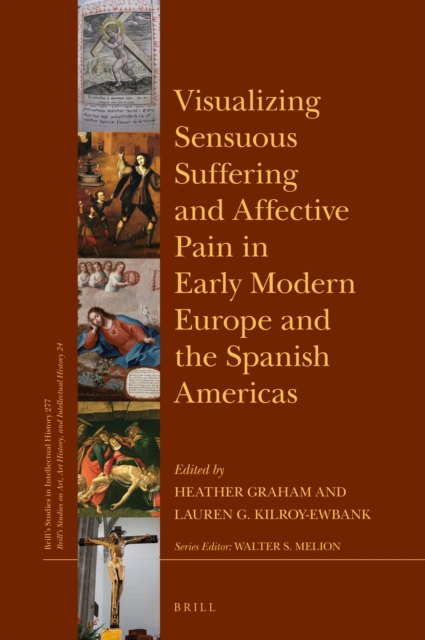
Visualizing Sensuous Suffering and Affective Pain in Early Modern Europe and the Spanish Americas
A trans-cultural collection of studies on early modern imagery of the phenomena of pain and suffering and viewers' potential responses. Authors variously consider pain and suffering as somatic, emotional, and psychological experiences.
eBook

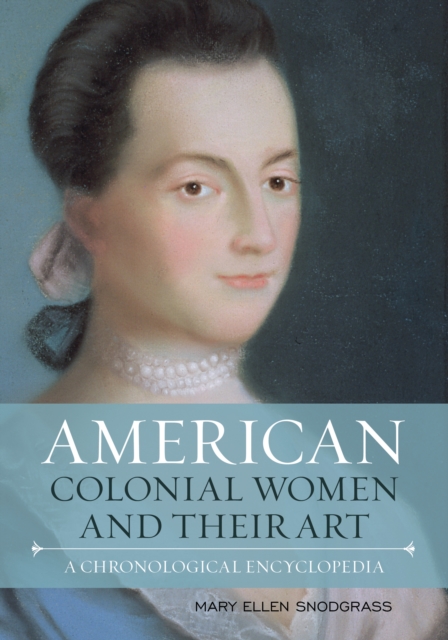
American colonial women and their art
Less celebrated than their male counterparts, women have been vital contributors to the arts. Works by women of the colonial era represent treasured accomplishments of American culture and still impress us today, centuries after their creation. The breadth of creative expression is as impressive as the women themselves.
In American Colonial Women and Their Art: A Chronological Encyclopedia, Mary Ellen Snodgrass follows the history of creative expression from the early 1600s to the late 1700s. Drawing upon primary sources—such as letters, diaries, travel notes, and journals—this timeline encompasses a wide variety of artistic accomplishment, such as:
Stitchery, quilting, and rug hookingPainting, sculpture, and sketchesEssays, poems, and other writingsDance, acting, and oratoryMusical composition and performance
Individual talents highlighted in this volume include miniature portraits by Mary Roberts, pastel likenesses by Henrietta Dering Johnston, stagecraft by Elizabeth Sampson Sullivan Ashbridge, basketry by Namumpum Weetamoo, dance by Mary Stagg, metalwork by blacksmith Elizabeth Hager Pratt, calligraphy by Anna “Anastasia” Thomas Wüster, city planning by Deborah Dunch Moody, poems and essays by Phillis Wheatley, and fabric design by Anne Pogue McGinty.
Featuring appendices that list individuals by skill and by state—as well as a glossary that clarifies the parameters of genres—this volume is essential to the study of Colonial women’s art. Resurrecting the efforts of women to record, adorn, and illustrate the spirit of their times, American Colonial Women and Their Art is a valuable resource that will be of interest to students and scholars of gender and women’s studies, art history, and American history.
eBook
Spain and the Hispanic world : treasures from the Hispanic Society Museum & Library
The Hispanic Society of America in New York is the vision of Archer M. Huntington (1870-1955). From an early age, Huntington developed an abiding love both of Hispanic culture and of museums and libraries. He resolved to devote his considerable fortune to combining these two passions, and carried out his project so resourcefully that the collections he assembled remain exceptional for their depth and richness, displaying the culture of Spain and Latin America in the broadest sense. Their scope ranges from the prehistoric era to the early 20th century, including antiquities, decorative arts, Islamic works, manuscripts and rare books as well as superb canvases by Old Masters such as El Greco, Velázquez and Goya. This handsome new publication features an introduction to Archer M. Huntington and the Hispanic Society by Patrick Lenaghan, the Society?s Head Curator of Prints, Photographs and Sculpture, and plates and catalogue entries on some of its greatest treasures by the Society?s curators. Exhibition: Royal Academy of Arts, London, UK (21.01. - 10.04.2023).
Book

Art and architecture of viceregal Latin America, 1521-1821
Kelly Donahue-Wallace surveys the art and architecture created in the Spanish Viceroyalties of New Spain, Peru, New Granada, and La Plata from the time of the conquest to the independence era. Emphasizing the viceregal capitals and their social, economic, religious, and political contexts, the author offers a chronological review of the major objects and monuments of the colonial era.
In order to present fundamental differences between the early and later colonial periods, works are offered chronologically and separated by medium - painting, urban planning, religious architecture, and secular art - so the aspects of production, purpose, and response associated with each work are given full attention. Primary documents, including wills, diaries, and guild records are placed throughout the text to provide a deeper appreciation of the contexts in which the objects were made.
eBook


Cosmopolitanism in Mexican Visual Culture
Since the colonial era, Mexican art has emerged from an ongoing process of negotiation between the local and the global, which frequently involves invention, synthesis, and transformation of diverse discursive and artistic traditions. In this pathfinding book, María Fernández uses the concept of cosmopolitanism to explore this important aspect of Mexican art, in which visual culture and power relations unite the local and the global, the national and the international, the universal and the particular. She argues that in Mexico, as in other colonized regions, colonization constructed power dynamics and forms of violence that persisted in the independent nation-state. Accordingly, Fernández presents not only the visual qualities of objects, but also the discourses, ideas, desires, and practices that are fundamental to the very existence of visual objects.
Fernández organizes episodes in the history of Mexican art and architecture, ranging from the seventeenth century to the end of the twentieth century, around the consistent but unacknowledged historical theme of cosmopolitanism, allowing readers to discern relationships among various historical periods and works that are new and yet simultaneously dependent on their predecessors. She uses case studies of art and architecture produced in response to government commissions to demonstrate that established visual forms and meanings in Mexican art reflect and inform desires, expectations, memories, and ways of being in the world-in short, that visual culture and cosmopolitanism are fundamental to processes of subjectification and identity.
eBook